

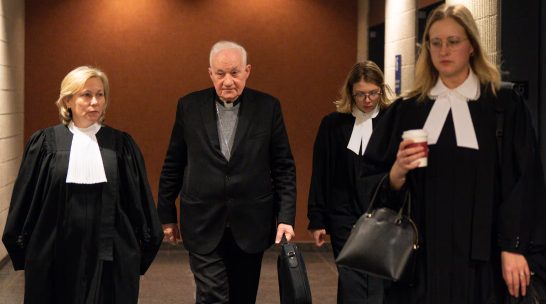
(ZENIT News / Quebec, 08.31.2026).- A Quebec Superior Court ruling in favor of Cardinal Marc Ouellet has brought a dramatic conclusion to one of the most closely watched cases connected to the province’s broader sexual-abuse litigation against Catholic institutions. The judgment not only clears the cardinal of allegations made against him but also raises wider questions about the evidentiary standards required when serious accusations are advanced in high-profile legal proceedings.
In a decision released on August 31, Justice Martin Castonguay concluded that the allegations made by Paméla Groleau against Ouellet were unfounded and defamatory. The court ordered Groleau to pay the cardinal CAD$100,000 in damages, the amount he had sought after launching a countersuit in response to accusations that emerged through a class-action lawsuit targeting the Archdiocese of Quebec and numerous clerics and lay church workers.
The controversy began when Groleau alleged that Ouellet had touched her inappropriately on three occasions between 2008 and 2010 while she was training or serving as a lay pastoral worker. She also described a separate incident in which she felt harassed when the cardinal allegedly crossed a room and sat beside her during a church gathering.
After reviewing the evidence, however, Castonguay concluded that none of the four events occurred as alleged. In his written judgment, the judge stated that the accusations were false and emphasized that Groleau’s account evolved repeatedly throughout the proceedings. At various stages, she altered her characterization of the incidents, eventually indicating that she regarded only one of the alleged encounters as constituting a sexual assault.
The ruling was particularly critical of the reliability of her testimony. According to the court, the inconsistencies were not minor discrepancies but affected the very substance of the claims. Castonguay ultimately found her evidence neither credible nor dependable, leading him to reject the allegations in their entirety.
One accusation received special attention during the trial. Groleau alleged that during a priestly ordination ceremony in 2010, Ouellet placed his hand on her back and moved it toward the upper part of her buttocks, leaving it there for several seconds. The court found insufficient grounds to accept that account and included it among the allegations it deemed false.
The judgment also addressed testimony from two additional women who reported interactions with Ouellet that they considered inappropriate. Castonguay ruled that their accounts were not relevant to determining whether Groleau had defamed the cardinal. In one notable instance, the judge concluded that evidence demonstrated Ouellet could not have been responsible for the conduct alleged by one of the women. She had claimed that, during preparations for a Mass in Montreal in 1992, a cleric approached her from behind and pressed his pelvis against her. The court found that Ouellet was not the priest presiding at those liturgical celebrations, effectively excluding him as the individual involved.
Beyond clearing the cardinal’s name, the decision highlights the reputational consequences that can arise when allegations become associated with large-scale abuse cases. Castonguay noted that the damage suffered by Ouellet was intensified because the accusations appeared within a class action principally involving claims against religious sexual abusers, including perpetrators of child abuse. The judge observed that this context could lead ordinary observers to associate the cardinal with individuals accused of far more serious crimes, causing substantial harm to his honor and public standing.
That reputational dimension carried particular weight given Ouellet’s international profile. From 2010 until his retirement in 2023, he headed the Vatican’s Dicastery for Bishops, one of the Holy See’s departments, responsible for helping select bishops around the world. News of his inclusion in the Quebec class action generated widespread international media attention and prompted intense scrutiny both inside and outside the Church.
While the court acknowledged that the precise extent of the damage to Ouellet’s reputation could not easily be measured, it determined that compensation was warranted and awarded the full CAD$100,000 sought in the lawsuit.
The cardinal has indicated that he will not personally benefit from the award. Instead, he intends to donate the money to organizations assisting Indigenous communities affected by sexual abuse in Canada.
The ruling comes only weeks after Quebec courts approved a CAD$31.5 million settlement in the broader class-action case against the Archdiocese of Quebec. That larger agreement addressed claims involving numerous alleged victims and defendants, but the Ouellet judgment stands apart because it represents a judicial finding that the specific accusations against him were unsupported by the evidence presented.
Reacting to the decision, Ouellet’s legal team welcomed the court’s conclusions. Attorney Dominique Ménard stated that the judgment reinforces a principle essential to the administration of justice: serious allegations must rest on accurate and relevant facts and must be advanced with a level of rigor proportionate to their gravity.
Thank you for reading our content. If you would like to receive ZENIT’s daily e-mail news, you can subscribe for free through this link.

Publicaciones relacionadas:
 Catholic Leader in the Holy Land Visits Gaza Following Events at Catholic Parish
 Becciu case: Vatican appeal trial enters uncharted waters amid questions about the role of the prosecution
 The highest-ranking military bishop in the United States states that Trump’s war in Iran does not meet the criteria for a “just war”
 USA: student may wear previously banned masks with «Jesus Loves Me» sign
