

(ZENIT News / Jerusalem, 07.24.2026).- The crisis engulfing the Holy Land it is also being measured in abandoned villages, threatened schools, blocked humanitarian aid and the gradual disappearance of communities that have inhabited the land for centuries.
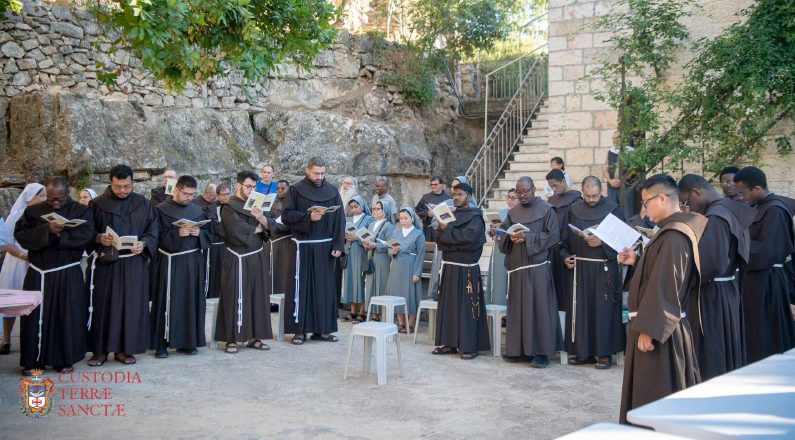
For Christians, the alarm is particularly acute. In the West Bank, the Franciscan leadership in the United States has publicly urged Secretary of State Marco Rubio to act against the growing violence attributed to Israeli settlers targeting Palestinian Christians. The appeal followed attacks in Taybeh, the West Bank’s last entirely Christian village, where homes and vehicles were set ablaze in late June. Israeli authorities said five suspects were arrested after the attack, which reportedly left three people dead.
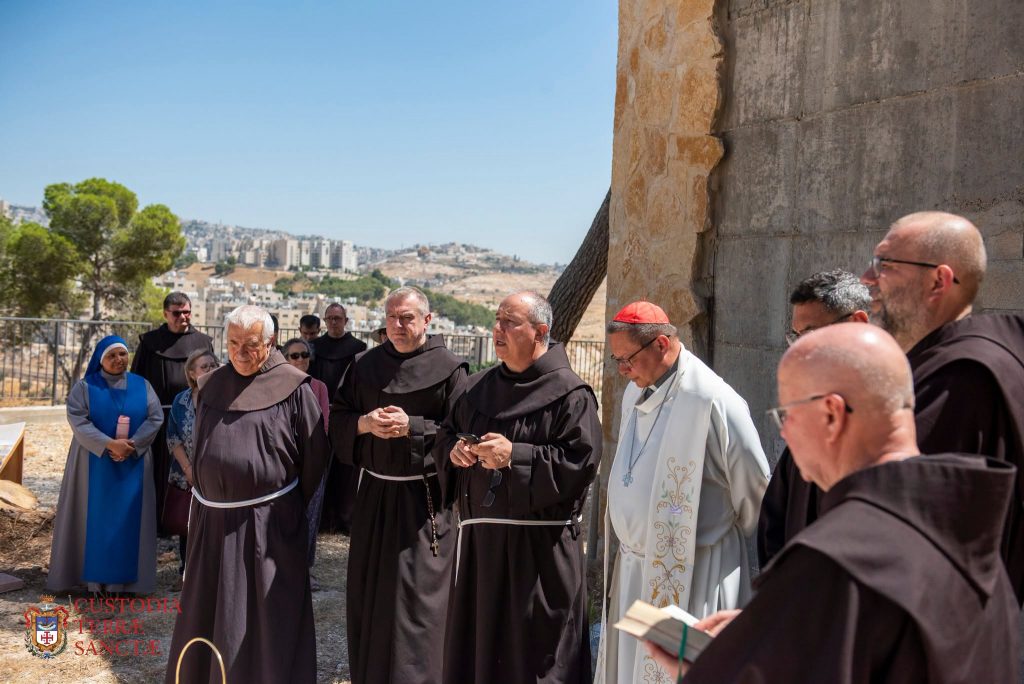
The Franciscan concern is not isolated. Church leaders in Jerusalem have repeatedly denounced vandalism, desecration, spitting at clergy and verbal and physical attacks attributed to extremist ultra-Orthodox Jewish elements. On July 17, Greek Orthodox Patriarch Theophilos III met George Christian Deek, Israel’s special envoy for Christian affairs and a member of the Arab-speaking Greek Orthodox community of Jaffa. The encounter took place against a background of growing demands from Christian communities for greater protection of their faithful and holy places, particularly in Jerusalem’s Old City.
The issue is not simply the safety of religious minorities. It is the survival of an indigenous Christian presence that has endured for almost two millennia. The Franciscan provincial ministers warned that continued violence could drive this community toward extinction, with consequences extending far beyond the Christians themselves. A Holy Land without its historic Christian population would lose one of the few communities capable of serving as a bridge between different religious and ethnic groups.
The figures emerging from the wider West Bank crisis make the concern impossible to dismiss as a series of isolated incidents. According to the latest United Nations humanitarian assessment, around 850 Palestinians have been injured in settler-related attacks since the beginning of 2026, with nearly 690 injuries directly attributed to settlers. Such attacks have risen from an average of one injury every three days in 2020 to more than three injuries a day in the first months of 2026.
Between January 2023 and July 13, 2026, 122 Palestinian communities experienced partial or complete displacement. Forty-seven were entirely abandoned, while more than 6,200 people — including over 3,000 children — were forced from their homes. More than 2,300 displacements occurred in 2026 alone. In the Jordan Valley, 11 communities have been completely emptied since 2023, five of them this year.
Education is also being pulled into the crisis. Eighty-four Palestinian schools face demolition or work-stoppage orders, potentially affecting nearly 13,000 students and more than 1,000 teachers. In some communities, displacement has effectively erased access to schooling altogether. The destruction of a school in Al Maleh, after months of vandalism and attacks, deprived local children of their educational institution.
The Holy See has meanwhile focused on another dimension of the emergency: humanitarian access. In a statement to the United Nations, the Vatican reaffirmed its financial support for the United Nations Relief and Works Agency for Palestine Refugees in the Near East, which has provided education, health care, food assistance and social services to Palestinian refugees for more than 70 years. The Holy See also expressed deep concern over the killing of agency personnel and attacks on its facilities, while stressing that humanitarian operations must respect the principles of humanity, neutrality, impartiality and independence.
That insistence is especially significant because aid itself has become part of the conflict. The United Nations has condemned attacks on humanitarian operations in Gaza, including the assault of a food distribution point and a World Food Programme warehouse. The message from the international organization is unequivocal: humanitarian agencies must be able to work safely and independently, without intimidation or violence.
At the same time, the physical geography of Gaza is changing. Israel has constructed more than 23 kilometers of new roads and a large sand embankment along what has become known as the “yellow line,” an internal boundary separating areas under Israeli military control from those where Hamas remains present. The line extends for roughly 59 kilometers and divides territory that, according to estimates, represents between 50 and 70 percent of the Gaza Strip from the remaining area. Israel says the infrastructure is necessary to protect its troops and nearby communities. Critics fear that a supposedly temporary security arrangement could harden into a permanent territorial division and make the return of Palestinians to their homes even more difficult.
The human cost has continued despite the cease-fire. The United Nations says at least 57 people, including six children and eight women, were killed between July 13 and 20. Thirty-four of those deaths occurred away from the yellow line. On July 21, an Israeli strike on an apartment in Gaza City killed a couple and their four children, according to relatives and local medical sources; the Israeli military said it had targeted a Hamas member and was investigating the consequences of the attack.
The destruction has also created a challenge that cannot be solved simply by rebuilding houses. A new Oxfam report estimates Gaza’s direct damage and economic losses at $57.9 billion, while recovery over the next decade would require more than $71 billion. The organization says the war has effectively erased 77 years of economic and social progress.
The damage extends to schools, universities, hospitals, religious buildings, water systems and the social fabric itself. More than 58,600 households are now headed by women, female unemployment has reached 92 percent, and more than 50,000 people require long-term rehabilitation. The reconstruction, according to the report, would take at least five years merely to initiate recovery and several decades to complete.
The central question, therefore, is not simply how to rebuild Gaza. It is whether the international community will allow the region to be reconstructed in a way that preserves its people, its communities and its historic pluralism.
For Christians in the Holy Land, the warning is particularly stark. Their future depends not only on protecting churches and clergy, but on protecting villages, schools, families and the right to remain on ancestral land without fear. The same principle applies to every civilian population caught in the conflict.
Thank you for reading our content. If you would like to receive ZENIT’s daily e-mail news, you can subscribe for free through this link.

Publicaciones relacionadas:
 This Is the Legal Situation of the Bishop Arrested in Nicaragua as Told by His Lawyer
 53 Humanitarian Organizations Denounce «False Narratives» to Sabotage Those Saving Lives in Palestine
 Between Drones, Settlers and Classrooms: How Violence and Administrative Israeli Pressure Are Reshaping Palestinian Life
 Pope Leo XIV, the US-Iran war, and a forceful call in a Middle East on the brink of the abyss
