

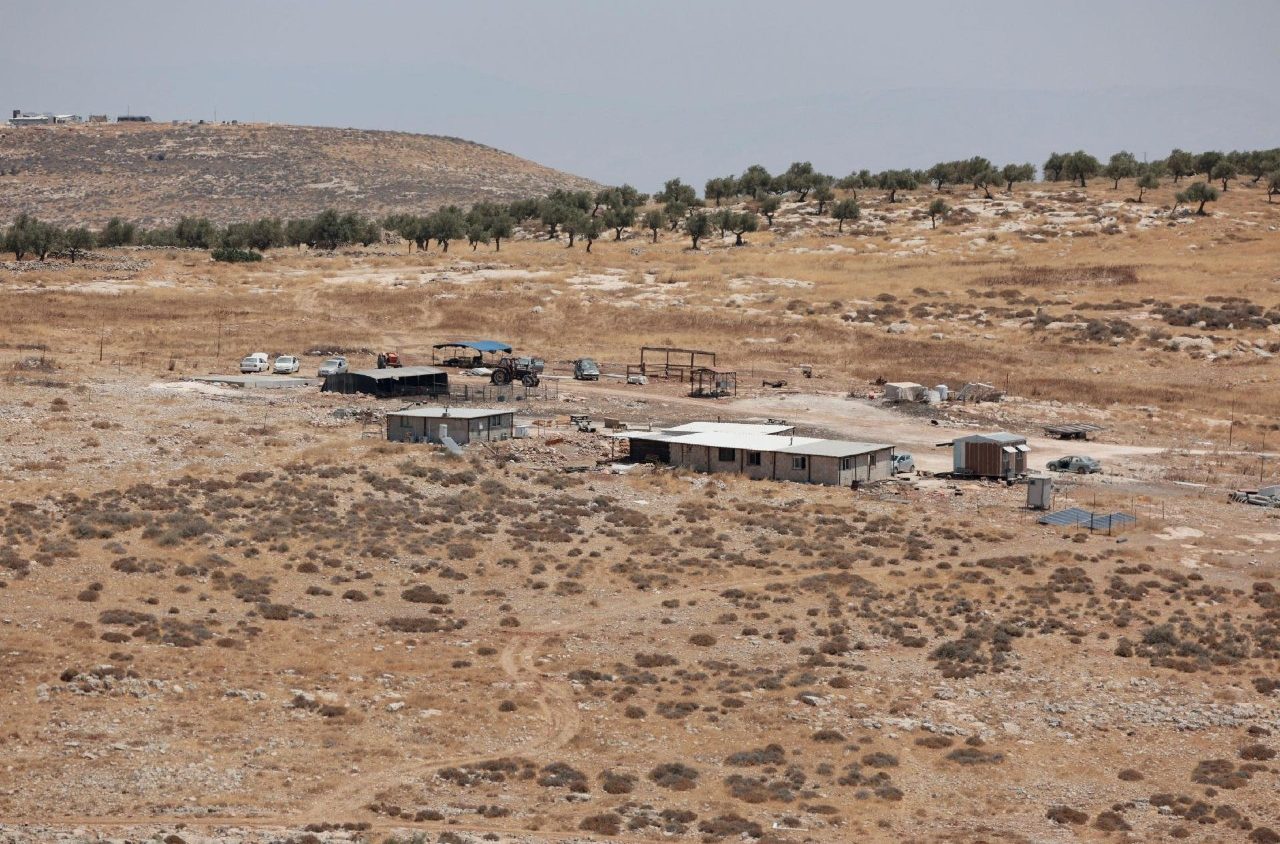
(ZENIT News / Taybeh, 08.13.2026).- For Taybeh, the question is no longer simply whether Christians can remain in their ancestral village. It is whether they can continue to live there without fear.
On Sunday, August 9, the Israeli military declared Taybeh, the last entirely Christian village in the occupied West Bank, a closed military zone for non-residents. The army said the measure was intended to prevent attacks by Israeli settlers and protect residents following “several violent attacks committed by Israelis in the area.” According to the military, the restriction applies to Israelis rather than Palestinians.
That distinction matters, but so does what happens next. For Taybeh’s Christian community, protection will be measured not by the announcement but by whether armed settlers are actually prevented from entering private property, damaging farmland and intimidating residents.
The village, located east of Ramallah, is home to roughly 1,500 people and has a Christian history stretching back to antiquity. It is identified by many Christians with Ephraim, where the Gospel of John says Jesus withdrew with his disciples before his Passion. Its churches, ancient sites and religious heritage have made Taybeh a destination for pilgrims and visitors, while its hotels, restaurants and other businesses depend heavily on tourism.
The new restrictions could therefore carry an economic cost of their own. Taybeh’s mayor, Suleiman Khoury, warned that excluding foreign visitors could seriously damage businesses already operating under difficult conditions. Bishop James Curry, the lead bishop for the Holy Land of the Catholic Bishops’ Conference of England and Wales, likewise questioned whether closing the village is the right way to protect its inhabitants. He warned that the loss of pilgrimage and tourism revenue could place additional pressure on families already struggling to remain.
The deeper concern, however, is the security environment that made the military decision necessary in the first place.
Father Bashar Fawadleh, pastor of the Church of the Redeemer in Taybeh, has described months of incursions into privately owned agricultural and residential land, intimidation, fires, road closures, armed presence and attempts to establish a permanent presence around the village. On August 5, settlers repeatedly entered a recently prepared home belonging to a parish family, cut its fence and brought sheep onto the property. Fawadleh said that, even as he spoke about the incident, the same settlers had returned to put up tents.
For the priest, these incidents are not isolated acts of vandalism but part of a sustained campaign that creates fear and encourages Palestinians to leave their land. He says families in areas west, east and south of Taybeh have experienced similar pressure, including the burning of fields, destruction of agricultural land and repeated incursions.
The concern is shared by church leaders beyond Taybeh. Bishop Curry, from United Kindom, said that when he visited the village in January 2026, residents already reported continuing intimidation, growing numbers of checkpoints and severe financial pressure. Some families, he said, were considering leaving because they no longer believed they could raise their children safely there.
That development would have consequences extending far beyond one Palestinian village.
The Christian population of the West Bank and Jerusalem is estimated at around 50,000. Their presence is not a recent historical remnant but part of the region’s continuous Christian heritage. The disappearance of communities such as Taybeh would therefore represent not merely demographic change, but the erosion of a living Christian presence in the land where Christianity began.
Recent events have also drawn international attention. In June, Palestinian civil-defense firefighters and a local priest said Israeli settlers impeded efforts to extinguish a major fire near Taybeh. A United Nations inquiry published that month concluded that Israeli authorities had been directly involved in attacks by settlers that killed, injured or displaced Palestinians in the West Bank. Israel rejected those findings, saying its authorities, including the president and prime minister, had repeatedly condemned violence against Palestinians.
Against that backdrop, the closed-zone order presents an obvious dilemma. Restricting access could help if it is genuinely used to prevent settlers from entering Taybeh and attacking residents. But if journalists, international observers and foreign visitors are also prevented from entering, the measure could reduce independent scrutiny precisely when scrutiny is most needed.
Father Fawadleh has therefore adopted a deliberately cautious position. He welcomed any serious measure that genuinely protects Taybeh’s people, homes and land, but insisted that restrictions should target those committing violence rather than those suffering from it. His questions are straightforward: Can farmers reach their fields safely? Can families remain in their homes without fear? Have attacks stopped? Will attempts to establish new footholds around the village be prevented?
Those questions also go to the heart of religious freedom. A Christian community cannot meaningfully enjoy freedom of religion if insecurity, intimidation or the loss of access to homes and land eventually makes remaining impossible. Protecting religious minorities requires more than safeguarding churches; it requires allowing the people who constitute those communities to live ordinary lives.
The Catholic Church has increasingly framed the issue in those terms. Father Fawadleh has appealed directly to Pope Leo XIV to intervene on behalf of Taybeh, while asking dioceses around the world to speak publicly about the village and pray for its inhabitants. He says the community feels “forgotten” and “alone,” even as Christians from different traditions cooperate in supporting affected families and raising international awareness.
The appeal comes as the Church looks toward 2033, when Christians will mark two thousand years since the earthly life of Jesus. For Taybeh, that approaching anniversary gives the village an added symbolic weight: its residents see their continued presence not as a political slogan, but as a living Christian witness in the Holy Land.
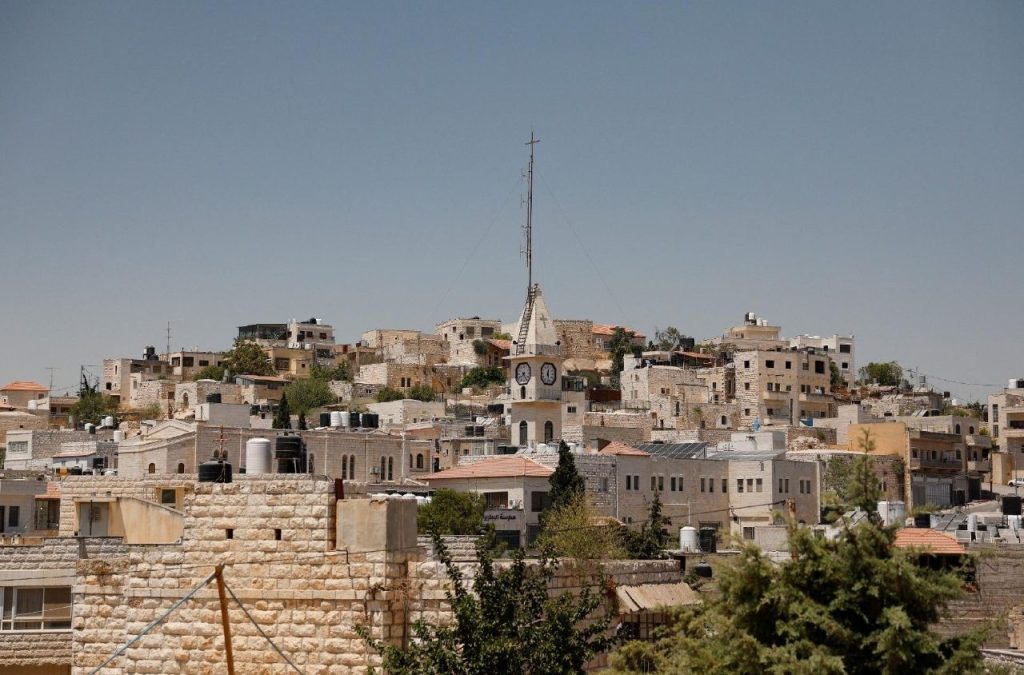
The Vatican has consistently supported a negotiated two-state solution and the right of Palestinians to live in peace on their own land, while Catholic leaders have condemned violence against civilians regardless of their identity.
Taybeh’s Christians are asking for something more immediate than grand diplomatic formulas. They want to remain where their families have lived for generations, cultivate their land, receive pilgrims, worship freely and raise their children without intimidation.
The military closure may prove meaningful if it delivers that security. But Taybeh’s leaders are right to insist that the test cannot be the order itself. The test is whether violence ends, whether perpetrators are held accountable and whether a Christian community that has survived for centuries can continue to live openly rather than gradually disappear under pressure.
“Peace, justice and dignity,” as Father Fawadleh puts it, are not privileges reserved for one side of the conflict. They are the minimum conditions for Taybeh to have a future.
Thank you for reading our content. If you would like to receive ZENIT’s daily e-mail news, you can subscribe for free through this link.

Publicaciones relacionadas:
 Christian Leaders Unite Against Jerusalem Municipality’s Move to Seize Armenian Patriarchate Properties
 Jewish persecution of Christians in the Holy Land on the rise, research reveals
 Attacks by Jewish settlers against our peaceful community must stop in Taybeh: note from Christian leaders in Holy Land
 The Grammar of Hate: An Interview with Bishop Rafic Nahra, Auxiliary Bishop of Jerusalem, on the Situation in the Holy Land
