
(ZENIT News / París, 11.17.2026).- France is confronting a striking contradiction: a country shaped by centuries of Christian history is seeing churches vandalized, clergy increasingly targeted and religious communities struggling to make themselves heard in an increasingly secular society.
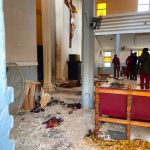
The latest figures cited in the reports paint a troubling picture of hostility toward religious communities. French authorities reportedly recorded more than 840 anti-Christian incidents in 2026, most involving churches, including vandalism, arson and desecration. Attacks against individuals increased by more than 70%, while incidents targeting clergy reportedly quadrupled. The figures form part of a wider rise in religiously motivated attacks, with Jewish communities also suffering heavily.
Israeli Ambassador to France Joshua Zarka has drawn attention to the shared vulnerability of religious minorities, noting that Christians, too, face attacks, including churches being burned and priests killed. The issue is increasingly difficult to dismiss as isolated acts of vandalism when places of worship and religious leaders repeatedly become targets.
But the pressure on Christianity in France is not always violent. For some believers, it takes the form of a less visible hostility arising from a society in which religion has increasingly been pushed to the margins of public life.
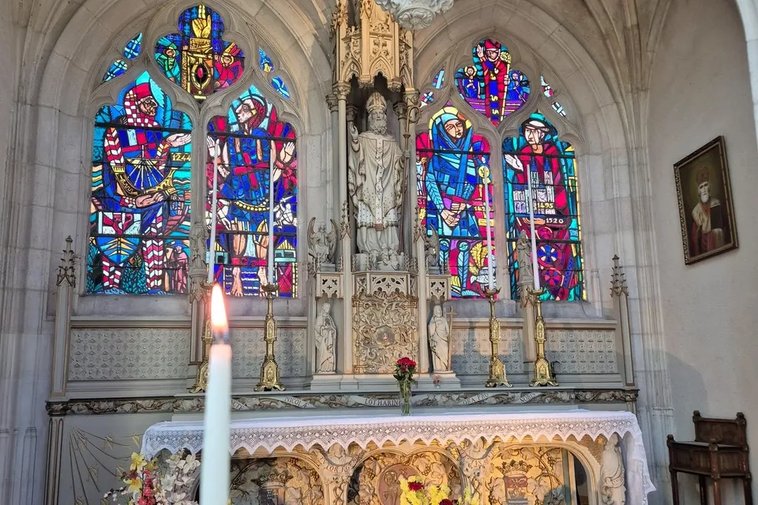
The theft and deliberate destruction of a relic attributed to St. Nicholas at the Basilica of Saint-Nicolas-de-Port, meanwhile, has brought another dimension to the debate over France’s relationship with Christianity. The relic, a fragment of bone venerated for more than nine centuries, was stolen and destroyed by a suspect who reportedly told investigators he wanted to combat what he regarded as religious fetishism.
For the parish, the loss was an assault not merely on an object but on the memory, faith and devotion of generations. The relic’s destruction is particularly painful in a town whose identity is inseparable from St. Nicholas, whose devotion there dates to the medieval period. Another relic, preserved in an arm-shaped reliquary, remains intact.
Despite the desecration, the parish intends to hold its traditional candlelight procession on December 5, ahead of the saint’s feast day. Thousands are expected to gather once again in the basilica, turning an act intended to destroy a sacred symbol into an occasion for public devotion.
France’s Christian heritage cannot be reduced to its monuments, relics or historical prestige. Its future depends on whether believers can worship freely, pass on their faith, maintain their communities and live without fear of attacks or marginalization.
A nation does not recover its religious roots simply by preserving its churches. It needs people willing to fill them—not as tourists admiring a vanished civilization, but as believers sustaining a living one.
Thank you for reading our content. If you would like to receive ZENIT’s daily e-mail news, you can subscribe for free through this link.