

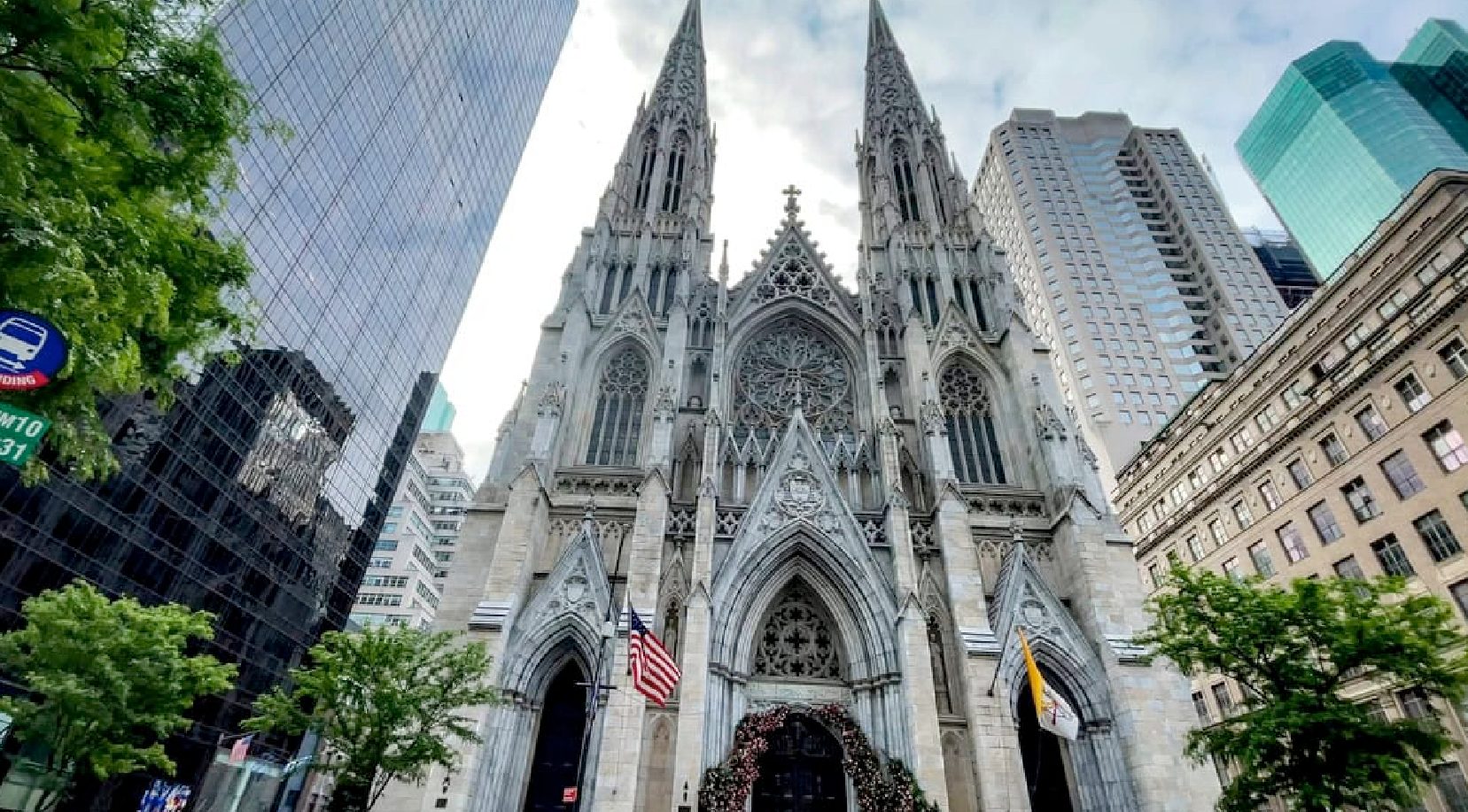
(ZENIT News / New York, 02.05.2026).- A bitter courtroom battle between the Archdiocese of New York and one of its longtime insurers has taken a dramatic turn, with Church officials now accusing the insurance giant Chubb of secretly operating a victim-advocacy website to pressure abuse survivors into filing claims—while simultaneously fighting those same claims in court.
In a filing dated January 31, 2026, before the New York State Supreme Court, the archdiocese alleged that Chubb Insurance orchestrated what it called a covert effort to weaken the Church’s legal position during an ongoing coverage dispute. According to the archdiocese, Chubb quietly ran a website known as the “Church Accountability Project,” presenting it as an independent victims’ rights initiative while allegedly using it to encourage abuse survivors to bring lawsuits against the archdiocese.
The Church argues that the strategy was designed to serve Chubb’s own financial interests by inflating claims against the archdiocese—claims the insurer has been resisting since at least 2024, when the archdiocese formally sued Chubb for allegedly failing to pay covered abuse-related settlements.
In its court papers, the archdiocese characterized the operation as a “shadow campaign,” asserting that the insurer concealed its involvement with the website for years. Archived versions of the site from roughly a year ago contained no reference to Chubb, instead portraying the project as an independent watchdog “committed to holding the Archdiocese of New York accountable.” Those earlier pages accused the archdiocese of having “tolerated and covered up horrific sexual abuse of minors for decades.”
That changed on February 4, when the site began prominently displaying Chubb’s logo at the top of its homepage.
Church attorneys say this disclosure supports their claim that the platform had been secretly funded and managed by the insurer all along. They argue that Chubb used the site to amplify allegations against the archdiocese while simultaneously denying insurance coverage for resulting claims—an approach the archdiocese now labels “overreach sabotage.”
As part of its January 31 filing, the archdiocese is seeking punitive damages, accusing Chubb of acting in bad faith and deliberately undermining its insured client.
Chubb has forcefully rejected the accusations.
On February 4, a spokesperson for the company described the archdiocese’s court submission as “a desperate last tactic to delay justice and distract from decades of horrific child sexual abuse that the Archdiocese of New York allowed and concealed.” The insurer added that it was “telling” that Church leaders appeared more troubled by the existence of the website than by the abuse itself.
The statement also accused the archdiocese of dragging its feet in compensating survivors and failing to provide insurers with key documentation necessary to resolve claims.
This latest clash builds on a long-running standoff that erupted publicly in 2024. At that time, New York’s archbishop, Cardinal Timothy Dolan, told Catholics that Chubb was “trying to evade its legal and moral contractual obligation to resolve covered claims that would bring peace and healing to survivor victims.”
Chubb countered by alleging that the archdiocese had “tolerated, hidden, and covered up rampant child sexual abuse for decades” and, despite possessing substantial financial resources, continued to resist paying victims directly.
In recent years, dioceses across the United States have faced mounting financial pressure from abuse settlements, often relying heavily on historic insurance policies to fund compensation for survivors. Insurers, for their part, increasingly argue that decades-long patterns of misconduct fall outside the scope of standard coverage.
For the Archdiocese of New York, one of the largest and most influential Catholic jurisdictions in the country, the stakes are both financial and reputational. For Chubb, the dispute raises uncomfortable questions about advocacy, transparency, and the role of insurers in shaping public narratives around abuse.
Thank you for reading our content. If you would like to receive ZENIT’s daily e-mail news, you can subscribe for free through this link.

Publicaciones relacionadas:
 USA: bishops make sex abuse data and their struggle transparent in 2022 annual report
 Catholic Church in USA presents annual report against sexual abuse: these are the advances and pitfalls
 Archdiocese of Los Angeles Reaches $880 Million Settlement Over Child Abuse Claims
 Abuses in the Catholic Church in the USA: Report Reveals Both Shadows of the Past as Well as Indisputable Signs of Change
