

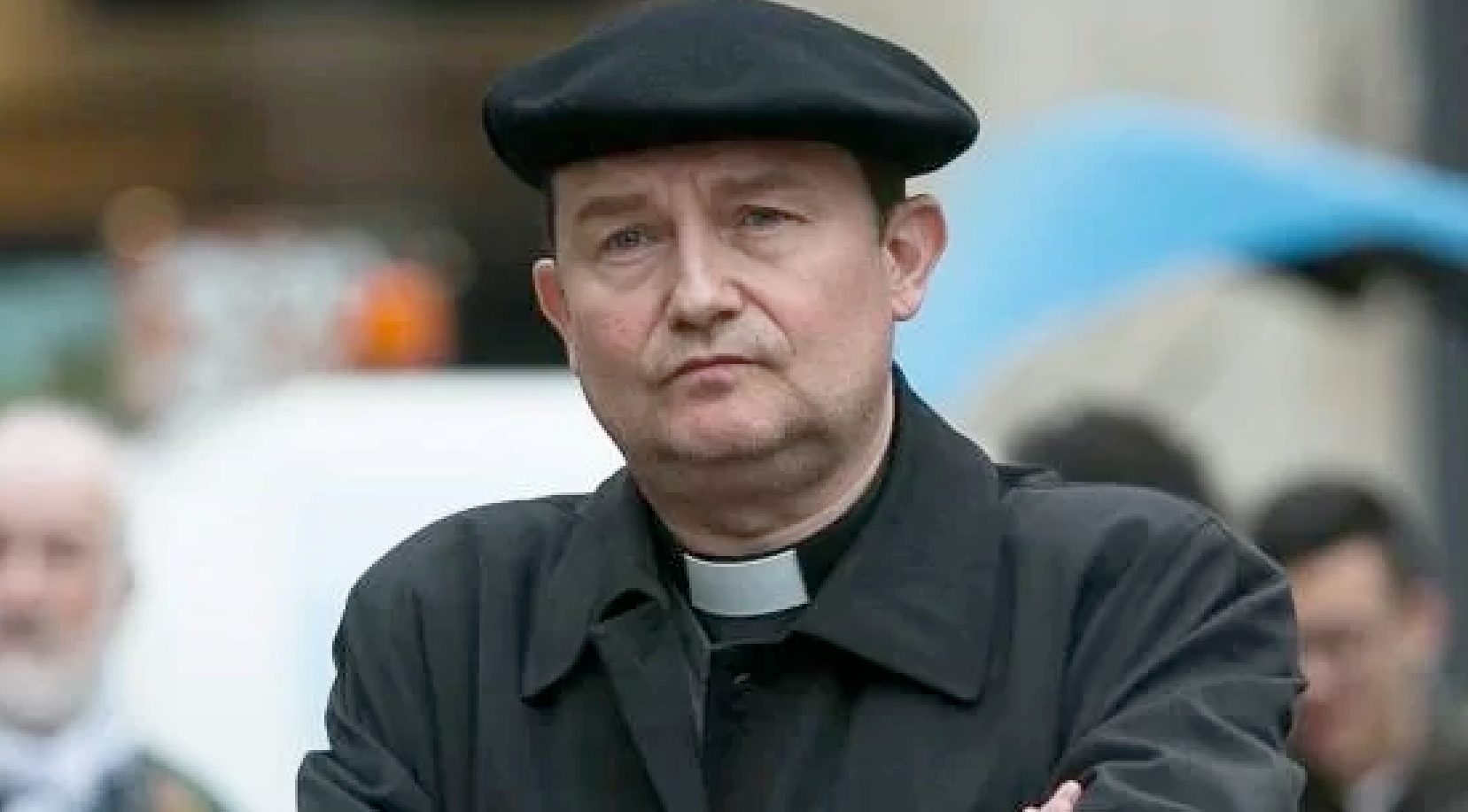
(ZENIT News / Barcelona, 10.07.2025).- The conviction of a Spanish priest for “hate speech” has ignited a national conversation about the boundaries of religious expression and freedom of conscience in modern Europe. Father Custodio Ballester, a Barcelona parish priest known for his outspoken views, was found guilty last week of making “Islamophobic” remarks in an article he wrote more than seven years ago.
At the center of the controversy is a 2016 essay titled “The Impossible Dialogue with Islam,” in which Ballester argued that genuine dialogue between Christianity and Islam remains unattainable under current conditions. The article was a direct response to a pastoral letter from Cardinal Juan José Omella, Archbishop of Barcelona, entitled “The Necessary Dialogue with Islam.” Ballester’s critique was pointed, suggesting that “for Islam, one either believes or remains an infidel to be subdued in one way or another.”
Four years later, in 2020, Catalonia’s regional prosecutor accused the priest of violating Spain’s hate speech laws, arguing that his article constituted a “crime of hatred” under national legislation. The case later expanded to include comments he and two others—Father Jesús Calvo and journalist Armando Robles—made in a 2017 podcast that Muslim advocacy groups claimed incited hostility against their community.
Spain’s hate crime law carries penalties ranging from one to four years in prison and additional fines. While sentencing has not yet been finalized, Ballester has made clear his intention to appeal the ruling, even to the European Court of Human Rights if necessary. “My words were never discriminatory or hateful,” he told the Catholic News Agency. “They want to use me as an example to make others silence themselves.”
Outside the courthouse, supporters gathered with signs declaring their solidarity. The Christian Lawyers Association (Abogados Cristianos) has collected nearly 30,000 signatures demanding the priest’s acquittal. Yet within the Church, the reaction has been muted. Cardinal Omella, Ballester’s ecclesiastical superior, is said to have expressed personal support in private but has refrained from making any public statement.
The case has struck a nerve in Spain, where tensions between freedom of expression and anti-hate legislation have intensified in recent years. Critics argue that laws intended to curb extremism are now being weaponized to suppress legitimate debate—particularly on religious and moral issues. “People are outraged,” Ballester said, “that so-called hate crimes are being punished as harshly as violent assaults or sexual offenses.”
For many observers, the issue extends beyond one priest’s words. It touches on a deeper cultural struggle over whether faith communities may still speak openly about their beliefs in societies that prize tolerance yet increasingly police speech. In a Europe still grappling with questions of identity, pluralism, and faith, Father Ballester’s case may become a defining moment in the fragile balance between free expression and social harmony.
Thank you for reading our content. If you would like to receive ZENIT’s daily e-mail news, you can subscribe for free through this link.

Publicaciones relacionadas:
 Gay Inquisition: 400 Days in Prison (and Imprisoned Again) for Not Using Transgender Pronouns
 Holy See signs agreement with Czech Republic: inviolability of confession and conscientious objection guaranteed
 100 children kidnapped from Catholic school in Nigeria are freed… hostages remain
 Nicaraguan regime bans urban and rural “door-to-door” missions in the country’s dioceses
