

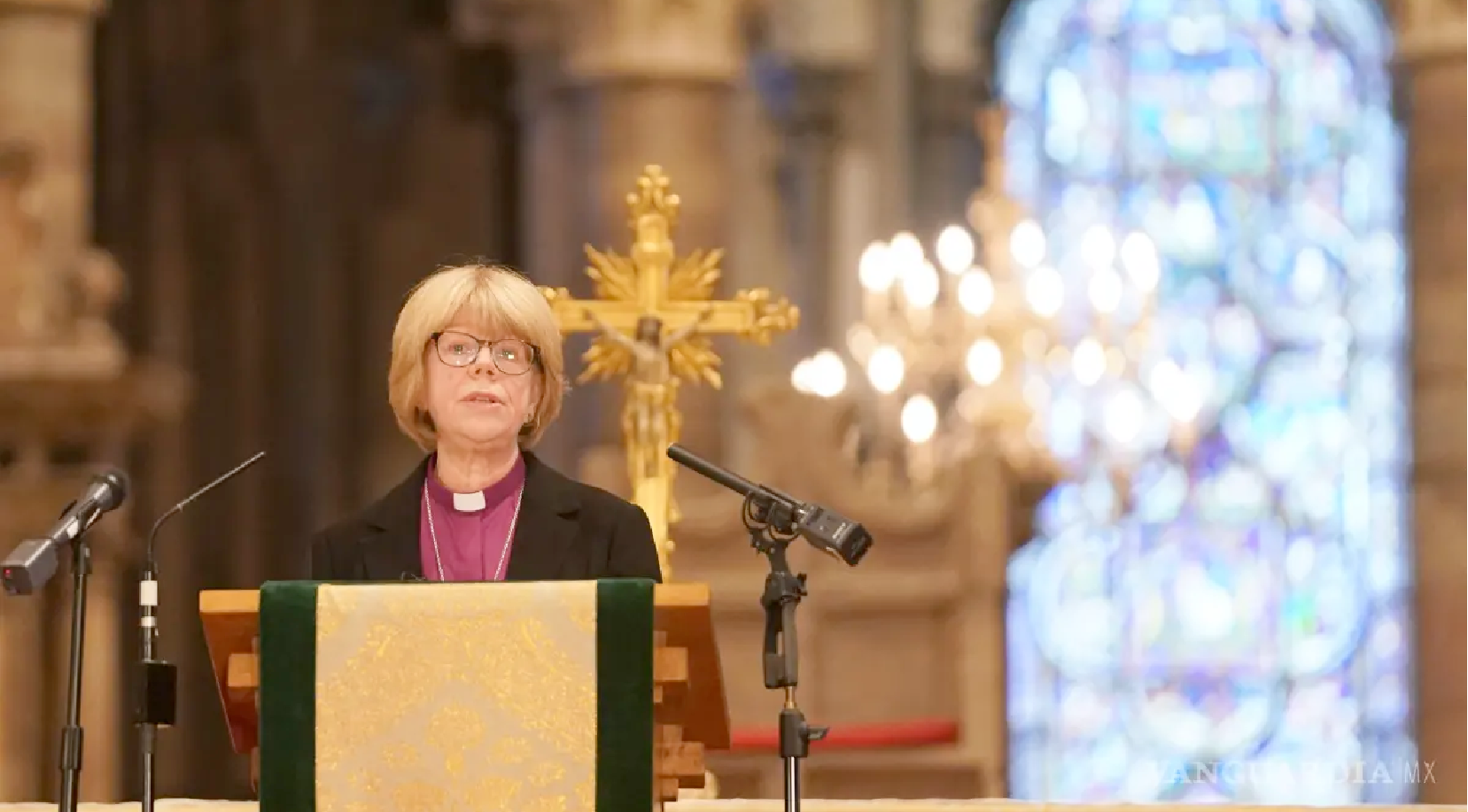
(ZENIT News / London, 08.10.2025) – The election of Sarah Mullally as the new Archbishop of Canterbury places the first woman at the head of the Church of England in 500 years, following a lengthy consultative process. The implications of the appointment open up a complex horizon.
The Anglican Church is made up of 40 autonomous provinces in mutual dependence and full communion, headed by the Archbishop of Canterbury, the symbolic head of the worldwide Anglican Communion as primus inter pares. Anglican provinces are independent Churches, each with a Bishop or Archbishop and their own governing structure. The Archbishop of Canterbury serves as the spiritual and moral leader of the Anglican Communion worldwide.
The appointment of Sarah Mullally has sparked great debate and division. Aged 63, married with two children, her election culminates a ten-year process that introduced female ordination into the Anglican Church, first in the priesthood (1992) and then in the episcopate (2014).
The Global Anglican Future Conference (GAFCON), an influential group of Anglican Bishops and leaders, did not take Mullally’s election well, declaring that it «welcomed [it] with sorrow.» The Reverend Jodie McNeill, Honorary Canon of St. Andrew’s Cathedral in Sydney, Australia, noted that the appointment «abandons Anglicans worldwide, as the Church of England has elected a leader who will further divide an already divided Communion.»
GAFCON notes that this appointment does not «recognize the Archbishop of Canterbury as an Instrument of Communion or as first among equals» of the Churches around the world. It noted that «the majority of the Anglican Communion still believes that the Bible requires an all-male episcopate.»
The most significant decision by GAFCON is to declare itself ready to assume the leadership of the Anglican Communion and has summoned all the Anglican Bishops of the world to Abuja, Nigeria, from March 3 to 6, 2026.
The Reverend Tom Middleton, Director of Forward in Faith, an Anglo-Catholic association within the Church of England, also present in Scotland, founded in 1992 precisely after the General Synod approved the ordination of women to the priesthood, explained that, while «this appointment is the natural development of measures already introduced in the Church of England,» Forward in Faith recognizes Bishop Mullally as «the true and legitimate holder of that office.»
Anglicans face the dilemma of concern over the Anglican drift toward ordaining women, contrary to the doctrinal admonitions pointed out by groups in England and other countries, and, at the same time, saving the Anglican Communion by remaining faithful to the apostolic succession.
In Catholic circles, formal congratulations were offered to the new Anglican primate for maintaining dialogue between the Catholic Church and the Anglican Communion, despite the differing doctrinal views on this point. Thus, Cardinal Vincent Nichols, Catholic Primate of England and Wales, promised prayer on behalf of the Catholic community for the woman assuming the office and added that «together we will respond to Jesus’ request That we all be one.»
As reported by ZENIT on October 3, Cardinal Prefect Kurt Koch of the Dicastery for Promoting Christian Unity sent a letter of congratulations and recalled that the Catholic Church and the Anglican Communion «have participated in an official theological dialogue for almost sixty years, during which time we have grown greatly in mutual understanding. This work of seeking a deeper communion has been sustained by the closeness between the pastors of our two communities.
Progressive sectors in the United Kingdom praised the appointment as a significant step toward gender equality. Conservative sectors, especially in Africa, declared a complete break with Canterbury, describing the appointment as «the definitive confirmation of the moral decadence» within the Anglican leadership. On October 8, they announced their spiritual and doctrinal independence, no longer recognizing the authority of the Archbishop of Canterbury.

Publicaciones relacionadas:
 Anglican Leaders Meet with the Pope in Rome
 Anglicans abandon term “church” in new churches
 After 500 years, the King of England will pray with the Pope in the Sistine Chapel (and receive a seat and royal title in the papal basilica for himself and his successors)
 [Pope in Turkey: Day 4] The Pope’s words during his visit to the Armenians of Istanbul
