

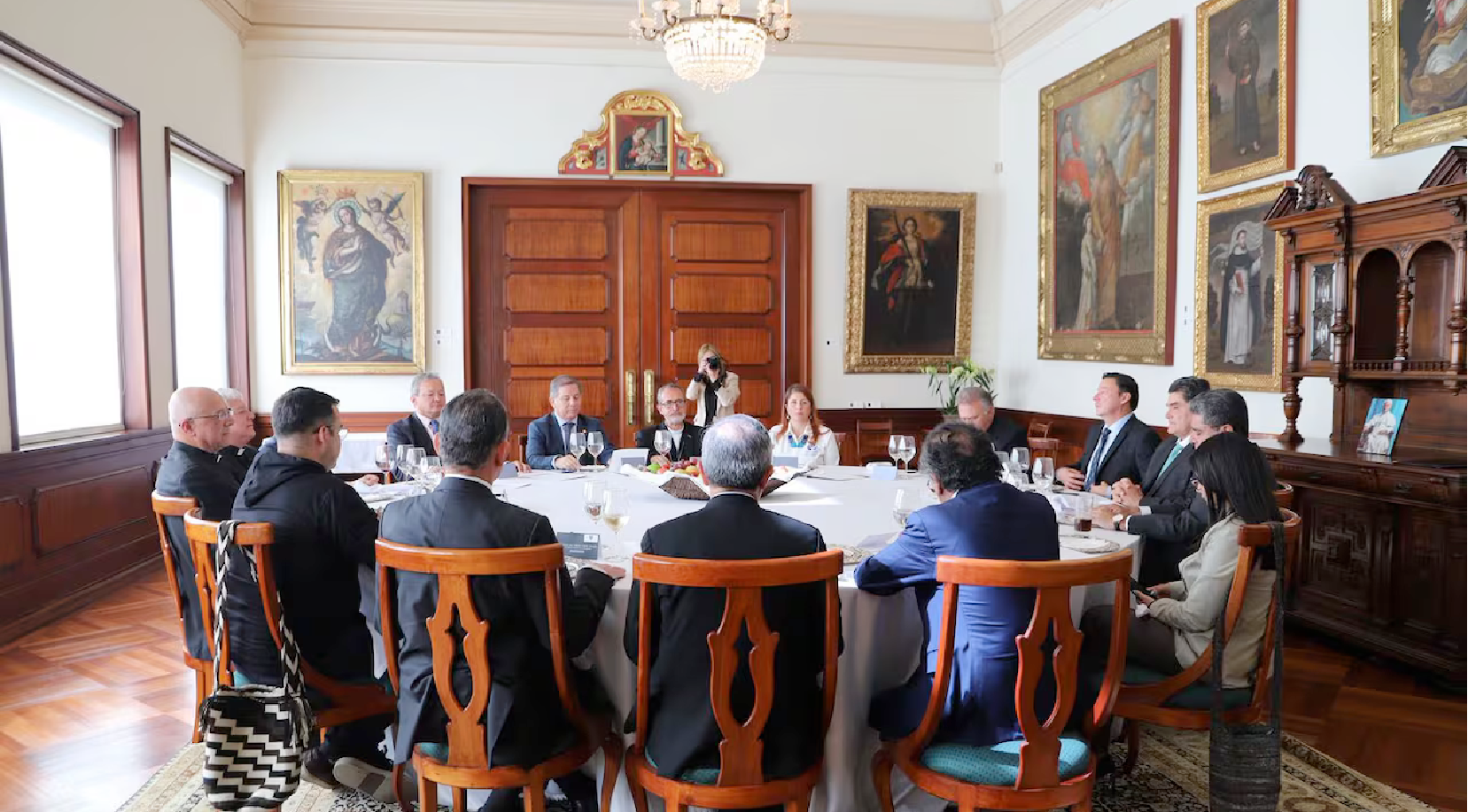
(ZENIT News / Bogotá, 01.30.2026).- The Colombian Episcopal Conference issued a formal statement this week reaffirming core Christian doctrine and demanding respect for religious convictions, following controversial remarks by President Gustavo Petro that many believers perceived as offensive and theologically reckless.
The comments that triggered the response were delivered on January 27 during the reopening ceremony of Bogotá’s historic San Juan de Dios Hospital. In a spontaneous reflection, Petro suggested that Jesus may have had a sexual relationship with Mary Magdalene, adding that Christ was accompanied by women who loved him until the end. The president’s words spread rapidly across social media and national outlets, igniting criticism from church leaders and lay Catholics alike.
Although the bishops avoided naming Petro directly in their initial communiqué, the timing and content left little doubt about the target of their concern.
For Colombia’s Catholic hierarchy, the issue goes far beyond personal opinion. In their official declaration (COM-CEC-040/26), signed by the presidency of the Episcopal Conference, the bishops stressed that Jesus Christ cannot be reduced to a historical figure or moral exemplar.
“For those who follow the teachings of the Son of God, grounded in Sacred Scripture and the Church’s Tradition, his name is holy,” they wrote, underscoring that Christ is “true God and true man, the center of our faith and hope.” Any portrayal that strips Jesus of his divine identity, they warned, distorts the very foundations of Christianity.
The bishops also framed their response in legal terms, reminding the government that Colombia’s secular character does not authorize public officials to reinterpret religious doctrine.
They cited the 1991 Constitution, Constitutional Court ruling C-817 of 2011, and Article 4 of Law 133 of 1994 (the Statutory Law on Religious Freedom), all of which enshrine the principles of respect, non-interference, and protection of citizens’ beliefs.
“Laicity does not mean delegitimizing faith,” the statement emphasized. Rather, it obliges the state to safeguard religious freedom and ensure harmonious relations with the country’s diverse confessions. From that perspective, the bishops were categorical: no public authority is called to issue theological judgments about the convictions of believers. On the contrary, public power has the duty to protect those convictions.
The intervention reflects a broader concern within the Church about misinformation surrounding Christianity’s central figure. Church leaders described the president’s remarks as superficial and decontextualized, warning that such statements risk confusing the faithful and trivializing doctrines held sacred by millions.
In response, the bishops urged Catholics—and anyone seeking to understand Jesus—to return to primary sources: the Gospels and the Catechism of the Catholic Church. Doubts about Christ, they said, should be addressed through serious study rather than improvised speculation in political forums.
Beyond doctrine, the episode highlights a sensitive boundary in Colombian public life. Gustavo Petro, a former guerrilla leader turned leftist president, governs a nation where Catholicism remains culturally influential even as religious pluralism grows. His remarks have reignited questions about how far political leaders can go when speaking about religious symbols in a constitutional democracy.
The Episcopal Conference closed its statement with a call for mutual respect and social peace. While reaffirming loyalty to Colombia’s institutions and laws, the bishops reminded authorities that the Church has consistently taught respect for legitimately constituted leadership and promoted reconciliation. In return, they asked that believers’ rights be equally honored—specifically, the freedom to profess and share their faith as an essential pillar of democratic coexistence.
Thank you for reading our content. If you would like to receive ZENIT’s daily e-mail news, you can subscribe for free through this link.

Publicaciones relacionadas:
 Ireland Will Undergo a Diocese Restructuring by the Pope
 The World’s Largest Mural Is Inaugurated. Where Is It and To Which Pope Is It Dedicated?
 Finland: Priests travel long distances to accompany the growing Catholic community
 Turbulent Times for Emmanuel Community as Global Leader Steps Down Amid Internal Strains
