

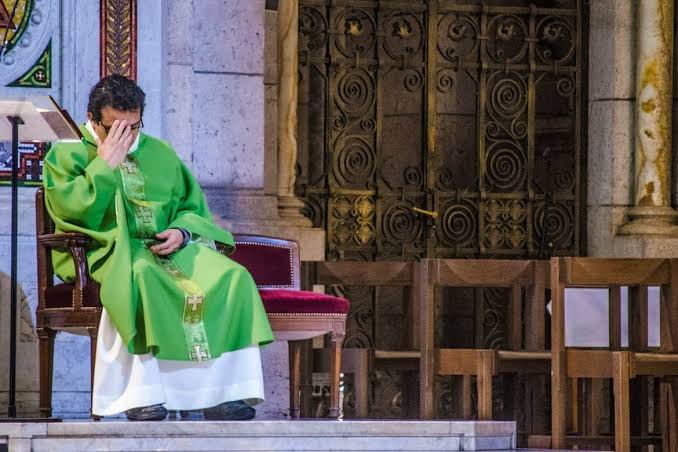
(ZENIT News / Rome, 15.11.2026).- The Catholic Church in the United States is launching a major investigation into why some diocesan priests leave active ministry within a relatively short time of their ordination. Funded by the Knights of Columbus and led by researchers at The Catholic University of America, the project aims to establish whether early departures are becoming more common and, above all, to understand the personal, spiritual and institutional factors behind them.
The concern has been voiced by bishops and other Church leaders, who perceive that more priests may be abandoning the ministry during their first years of service. But the researchers want to move beyond impressions and establish what the figures actually show. “We wanted to find out whether there is any basis for this in the numbers and, if so, what factors might be contributing to it,” said Sara Perla, a university official.
The scale of the undertaking is considerable. The quantitative component will examine the careers of diocesan priests ordained in the United States between 2006 and 2025. According to Jesuit Father Thomas P. Gaunt, executive director of the Center for Applied Research in the Apostolate (CARA) at Georgetown University, approximately 9,000 priests were ordained for U.S. dioceses during those two decades. His team must establish what became of each one.
“We have 9,000 names and we have to find out where each one is today,” Gaunt explained. CARA is compiling anonymized data through a painstaking process that combines publicly available information, diocesan clergy lists and sources such as the Official Catholic Directory. Researchers must distinguish genuine departures from other changes in a priest’s circumstances, including death, medical leave or temporary assignments elsewhere.
Identifying those who have left is only part of the challenge. Contacting them is more difficult, since dioceses are rightly bound by their obligations to respect individual privacy. The research team therefore faces the delicate task of establishing who is willing to discuss an experience that, for some former priests, may remain deeply painful.
That is why the project also includes an extensive qualitative component. Led by sociology professor Brandon Vaidyanathan, director of the university’s Institutional Flourishing Lab, the research team includes data scientist Stephen Cranney, sociologist Maureen Day of Villanova University, University of Virginia sociologist Joseph Davis and Notre Dame doctoral researcher Caitlin Fitzgerald.
Several dozen former diocesan priests have already agreed to participate in interviews lasting between 60 and 90 minutes. The researchers received 61 responses to their call for participants in just one week, a level of interest that exceeded their expectations.
The interviews will explore the entire trajectory of these men’s experiences: their backgrounds and initial sense of vocation, formation and ordination, years in ministry, the emergence of doubts, the decision to leave and their subsequent lives. For this part of the study, participants must have been ordained after 2000 and have left public ministry within ten years of ordination, with the knowledge of their bishop or religious superior. Formal laicization is not required, but priests removed from ministry through canonical proceedings or those who departed without their superior’s knowledge are excluded.
The reasons for leaving, according to Gaunt, are far from uniform. Some men conclude that the priesthood was not their vocation and feel at peace with their decision. Others describe resentment arising from their relationship with a bishop, while some associate their departure with experiences so traumatic that they are unwilling to revisit them. Such accounts suggest that the phenomenon cannot be reduced to a single explanation, whether personal, spiritual or institutional.
Understanding these different experiences is central to the project. Vaidyanathan hopes the findings will help bishops and Church leaders recognize warning signs and respond more effectively before difficulties become irreversible. Equally important, he says, is allowing former priests to describe what happened in their own words rather than viewing their departures solely through institutional statistics.
The researchers also stress that the investigation is not intended to diminish the value of priestly life. Perla argues that examining why some men leave should go hand in hand with greater recognition of those who persevere in their vocation despite its demands. Most Catholics, she observes, want to support their priests, and a clearer understanding of the pressures they face could help identify practical ways to do so.
The findings are expected in autumn 2027. By combining a nationwide examination of ordination records with first-hand testimony, the study seeks to provide the Church with something more useful than speculation: a clearer picture of why some priests struggle to remain in ministry, what might have been done differently, and how the experiences of those who leave can help strengthen the support offered to those who stay.
Thank you for reading our content. If you would like to receive ZENIT’s daily e-mail news, you can subscribe for free through this link.

Publicaciones relacionadas:
 Research Shows That Only 35% of American Catholics Have a Favourable Opinion About Biden
 9 interesting and curious facts you may not have known about U.S. Catholics
 Trump Signs Law Giving Catholic Priests and Other Clergy a Second Chance at Social Security
 New Study Presented to Pope Leo XIV Challenges Stereotypes About Traditional Latin Mass Catholics
