

(ZENIT News / Rome, 08.21.2025).- The pandemic has permanently altered the landscape of religious practice, forcing scholars to confront questions about embodiment, ritual, and the role of technology in communal life. While social scientists have long documented the health and psychological benefits of religious attendance, the rise of digital worship has complicated assumptions that participation can be measured solely by physical presence. A recent study conducted at Duke University contributes to this debate by offering empirical evidence on how online services compare with in-person gatherings, both physiologically and experientially.
The study, published in the «Psychology of Religion and Spirituality«, recruited 43 Christians in North Carolina to participate in two worship services — one physically attended, the other streamed online. Participants wore Fitbit monitors to capture physiological data such as heart rate and caloric expenditure, and were asked to complete surveys assessing subjective states of transcendence, communal identification, and perceived closeness to God.
The results indicate that physical presence remains uniquely powerful. Attendees reported higher levels of emotional elevation, stronger identity alignment with fellow congregants, and greater experiences of transcendence. Physiological markers supported these findings: average heart rates were elevated during in-person worship (84 bpm compared to 79 bpm online), and caloric expenditure was significantly greater. These embodied differences suggest that worship in a shared physical environment engages participants in ways that virtual participation cannot fully replicate.
Importantly, the study does not dismiss online worship. Lead researcher Patty Van Cappellen emphasized that digital liturgies retain measurable benefits, though they diverge from the communal and transcendent dynamics of physical worship. Her caution highlights the need for nuanced evaluation: virtual services should not be reduced to inferior imitations, but neither should they be assumed to carry identical outcomes.
The persistence of online worship after the pandemic underscores the relevance of such findings. Data from the Pew Research Center (2023–24) reveal that approximately 23 percent of Americans report watching religious services online or via television at least once a month, while about one-third attend in person at the same frequency. These patterns illustrate not a wholesale migration from pews to screens, but a hybridization of religious practice that challenges traditional categories of belonging and participation.
Theologically, the findings raise critical questions. Religious traditions have historically embedded worship within the physical gathering of a community, where rituals of presence — singing, standing, kneeling, sharing sacred space — embody doctrinal claims about unity and transcendence. If digital worship attenuates these embodied markers, does it reshape the theological meaning of participation itself? Or will innovations — interactive platforms, more immersive technology, or hybrid liturgies — allow virtual gatherings to cultivate a comparable sense of presence?
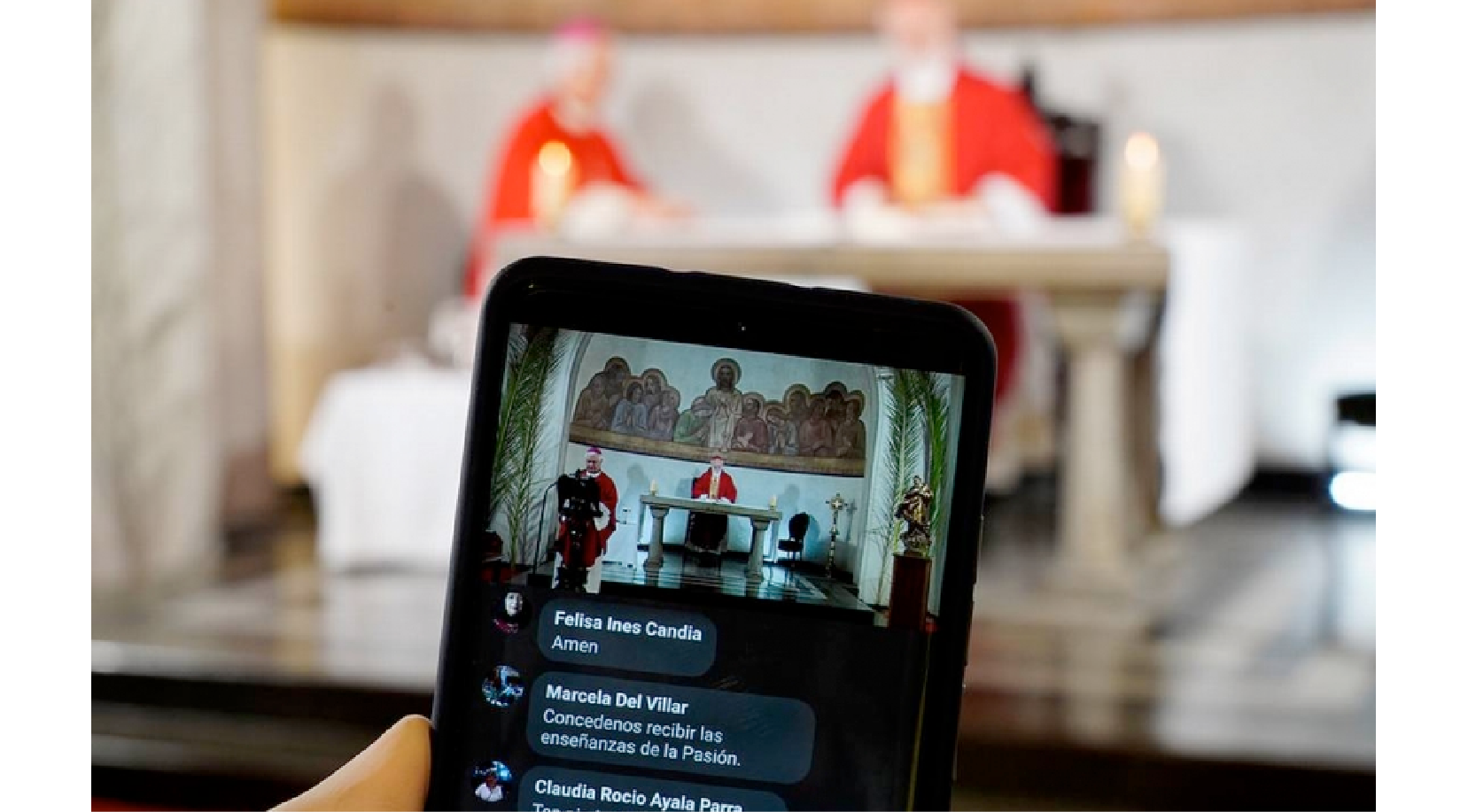
Van Cappellen and her team acknowledge that their study is preliminary. They suggest further research into design features that might enhance digital worship, such as incorporating real-time congregational interaction or camera perspectives that foreground the assembly rather than the presider alone. Such innovations could mitigate some of the limitations of current livestream practices.
Ultimately, the Duke study illustrates both the promise and the constraints of virtual religious life. It confirms that worship is not merely cognitive assent to doctrine but a multisensory, embodied experience shaped by the presence of others. At the same time, it demonstrates the adaptability of religious practice in an era where physical and digital spaces increasingly overlap. For scholars of religion, these findings call for continued examination of how technology mediates sacred experience — not as a replacement for physical assembly, but as a new domain where the dynamics of faith and community are being renegotiated.
Thank you for reading our content. If you would like to receive ZENIT’s daily e-mail news, you can subscribe for free through this link.

Publicaciones relacionadas:
 What Would Happen or What Protocol Would Be Activated on the Death of Benedict XVI?
 20% of the Congressmen of the New U .S. Congress Are Catholics
 Inclusivity and love: What exactly would a welcoming and inclusive Church look like?
 The Ten Countries That Made the Most Financial Contributions to the Pope in 2023
