(ZENIT News – Bitter Winter / Rome, 07.09.2025).- Pope Leo XIV has officially announced the canonization of Blessed Carlo Acutis, a teenager who passed away from leukemia at the age of 15 in 2006. The ceremony is now scheduled for September 7, 2025. Originally, Pope Francis had planned the canonization for April 27, 2025, but the ceremony was postponed due to his death.
The announcement was met with significant enthusiasm in Italy, where Acutis is quite popular. However, a campaign against his canonization has emerged, covered by both domestic and international media. This campaign began in March 2025, initiated by “The Economist,” a magazine that is not particularly sympathetic to the Roman Catholic Church. As is often the case, this new controversy was largely stirred up by Catholic critics, particularly an Italian liberal theologian named Andrea Grillo, and has since been picked up by secular media.
I find the campaign against the canonization of Carlo Acutis disturbing and even a threat to religious liberty. This becomes evident when examining the arguments raised against his canonization.
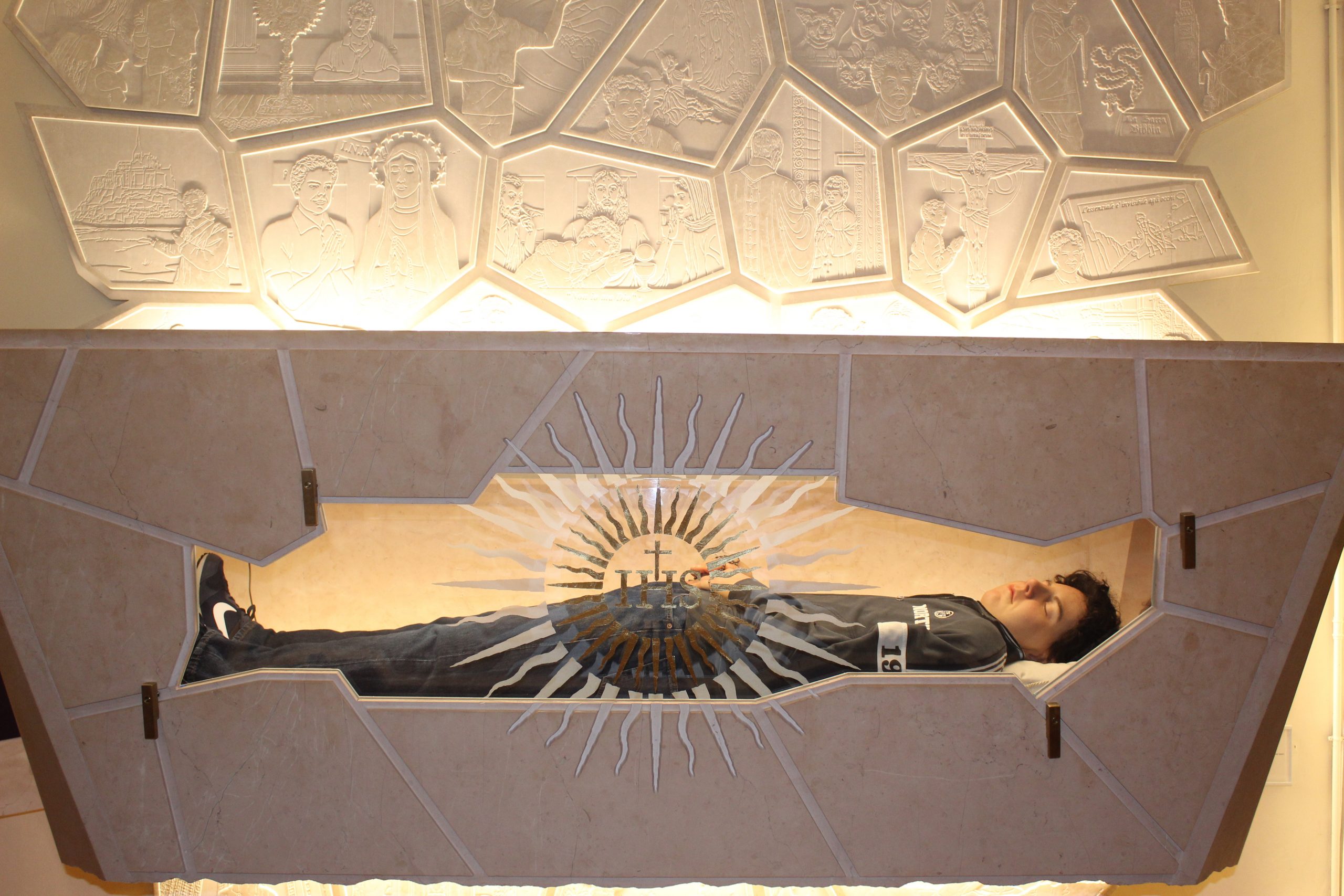
One objection I can partially agree with concerns the display of Acutis’ body after his beatification. His remains were encased in wax for public viewing in Assisi, which some have criticized as in poor taste and akin to a posthumous form of abuse, comparable to sexual abuse. While I believe this is a clear exaggeration, I did find the manner of exhibiting his body slightly unsettling during my visit to his altar in Assisi. However, upon reflection, I can understand the connection to a centuries-old tradition that the Catholic Church maintains for saints, contrasting with the modern societal tendency to conceal death.
There are three main objections to Acutis’ canonization, a process often misunderstood by some international media. The process is serious and akin to a legal trial, where objections to the candidate’s sainthood are carefully evaluated before a decision is reached.
The first objection is that Acutis came from a wealthy background; his parents were affluent, and his grandfather was a millionaire. Critics question what this means in light of Jesus’ admonitions regarding the rich. However, neither Jesus nor Christianity teaches that all wealthy individuals are destined for hell. The critique is directed at those who harbor an unhealthy attachment to their wealth and fail to use it to help the poor—something that Acutis, within the limits of a teenager, sought to do. The Catholic Church has a long history of canonizing figures who were not poor, including kings, queens, and young aristocrats like Aloysius Gonzaga.
The second objection proposes that at the age of 15, Acutis lacked the maturity to achieve sainthood. Some suggest that either the stories surrounding him are untrue or that he was manipulated or “brainwashed” by his family and teachers at Catholic schools. This viewpoint misrepresents the maturity of teenagers. In many countries, young individuals are tried and sentenced as adults for crimes, and they can refuse medical treatments despite being minors. If society recognizes their responsibility as perpetrators of crimes, it should equally acknowledge their merit for virtuous and saintly deeds. In today’s world, a 15-year-old is not merely a child.
The third objection, primarily raised by Catholic liberal groups, may well be the main impetus behind the campaign against his canonization. Acutis was a computer geek who operated a successful blog at a young age, focusing on Marian apparitions and miracles that support Catholic doctrine on transubstantiation. According to Catholic belief, during Mass, the Eucharist—the bread and wine—transforms into the actual body and blood of Jesus. This belief is often viewed symbolically by other Christian denominations, but for the Catholic Church, the Eucharist is not a symbol. Miracles, such as bleeding hosts and wine transforming into blood, are recognized by the Church, although rarely, as signs confirming transubstantiation.
Acutis expressed a traditional form of Catholicism and was a staunch believer in transubstantiation. He recognized that many—even among Catholics—do not accept this doctrine and regard the Eucharist as merely symbolic. To counter this skepticism, he dedicated time to documenting miracles related to transubstantiation and sharing them through his blog.
Ultimately, it is Acutis’ steadfast belief in transubstantiation and miracles that troubles progressive Catholics and secular humanists. The idea that a young man from a distinguished family and a computer prodigy could adhere to these “Medieval” doctrines is seen as unacceptable by many. What they oppose in the canonization process is a “primitive” or “reactionary” religion.
However, they fail to recognize that by publicly affirming his belief in miracles, Acutis was, in fact, an anti-conformist—a rebel with a cause. I am unsure if the crowds of young people visiting his grave or who went to Rome for his (later postponed) canonization share his belief in transubstantiation. Nevertheless, they find Acutis more intriguing and engaging than his liberal Catholic or secular critics. Pope Leo XIV understands this sentiment. Publications like “The Economist” and certain “progressive” Catholic theologians do not.
Thank you for reading our content. If you would like to receive ZENIT’s daily e-mail news, you can subscribe for free through this link.