

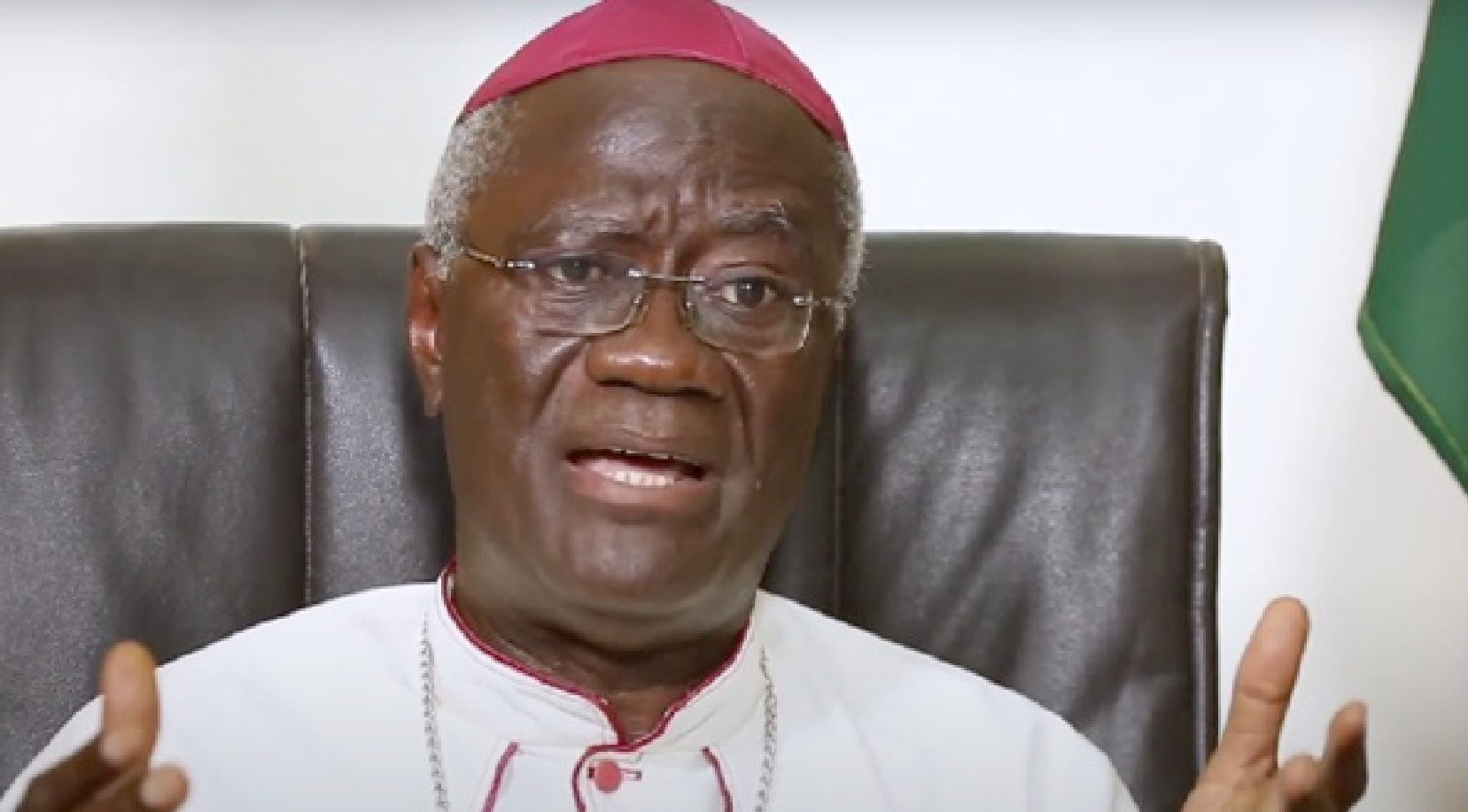
(ZENIT News / Rome, 01.13.2026).- The message that reached Accra from Rome was blunt and unsettling: the archdiocese is considered large enough to fend for itself. Archbishop John Bonaventure Kwofie made that reality public on December 30, 2025, telling priests, religious and lay collaborators that recent requests for financial assistance sent to the Vatican had been rejected on the grounds that Accra no longer qualifies as a needy mission territory.
Speaking during the annual Co-Workers’ Thanksgiving Day at the Holy Spirit Cathedral in Ghana’s capital, Kwofie disclosed that four separate funding applications had been submitted to the Dicastery for Evangelization during the year. None were approved. “Nothing at all,” he said, summarizing Rome’s position. The explanation, as it was conveyed to him, was straightforward: Accra is a “large archdiocese” in a “large city,” and therefore should rely on resources already present on the ground.
For the archbishop, the response demanded not resignation but a cultural shift. He urged local Catholics to tighten their belts, work harder, and deepen what he called a spirit of self-sufficiency. The appeal reflects a broader recalibration underway in parts of the global Church, as traditional funding pipelines from Europe and Rome show signs of strain.
Ghana, a West African nation of roughly 35 million people bordering Côte d’Ivoire, Burkina Faso and Togo, is often cited as a success story of economic growth. The World Bank currently classifies it as a lower-middle-income country. Yet the social picture is uneven. About a quarter of the population lives in poverty, with another quarter hovering just above that threshold. Rural areas are disproportionately affected, while Accra stands out as one of the country’s wealthiest zones, albeit marked by stark income inequality within the city itself.
From Rome’s perspective, these macroeconomic indicators matter. So does scale. The Archdiocese of Accra serves an urban population of about 5 million people. Of these, approximately 400,000 were Catholics as of 2022. That figure, while substantial, masks a longer-term concern: Catholicism is losing ground in Ghana. Census data show that the proportion of Ghanaians identifying as Catholic fell from 15.1 percent in 2000 to 10.1 percent in 2021.
Local bishops often point to urbanization as a decisive factor. Catholics who migrate from rural areas to cities like Accra frequently drift toward other Christian communities, particularly Pentecostal and charismatic churches that emphasize the so-called Prosperity Gospel, linking financial giving to material well-being and personal success.
Despite these challenges, Accra remains under the jurisdiction of the Dicastery for Evangelization, which oversees mission territories worldwide. Its Section for First Evangelization and New Particular Churches—formerly known as the Congregation for the Evangelization of Peoples—plays a central role in appointing bishops, supporting seminaries, coordinating missionary activity and providing financial aid to dioceses deemed unable to sustain themselves.
Kwofie’s experience is not isolated. In July 2023, Bishop Sithembele Sipuka, then president of the Southern African Catholic Bishops’ Conference, warned in a letter that Vatican officials had acknowledged a growing inability to maintain previous levels of financial and material support. The conclusion was sobering: external resources that African churches had long depended on were “close to being depleted,” making self-reliance not an option but a necessity.
The Holy See’s own financial data help explain the tightening. According to its consolidated financial statement for 2024, the Vatican allocated 393.29 million euros—about 460 million dollars—to the Apostolic Mission and the Pontifical Fund. Of that amount, 146.40 million euros (around 171 million dollars) went directly to supporting local churches in difficulty and in specific evangelization contexts. While these figures represent an increase over 2023, when 370.5 million euros were allocated in total and 144.1 million euros earmarked for struggling churches, the demands on those funds continue to grow worldwide.
Against this backdrop, Accra has begun to look inward. On January 2, the archdiocese announced higher fees associated with baptisms, confirmations, weddings and funerals, along with an increase in annual parish membership dues. In a circular letter, Kwofie noted that sacramental fees had not been revised since 2014, and that church contributions had remained unchanged for years despite rising operational costs and expanding pastoral needs.
The adjustments are significant but measured. Fees for baptisms and confirmations will double from 10 to 20 Ghanaian cedis, roughly 94 cents to 1.88 dollars. Annual church dues for adults will rise from 24 to 50 cedis, or from about 2.26 to 4.71 dollars. These changes come as Ghana’s national daily minimum wage has recently increased by 9 percent to 21.77 cedis (approximately 2.06 dollars), and as inflation has shown a steady downward trend.
Kwofie, who has led the archdiocese since 2019, insists that the additional income will allow parishes to respond more effectively not only to spiritual needs but also to social challenges facing Catholics in the capital.
Nowhere is that tension between ambition and limited resources more visible than in the archdiocese’s plan to build a Catholic children’s hospital in Accra. At the groundbreaking ceremony in January 2022, the archbishop announced that the first phase alone would cost 2 million dollars. The project was born from his encounters with families struggling to secure medical treatment for sick children in a city that relies largely on a single major pediatric facility, the Princess Marie Louise Children’s Hospital.
Progress, however, has been slow. In his December address, Kwofie expressed frustration that some priests and parishes were barely aware of the initiative. “People are still asking whether the project is over,” he said, emphasizing that the hospital is not a personal venture but a collective responsibility. “It is not for the bishop or for a few people. It is for everyone.”
The underlying problem, he argued, is perception. From Rome’s vantage point, Accra appears financially stable. On the ground, the reality feels very different. “Rome thinks we are fine,” Kwofie said, “but we are not.”
His words capture a wider dilemma facing the Catholic Church in parts of Africa: how to reconcile growth, urban scale and economic indicators with fragile parish finances, shifting religious loyalties and ambitious social projects. As traditional sources of support recede, the call to self-reliance is becoming less a slogan than a defining test of ecclesial maturity.
Thank you for reading our content. If you would like to receive ZENIT’s daily e-mail news, you can subscribe for free through this link.

Publicaciones relacionadas:
 Cardinal Ouellet Says “The Interpretation and Diffusion of Accusations as Sexual Aggressions Is Defamatory”
 After Misunderstandings, Cardinal Koch and Leader of the German Bishops Meet in Rome
 Vatican approves “Mayan Mass”: it does not change the content of the Mass, but the way of expressing it
 Vatican contradicts German bishops: text for blessing same-sex couples was not approved
