

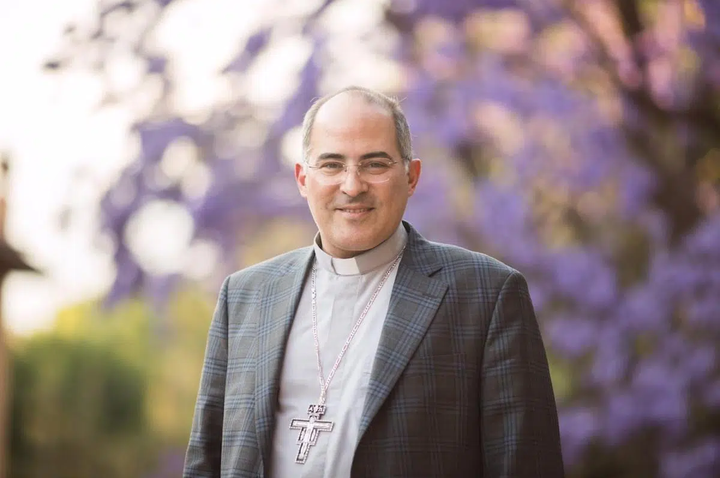
(ZENIT News / Mexico City, 11.04.2026).- During a press conference on October 11, Monsignor Héctor Mario Pérez Villarreal, Auxiliary Bishop of the Archdiocese of Mexico, noted that the commemoration of the 100th anniversary of the religious conflict in Mexico, known as the Cristiada or the Cristero War, is not about celebrating the tragedy, the violence, or the war itself; rather, «we are commemorating the testimony of faith of a great many Mexicans.»
Growing tensions between the Church and the Mexican State emerged in the second half of the 19th century and culminated in an armed uprising in 1926, as Catholics from various parts of the country took up arms against the civil authorities.
The conflict began with the implementation of the anticlerical «Calles Law» on July 31, 1926, which severely restricted public worship and the religious life of Catholics. The conflict lasted until 1929 and resulted in approximately 250,000 deaths. It spread across the central, northern, and southern regions of the country, encompassing half of the national territory.
The measures enacted by President Plutarco Elías Calles sought to limit or suppress the participation of churches in public life. These legislative actions, imposed in several states of the Republic, included requirements such as mandating marriage for ministers of worship, restricting religious services to the interior of church buildings, and prohibiting the wearing of religious habits outside of religious premises.
The armed conflict concluded with an agreement; the rebels honored it by laying down their arms, while the central government continued the killing of Cristeros for several more months.
In a country with an overwhelmingly Catholic majority, anti-religious politicians wielded their power to shackle Catholics and persecute the Church. This stance remained part of Mexican legislation until the final years of the 20th century, and more recent leaders have continued to show disdain for Catholic values.
The book San José Sánchez del Río y Mártires Cristeros («Saint José Sánchez del Río and the Cristero Martyrs»), by Father Luis Manuel Laurean, LC, raises a question regarding that conflict: Did those who killed 14-year-old Saint José Sánchez del Río, a youth who supported the Cristeros, ever repent? The author explains: «They burned the soles of the adolescent’s feet to make him bleed. With his feet skinned and bloodied, they forced him to walk through the streets of his hometown, Sahuayo, in the state of Michoacán.» The young man, who was executed by firing squad in the parish cemetery, was canonized by Pope Benedict XVI in 2005 as a martyr for the faith.
Monsignor Hector Mario Pérez Villarreal, who also serves as Secretary General of the Mexican Episcopal Conference (CEM), stated: “We believe it is very important to gain a thorough understanding of this history, a history that has been erased from Mexico’s history books.” A colloquium was held from October 14 to Friday, October 16, featuring both Mexican and international experts. The event’s purpose was not “to justify any form of violence, but rather to delve into the truth,” because the truth “helps us view reality objectively, free from ideologies, and enables us to live in a freer Mexico.”
The prelate highlighted that «Mexicans — primarily the laity — took a defensive stance, a form of self-defense for their faith, and for their capacity and freedom to express what they believed,» in the face of «a situation where the law was clearly violating one of the fundamental rights: the right to freedom of faith and religious expression.»
He also emphasized that «this was not an attack against the clergy; it was an attack against the religious freedom of an entire people.» Furthermore, this fundamental right «does not need to be granted by the State,» because «universal rights are not granted by the State; they are guaranteed by it.»
Father Juan Carlos Casas García, Director of the Department of Ecclesiastical History at the Pontifical University of Mexico, explained that the Catholic resistance «went beyond an armed uprising»; it was «a peaceful resistance by Catholics who found themselves vulnerable to legislation that was openly oppressive toward the right to religious freedom and the activities of the Catholic Church in our country.» It was the State’s obstinacy and refusal to engage in dialogue that led to military conflict.
Father Juan Carlos Casas noted that one should not adopt «a Manichaean perspective, making moral judgments or classifying the protagonists as ‘good’ or ‘bad,’ as heroes or villains», but rather approach this period with «objectivity and critical clarity.»
It’s common for some Mexican leaders to criticize the excesses committed by the Spanish conquerors against the indigenous people of Mexico, while overlooking the actions of those who governed the country following independence, such as the many extrajudicial killings carried out by the Federal Army against defenseless citizens, including women and children, during the Cristero War, as opposed to legitimate military engagement with the Cristeros.
Father Juan Carlos Casas noted that, «while acknowledging that this is a painful period in our history, it is also a historical episode filled with testimonies of faith and fidelity that we must not forget.»

Publicaciones relacionadas:
 United Kingdom: Prime Minister supports initiative to help persecuted Christians
 Reconstruction of the face of St. Teresa of Jesus: this is what her face looked like according to science
 Archdiocese of Chicago brings alleged fraudsters who allegedly posed as abuse victims to trial
 The Pope’s powerful homily on the Feast of Corpus Christi: may religiosity not be a museum of the past, but a school of faith from which we can draw inspiration even today
