

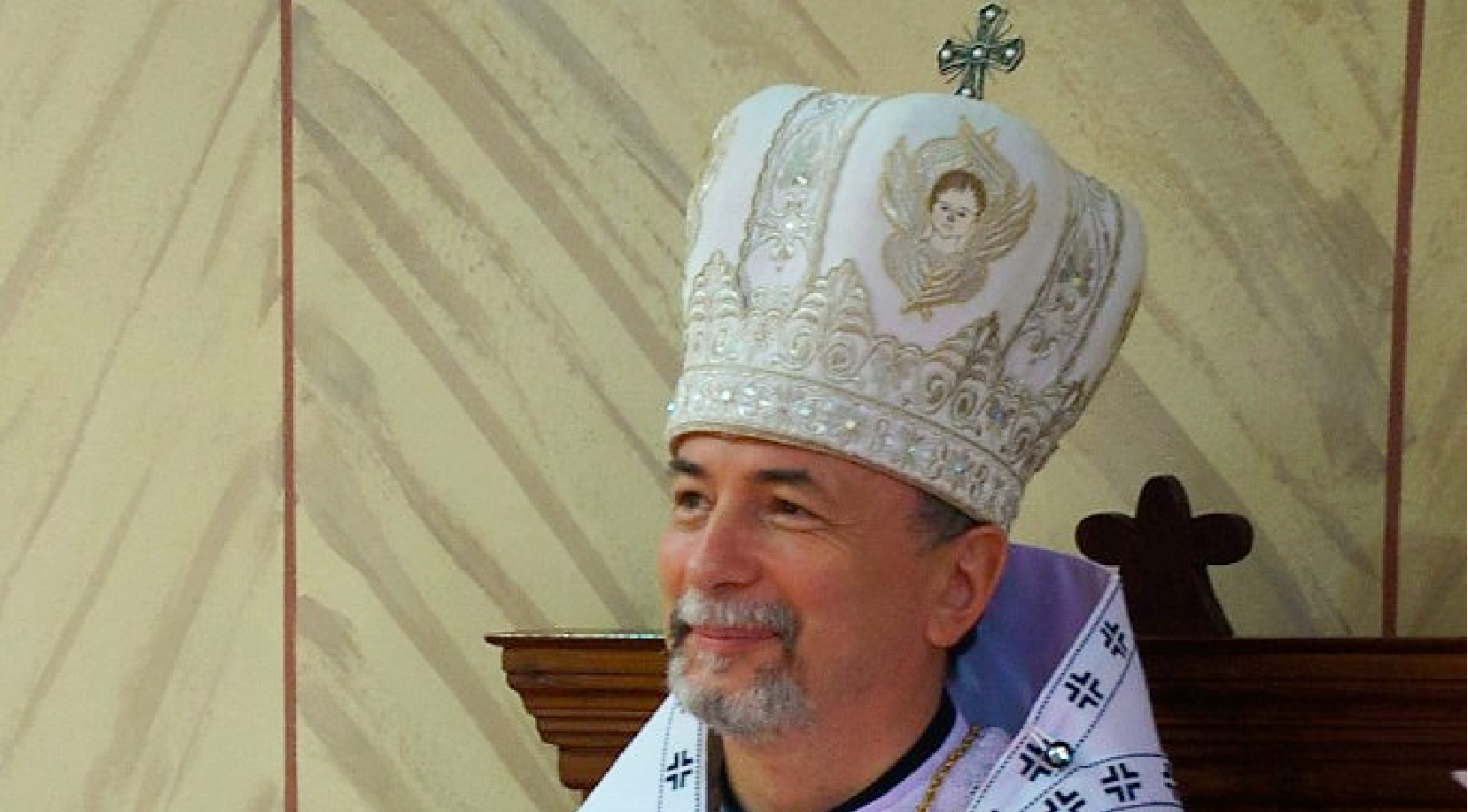
(ZENIT News / Rome, 07.09.2025).- When Pope Francis appointed Archbishop Cyril Vasil’ as his special envoy to India’s largest Eastern Catholic archdiocese in 2023, few believed the mission could succeed. The Siro-Malabar Church, one of the oldest branches of Christianity in the world, had been entrenched in a bitter liturgical dispute for years—one that had fractured not only its clergy but its people, its identity, and its unity.
Two years later, with Pope Leo XIV now at the helm of the Church, that mission has come to a formal end. The Vatican’s Dicastery for the Eastern Churches announced that Archbishop Vasil’ had concluded his role as papal delegate to the Archieparchy of Ernakulam-Angamaly.The new pope extended personal gratitude to the Slovak Jesuit for his tireless efforts in bringing a resolution to what had become a deeply divisive conflict.
The origins of the crisis trace back to a decision taken by the Siro-Malabar Synod in 2021, seeking to standardize the celebration of the Holy Qurbana— the Eucharistic liturgy—across its 35 dioceses. While nearly all archieparchies embraced the unified form, Ernakulam-Angamaly stood alone in defiance. Its clergy and lay faithful overwhelmingly favored a post–Vatican II adaptation in which the priest faces the congregation during the entire liturgy, particularly the Eucharistic Prayer.
The synod’s unified rite, by contrast, called for a partial return to tradition: facing the altar during the consecration, symbolizing a common orientation toward God. What was framed as a modest liturgical compromise soon snowballed into protest, resistance, and at times open confrontation.
Into this storm walked Archbishop Vasil’ in August 2023. Fluent in the traditions of the Eastern Churches and seasoned in ecclesial diplomacy, he was nonetheless met with fierce resistance. His return in December of that year was marked by physical hostility: angry parishioners hurled objects, and demonstrators burned images of Vatican officials. The symbolic rejection was clear.
Pope Francis responded with sanctions and with a personal video message—pleading for reconciliation, urging unity, and reminding the faithful of their shared apostolic heritage. The message was widely circulated, but tensions persisted. Even the installation of a new archbishop, Raphael Thattil, in January 2024—seen as a step toward compromise—did not immediately resolve the stalemate.
It would take another year and a half of quiet negotiations, pastoral visits, and behind-the-scenes dialogue to finally reach an agreement. On June 19, 2025, a new framework was announced: priests in Ernakulam-Angamaly would retain the option to celebrate facing the people, as had become custom since the 1970s, but they would also be required to offer at least one weekly Mass in the unified rite established by the Synod.
This formula—one of dual practice rather than forced conformity—entered into effect on July 3. The compromise marks the end of Archbishop Vasil’s mission, but perhaps more significantly, it signals a turning point for a church that had come perilously close to schism.
The Vatican has chosen its words carefully, praising not victory but dialogue, not discipline but communion. For Pope Leo XIV, this resolution is not merely a success—it is an expression of a deeper vision for the Catholic Church in the 21st century: a Church that honors tradition without weaponizing it, and that fosters unity without flattening diversity.
Yet the work is not done. The wounds inflicted during this long dispute will take time to heal. Trust remains fragile. Some still see the compromise as a defeat, others as a concession too far. But the silence of conflict—so long pierced by protest chants, broken glass, and accusatory sermons—has been replaced, at least for now, by the quieter rhythms of shared prayer.
Thank you for reading our content. If you would like to receive ZENIT’s daily e-mail news, you can subscribe for free through this link.

Publicaciones relacionadas:
 Leader of Ukrainian Catholics visits the Pope and invites him to Ukraine: “his visit would contribute to stop the war”
 These are the first countries Pope Leo would visit according to Cardinal Sturla’s statements
 This is the new Catholic bishop appointed by Pope Leo XIV for London: he is from Africa, enjoys horse riding, and was a soldier
 Pope Leo XIV accepts resignation of bishop whom Pope Francis appointed cardinal, but who “did not want” to receive the appointment
