

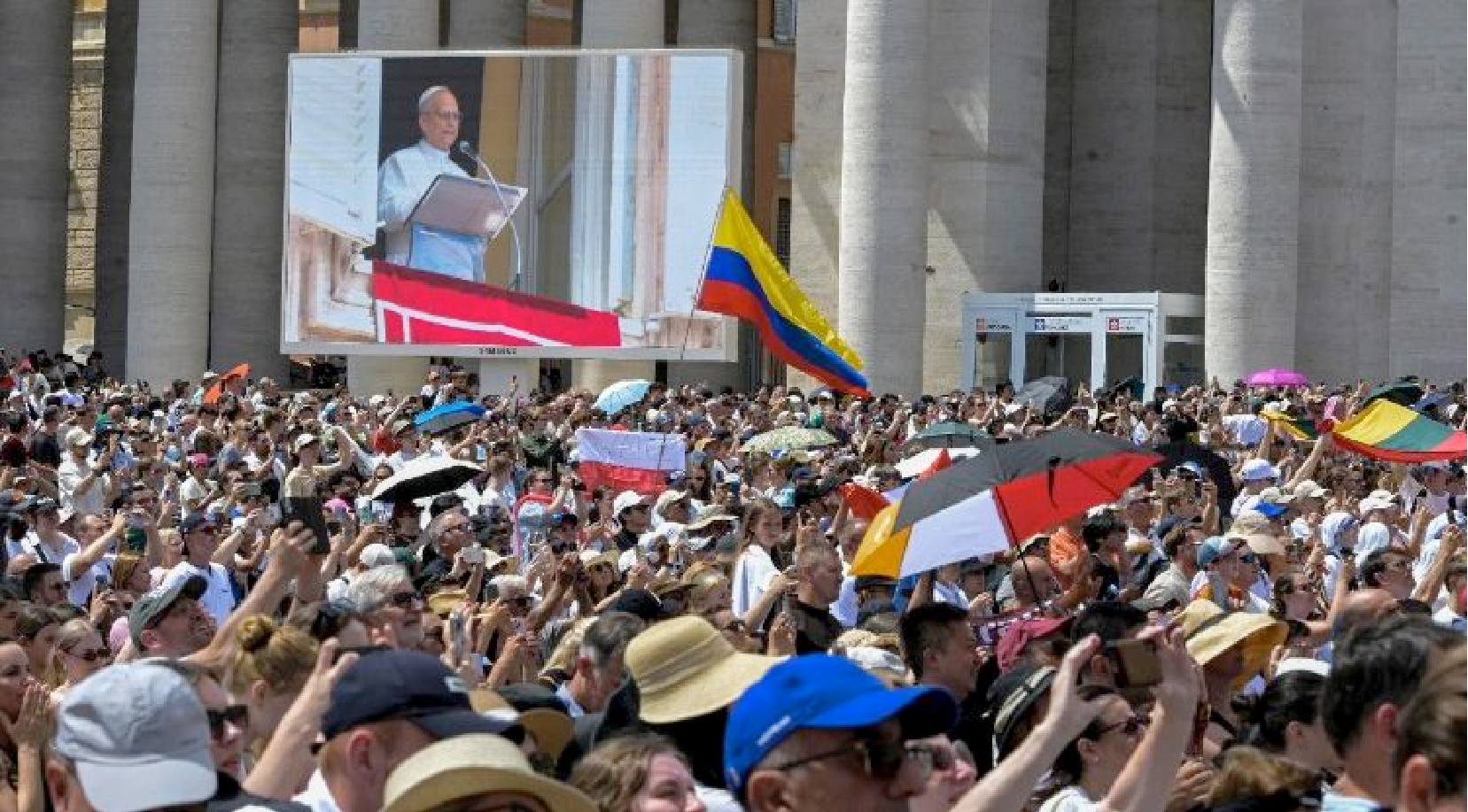
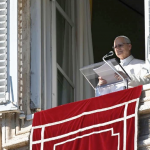
(ZENIT News / Vatican City, 07.27.2025).- After two weeks at the Papal Villa in Castel Gandolfo, Pope Leo XIV once again appeared at the window of the papal apartment overlooking St. Peter’s Square in Vatican City to pray the Angelus with thousands of Catholics gathered in the square. Below is the English translation of the address that preceded the prayer:
***

Dear brothers and sisters, happy Sunday!
Today’s Gospel presents Jesus teaching his disciples the Our Father (cf. 11:1-13). This is the prayer that unites all Christians, in which the Lord invites us to address God as “Abba,” “Father,” with childlike “simplicity, filial trust… boldness, the certainty of being loved” (, 2778).LkCatechism of the Catholic Church
The Catechism of the Catholic Church expresses this very well: “Thus the Lord’s Prayer at the same time that it reveals the Father to us” (ibid., 2783). Indeed, (cf. 8:14-17).reveals us to ourselveshow true this is, for the more we pray with confidence to our heavenly Father, the more we discover that we are beloved children and the more we come to know the greatness of his love(cf. Rm 8,14-17).

Today’s Gospel goes on to describe the characteristics of God’s fatherhood through vivid images: that of a man who gets up in the middle of the night to assist a friend in welcoming an unexpected visitor; and that of a parent who is concerned about giving good things to his children.
These images remind us that God never turns his back on us when we come to him, even if we arrive late to knock at his door, perhaps after mistakes, missed opportunities, failures, or even if, in order to welcome us, he has to “wake up” his children who are sleeping at home (cf. 11:7). Indeed, in the great family of the Church, the Father does not hesitate to make us all participants in each of his loving gestures. The Lord always listens to us when we pray to him. If he sometimes responds in ways or at times that are difficult to understand, it is because he acts with wisdom and providence, which are beyond our understanding.Lk Even in these moments, then, let us not cease to pray — and pray with confidence — for in him we will always find light and strength.

When we recite the Our Father, in addition to celebrating the grace of being children of God, we also express our commitment to responding to this gift by loving one another as brothers and sisters in Christ. Reflecting on this, one of the Fathers of the Church wrote: “We must remember… and know that when we call God ‘our Father’ we ought to behave as children of God” (Saint Cyprian of Carthage, , 11), and another adds: “You cannot call the God of all kindness your Father if you preserve a cruel and inhuman heart; for in this case you no longer have in you the mark of the heavenly Father’s kindness” (Saint John Chrysostom, , 3). We cannot pray to God as “Father” and then be harsh and insensitive towards others. Instead, it is important to let ourselves be transformed by his goodness, his patience, his mercy, so that his face may be reflected in ours as in a mirror.De Dom. orat.De orat. Dom.

Dear brothers and sisters, today’s liturgy invites us, through prayer and charity, to feel loved and to love as God loves us: with openness, discretion, mutual concern, and without deceit. Let us ask Mary to help us respond to this call, so that we may manifest the sweetness of the Father’s face.
Thank you for reading our content. If you would like to receive ZENIT’s daily e-mail news, you can subscribe for free through this link.

Publicaciones relacionadas:
 Why Does Jesus Say the Door of Salvation Is Narrow? Pope Leo XIV Responds
 This is how the Pope explains how we are called to unite our waiting for the Savior with attention to what God is doing in the world
 To enter into Christmas: Pope Leo XIV’s beautiful, short, timely, and appropriate meditation on Saint Joseph
 Ordinary time, our baptism, and the memory of a gift received: a simple reflection by Leo XIV
