

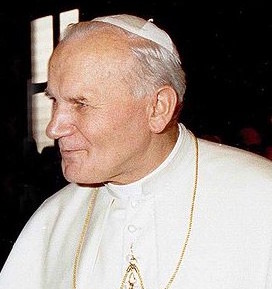
(ZENIT News / Krakow, 12.09.2025).- Public arguments over the legacy of Saint John Paul II have resurfaced in Poland, prompting the country’s Catholic bishops to issue a forceful defense of the late pontiff. Their intervention comes amid what they describe as persistent efforts to diminish the standing of one of Poland’s most influential historical figures.
In a statement released by the Polish Bishops’ Conference, Church leaders warned that criticism of John Paul II has moved beyond legitimate historical inquiry and now risks eroding the Christian foundations that have shaped Poland’s identity for centuries. They stressed that the nation owes an extraordinary debt to the Polish pope, whose long and active pontificate left a distinct mark not only on the Church but also on global political and social developments.
The bishops argued that the moral and spiritual leadership of the former archbishop of Kraków cannot be reduced to isolated controversies. They pointed to his advocacy for the poor, the persecuted, and the marginalized, and to his unwavering support for human dignity during an era of deep ideological tension. According to the statement, it required a “certain ill will” to overlook the good generated by his service and the changes he helped initiate in Poland and well beyond.
Scrutiny of John Paul II has become increasingly visible in digital spaces, where detractors highlight his conservative positions on moral issues and revisit allegations that he did not adequately confront clerical sexual abuse. These disputes have intensified over the past five years, coinciding with shifts in Poland’s political landscape. The current liberal government under Prime Minister Donald Tusk has reduced or withdrawn funding from several initiatives linked to John Paul II, including a planned museum in Torun dedicated to memory and identity.
Against this backdrop, Church leaders are concerned that the late pope, who played a prominent role in mobilizing spiritual resistance against communist rule, is being presented to younger generations through a distorted and incomplete narrative. Archbishop Wojciech Polak, the Primate of Poland, cautioned during the country’s annual Papal Day observance that contemporary critiques often isolate fragments of the pope’s teaching, stripping them from the historical context of the Cold War and the societal challenges of the late 20th century. Such an approach, he said, produces an image of John Paul II that bears little resemblance to the figure millions once knew.
Beyond his pivotal role in the collapse of communism and the reawakening of civic freedom across Eastern Europe, John Paul II reshaped global Catholic outreach. He appointed hundreds of bishops and cardinals, canonized an unprecedented number of saints, authored major doctrinal documents, and traveled extensively in an effort to strengthen ties between the Holy See and local churches worldwide.
The bishops’ statement underscores their belief that these achievements form an inseparable part of the historical ledger. As the nation navigates new cultural and political dynamics, Church leaders insist that reassessing the past need not require dismantling the memory of a figure whose impact reached far beyond Poland’s borders.
Thank you for reading our content. If you would like to receive ZENIT’s daily e-mail news, you can subscribe for free through this link.

