

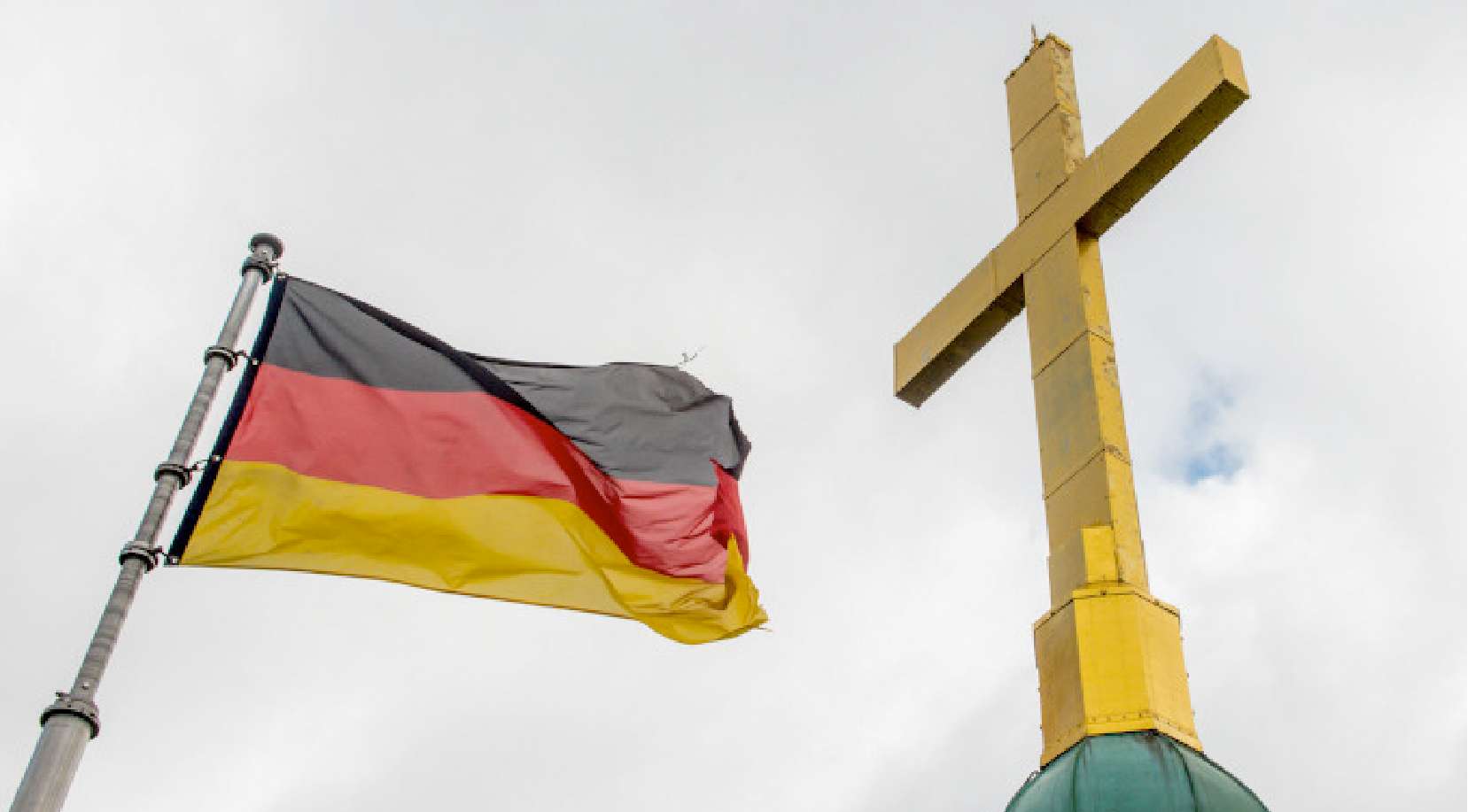
(ZENIT News / Rome, 01.06.2026).- Germany’s religious landscape is often described through the lens of decline, but a closer look at the numbers suggests a far more complex and, in some respects, counterintuitive picture. A new representative study on Christian life in Germany reveals not only continued erosion in formal church membership, but also measurable signs of openness, especially among younger generations and even among those outside Christianity.
The survey, conducted by the INSA polling institute, shows that about 45 percent of Germans still formally belong to a Christian church, while 73 percent say they are baptized. This gap means there are roughly 50 percent more baptized Christians than registered church members, a discrepancy that highlights how cultural and sacramental identity increasingly diverges from institutional affiliation.
Within this shrinking institutional base, Roman Catholics account for 23.7 percent of the population, slightly more than the 21.5 percent belonging to Germany’s regional Protestant churches. Yet when respondents were asked about their broader Christian identity, the balance shifted: 36 percent described themselves as Protestant Christians, compared with 31 percent who identified as Catholic. Among younger generations, however, Catholics form the larger group, a demographic detail that complicates assumptions about the future trajectory of both traditions.
Perhaps the most striking figures concern those outside the churches. Among Germans who do not currently belong to a Christian church, 8 percent say they could imagine joining or rejoining one. That share doubles among young adults aged 18 to 29, reaching 16 percent, or roughly one in six. Even among Muslims, 14 percent said they could envision joining a Christian church, a result that surprised researchers given prevailing narratives about religious boundaries.
These findings were presented on 5 January in Rome by INSA director Hermann Binkert during the annual pilgrimage organized by the Catholic initiative Neuer Anfang and the newspaper Die Tagespost. The study was commissioned jointly by Die Tagespost, Neuer Anfang, and the Protestant news agency Idea, and its results were discussed in a roundtable involving journalists and analysts from both Catholic and Protestant backgrounds. According to organizers, the data will also be shared with Pope Leo XIV in the coming days.
The numbers also underscore internal pressures facing Germany’s churches. Of those who currently belong to the Roman Catholic Church, regional Protestant churches, or free churches, 22 percent say they intend to leave within the next two years. Among Catholics, that figure rises to nearly one in four. The inclination to leave is particularly pronounced among younger respondents, reinforcing long-term concerns about generational continuity.
Belief itself shows sharp contrasts across age groups. Overall, 42 percent of Germans say they believe in God, while 45 percent say they do not. Among those under 30, belief rises to 53 percent, and among those aged 30 to 39 it stands at 46 percent. After age 40, belief declines significantly, ranging between 33 and 40 percent depending on the cohort. Identification and belief do not always align: 44 percent of Germans identify as Christian, yet almost one in five of them, 18 percent, say they do not believe in God.
Commitment within church membership also varies regionally. Among Catholics, Protestants, and free church members, 47 percent describe themselves as devout Christians. That share is higher in eastern Germany, at 54 percent, than in the west, where it stands at 46 percent. Patterns of witness follow a similar divide. Of those who see themselves as practicing Christians, 48 percent say they speak about their faith with non-Christians. In eastern Germany, this rises to 65 percent, compared with 46 percent in the west.
The survey also explored how Germans define Christianity. Nearly two-thirds of respondents, 64 percent, mentioned at least one defining aspect from a list of eight. Love of God and neighbor topped the list at 28 percent. Among those over 70, the most frequently cited defining feature was guidance by the Ten Commandments, mentioned by 36 percent. Younger adults offered different emphases: among those aged 18 to 29, one in four identified Jesus Christ as true God and true man as central to Christianity, a higher share than in any other age group.
Personal religious practice remains significant for many believers. Almost half, 48 percent, of those who believe in God say they pray regularly, and among regular prayer practitioners an overwhelming 84 percent report having experienced the effectiveness of prayer in their lives.
Attitudes toward ecclesial reform are far less settled. Only 16 percent of respondents consider the Catholic Church’s Synodal Path in Germany to be the right course, while 19 percent see it as wrong. A full 65 percent either had never heard of it, accounting for 39 percent, or said they could not or did not want to answer, making up another 26 percent. Even among Catholics, support remains limited: just 21 percent describe the Synodal Path as correct.
Digital engagement adds another layer to the picture. An additional survey commissioned by Die Tagespost found that nearly one in four Germans has searched for religious content online or on social media at least once. Among 18- to 29-year-olds, this jumps dramatically to 61 percent. Such online religious exploration is particularly common among Muslims, suggesting that digital spaces have become a key arena for religious curiosity and encounter.
Despite institutional challenges, broad cultural support for Christianity persists. More than half of Germans, 55 percent, say they want Christianity to remain in the country. Nearly two-thirds, 64 percent, want Christian churches to offer spiritual orientation or exert political and social influence. Even the Christian message of Christmas continues to matter to almost half of the population, with 47 percent saying it still plays an important role for them.
Taken together, the figures reveal a Germany marked less by simple secularization than by fragmentation, tension, and unexpected openness. Decline and renewal coexist in the data, often within the same age groups. The churches may be losing members, but the numbers suggest that belief, curiosity, and even the possibility of return remain very much part of the national conversation.
Thank you for reading our content. If you would like to receive ZENIT’s daily e-mail news, you can subscribe for free through this link.

Publicaciones relacionadas:
 The Future of the Catholic Church in the United States Passes Through the Hispanic Community
 Ireland: adult baptisms on the rise, a hopeful sign of a renewing church
 Mass Attendance Boom: The Case of the US Diocese of Bridgeport
 Pilgrimage to the Christ the King Monument in Mexico’s Center Breaks Participation Record with at Least 60,000 Young People.
