

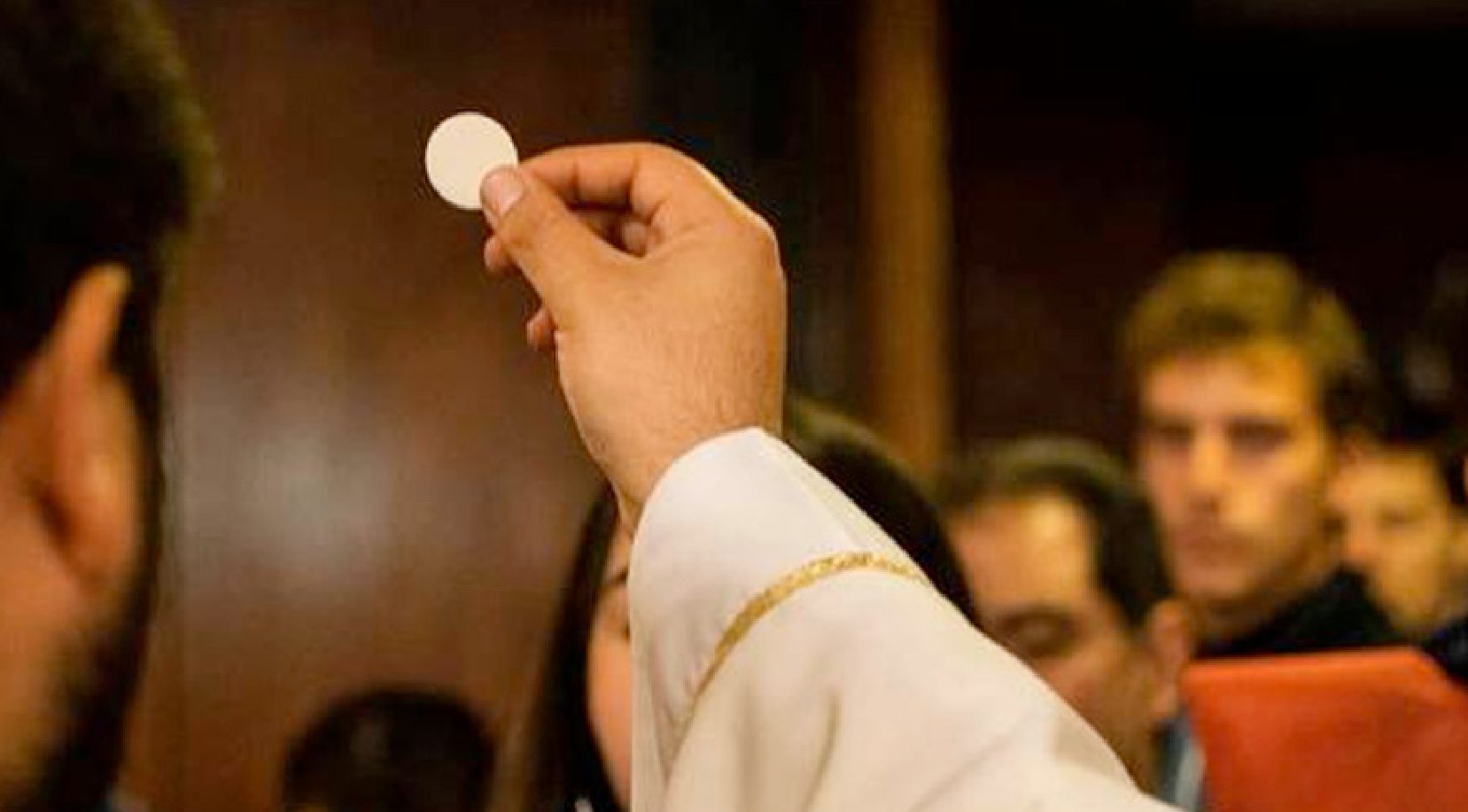
(ZENIT News / Charlotte, 01.07.2026).- In an unprecedented challenge to diocesan authority, 31 priests from the Diocese of Charlotte—approximately one-quarter of the diocesan clergy—have formally submitted questions, or dubia, to the Vatican regarding Bishop Michael Martin’s recent liturgical directives. Two-thirds of the petitioners are pastors, representing parishes across the diocese. The submission, delivered to the Dicastery for Legislative Texts on 5 January 2026, reflects deep concern over restrictions on traditional liturgical practices, including the use of altar railings and kneelers during the distribution of Holy Communion.
The controversy stems from Bishop Martin’s pastoral letter of 17 December 2025, which instructed that, effective 16 January 2026, “no altar railings, kneelers, or similar aids shall be used for the reception of Communion in public celebrations,” and directed the removal of temporary or mobile devices that facilitate kneeling. These measures follow a leaked draft from the summer of 2025 that further criticized Latin usage, priestly prayers before and after Mass, ornate vestments, and traditional gestures of reverence toward the sacred vessels.
The dubia submitted to the Vatican asks pointed questions about episcopal authority and pastoral discretion: Can a diocesan bishop prohibit the construction of altar railings or remove those already in use? May a bishop forbid kneelers for those who voluntarily wish to receive Communion on their knees, despite the explicit permission in the General Instruction of the Roman Missal (GIRM)? Can a bishop restrict vestments, liturgical prayers, gestures, or musical elements that have historically been part of the Mass, including those from the pre-Vatican II era, when neither universal Church law nor GIRM forbids them?
Clergy and lay faithful alike have voiced concern that the restrictions will disproportionately affect elderly or physically impaired parishioners who rely on kneelers to receive the Eucharist with reverence. Liturgist Dr. Peter Kwasniewski has argued that even under the current Novus Ordo, there is “no basis for a bishop to oppose the use or construction of altar railings,” emphasizing their theological and historical grounding. A 2025 study by Dr. Natalie Lindemann further confirmed that traditional liturgical practices, including the posture adopted for Communion, correlate with stronger belief in the Real Presence of Christ in the Eucharist. Lindemann recommends reinstating altar railings and offering kneelers to foster this devotion.
But liturgical concerns are only part of a broader debate under Bishop Martin’s leadership. His approach to vocations has sparked controversy as well. The Diocese of Charlotte has long prided itself on a thriving seminarian program, which over the past decade produced dozens of priests who were nurtured in devout households, educated at home or in local Catholic schools, and formed through exposure to reverent liturgies. Under previous leadership, the seminary minor in Belmont served as an incubator for orthodox, motivated clergy.
Now, Martin has announced what has been described by some as a punitive “pastoral year,” which delays ordination by one year and requires seminarians to work as lay teachers in diocesan schools. During this period, after completing their philosophy degree at Belmont Abbey College and before beginning a theology master’s program, seminarians will live as laymen, pay rent, and receive a first-year teacher’s salary. They will forfeit clerical dress and direct sacramental engagement for classroom duties, often teaching religion to high school students without completing their theological formation. Critics argue this undermines the primary purpose of seminary training: to prepare men for the priesthood, not to provide workforce experience.
Fr. John Eckert, the new director of vocations, defended the policy in the diocesan newspaper, suggesting that immersion in lay realities fosters “closeness” to the faithful. Detractors counter that the priesthood’s essence is not to mirror ordinary life but to embody the extraordinary, serving as Alter Christus for the community. By equating practical experience with spiritual formation, critics warn, the diocese risks discouraging young men from responding fully to their vocational calling.
The combination of liturgical restrictions and seminarians’ delayed ordinations has left many questioning whether the current diocesan leadership is undermining both reverence and vocations. Longstanding programs that cultivated orthodoxy, devotion, and the sacramental life are now under strain. As one commentator observed, the diocese’s previous success in generating vocations reflected a fertile spiritual ecology—an ecosystem that required reverence, exposure to the sacraments, and supportive formation. Attempts to “modernize” or control these pathways risk eroding both faith and commitment.
For the 31 priests who signed the dubia, the questions are not merely technical—they touch on the heart of Catholic worship and priestly identity. “The altar railings, kneelers, vestments, and gestures of reverence are not optional niceties; they are embodiments of the Church’s theology and devotion,” the dubia notes. “Decisions that compromise these elements may have lasting consequences for the faith of the people and the integrity of the priesthood.”
The Vatican’s response will be closely watched, not only in Charlotte but across dioceses in the United States.
Thank you for reading our content. If you would like to receive ZENIT’s daily e-mail news, you can subscribe for free through this link.

Publicaciones relacionadas:
 Municipal government buys house where Pope Leo XIV grew up: unanimous decision
 Laywoman Appointed Chancellor of Mexico City Archdiocese in Historic First
 Opus Dei Denies Accusation of «Trafficking» and Considers It Necessary to Grant the Accused Individuals the Right to Give Their Version of the Facts
 Inspiring: More Than 400 Iraqi Children Make Their First Communion
