

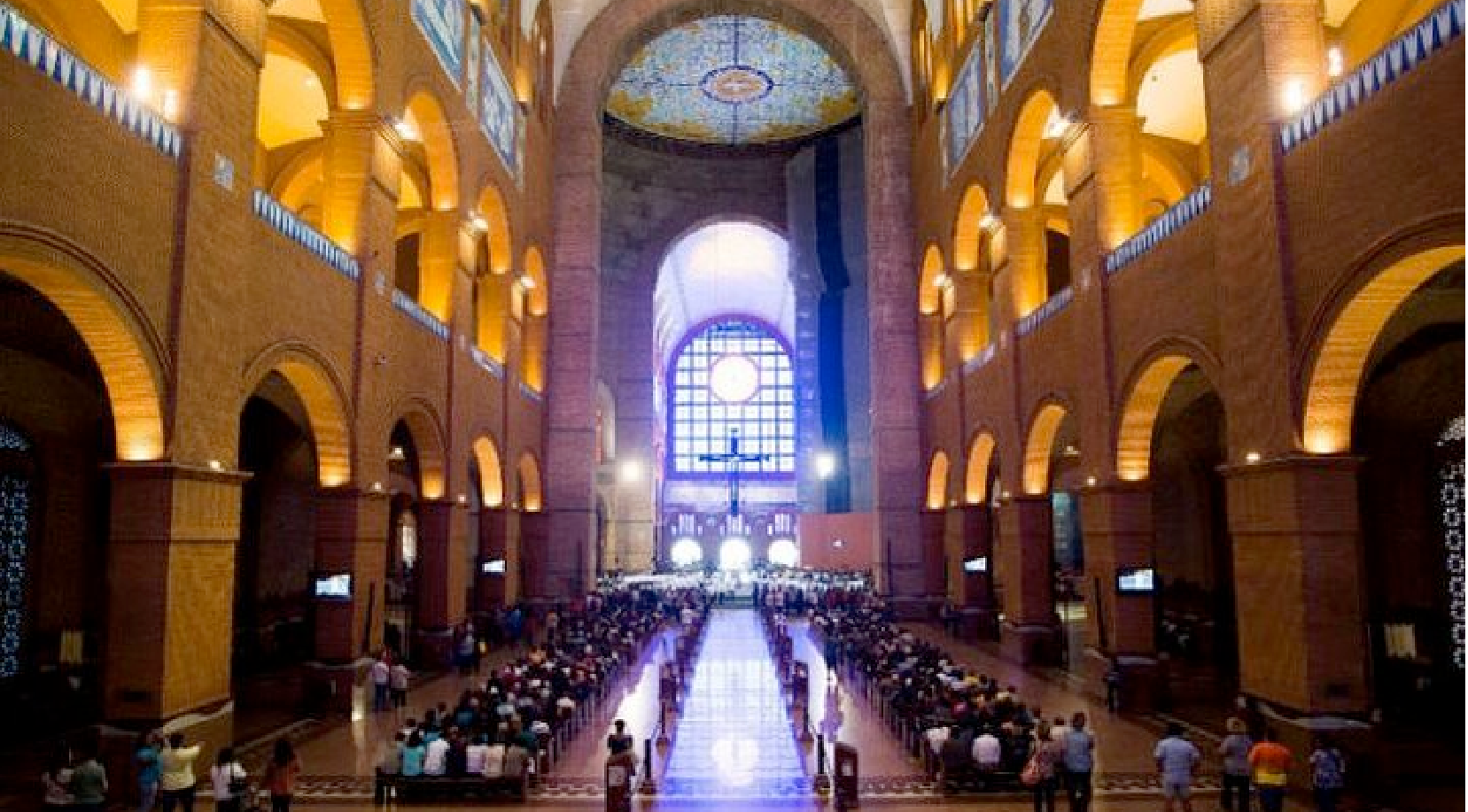
(ZENIT News / Aparecida, 01.09.2026).- The numbers alone tell a story of scale, momentum, and renewed devotion. Over the course of 2025, the National Shrine of Our Lady of Aparecida, in the interior of São Paulo state, welcomed 10,486,118 pilgrims, according to statistics released in the first week of January 2026. It was not merely a return to pre-pandemic patterns, but a decisive leap forward: a 15 percent increase compared with 2024, when 9,057,885 faithful made the journey to Brazil’s principal Marian sanctuary.
The flow of pilgrims was not evenly distributed across the year. Sixty percent of all visits took place during the second half of 2025, confirming a long-standing rhythm in Aparecida’s devotional calendar. The final quarter of the year, traditionally anchored by the feast of the nation’s patroness, once again proved decisive. In those final months alone, more than 3.5 million pilgrims arrived at the Basilica, accounting for 33 percent of the entire annual total.
Beyond raw attendance, the 2025 figures reveal how the profile of pilgrimage itself is changing. One of the most striking shifts concerns transportation. Compared with 2019, the last full year before the COVID-19 pandemic, the number of passenger vehicles using the Basilica’s parking facilities increased by 17 percent. Over the same period, tourist buses declined by 22 percent, signaling a move away from large, organized groups toward smaller, more personal forms of travel.
That trend was unmistakable throughout 2025. Cars carrying up to five passengers accounted for 90 percent of all vehicles parked at the Shrine, while buses and vans together represented just 4 percent. Shrine officials interpret this as a post-pandemic preference for family-based or small-group pilgrimages, a pattern that reshapes not only logistics but also the lived experience of devotion.
Time, as well as transport, remains a decisive factor. As in previous years, pilgrims overwhelmingly favored weekends, public holidays, and the days immediately following them. In 2025, 81 percent of visitors chose to travel to Aparecida on Saturdays, Sundays, or other non-working days in the civil calendar, reinforcing the sanctuary’s role as a focal point of popular religiosity closely tied to everyday rhythms of work and rest.
The spiritual intensity of the year was amplified by the Jubilee of Hope, proclaimed by Pope Francis in 2024 and celebrated throughout 2025. Its impact was felt not only in overall attendance, but also in sacramental life. Confessions increased by 84 percent compared with the previous year, while participation in Holy Communion during Masses rose by 27 percent. For shrine authorities, these figures suggest that pilgrimage was accompanied by a renewed desire for reconciliation and Eucharistic life.
The liturgical calendar offers further insight into the year’s devotional peaks. October 12, the feast day of Our Lady of Aparecida, stood out as the single busiest day of 2025, drawing 152,000 pilgrims. Yet the celebration extended well beyond one date. From October 3 to October 11, during the traditional Novena leading up to the feast, an additional 342,000 faithful took part. Together, these moments brought 494,000 pilgrims to the Shrine in honor of the Queen and Patroness of Brazil.
Major Christian feasts outside October also attracted significant crowds. Holy Week, from April 13 to April 20, saw 257,000 pilgrims gather to commemorate the Passion, Death, and Resurrection of Christ. Later in the year, between December 21 and December 27, the celebration of the Nativity of Jesus drew 314,000 visitors to the Basilica.
Taken as a whole, the 2025 data portray Aparecida not simply as a destination, but as a living barometer of Brazilian Catholic life. Growth of more than ten million pilgrims, a 15 percent annual increase, shifting travel habits, heightened sacramental participation, and nearly half a million faithful concentrated around the October festivities all point to a sanctuary that continues to adapt while remaining firmly rooted in popular devotion. In Aparecida, the path of pilgrimage is evolving, but the destination remains as compelling as ever.
Thank you for reading our content. If you would like to receive ZENIT’s daily e-mail news, you can subscribe for free through this link.

Publicaciones relacionadas:
 Third Vatican Pronouncement on Apparitions: Negative for “Our Lady of All Nations”
 Vatican Approves Marian Apparitions in France
 This is the largest statue of the Virgin Mary in the world, which is in Argentina
 Church proposes to French government recognition of candlelight procession as intangible cultural heritage of the country
