

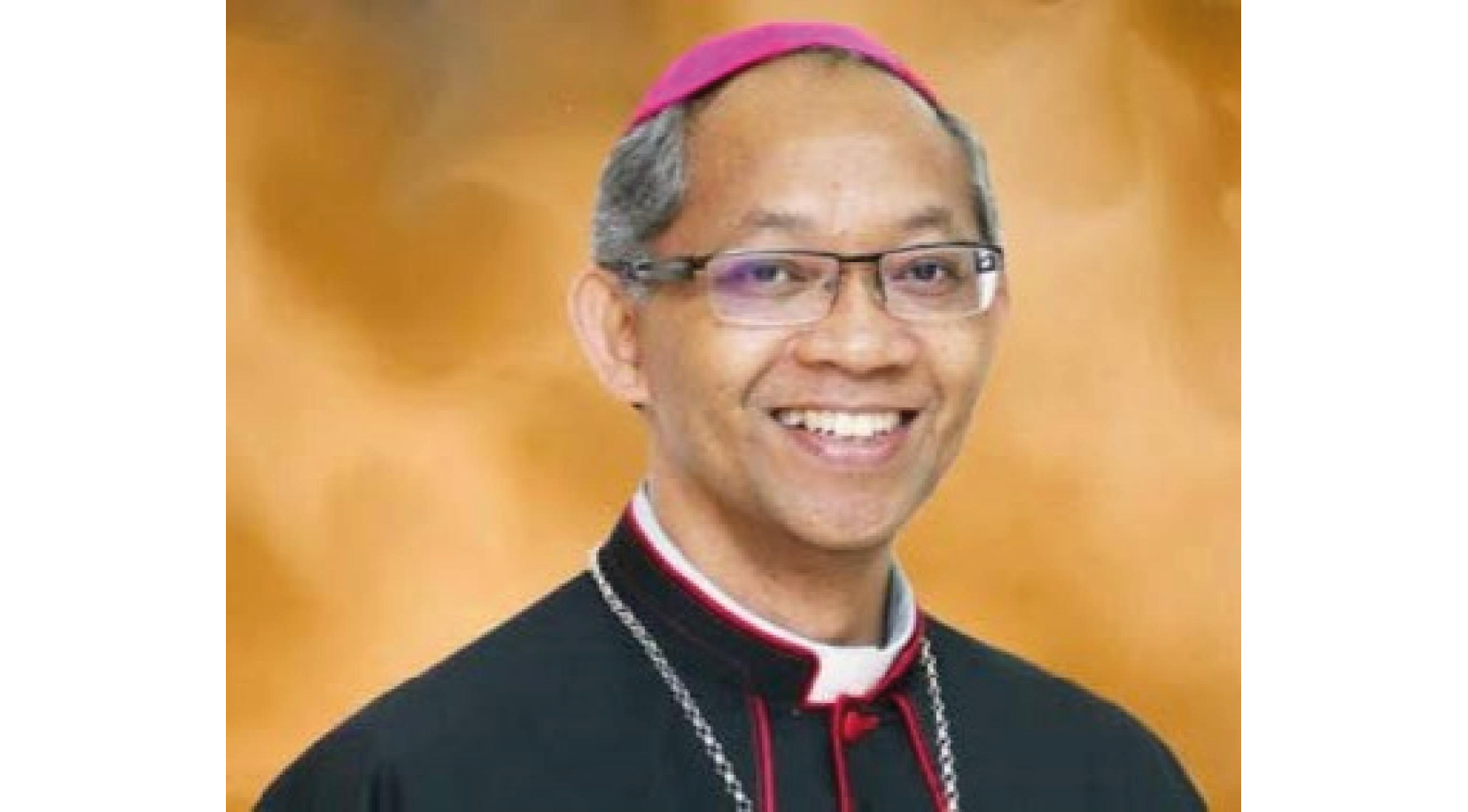
(ZENIT News / Rome, 01.20.2026).- On Monday, 19 January 2026, the Vatican quietly reshaped the immediate future of the Diocese of Bogor, in Indonesia, by accepting the resignation of its bishop, Monsignor Paskalis Bruno Syukur, O.F.M., and placing the local Church under temporary governance. Pope Leo appointed Monsignor Christophorus Tri Harsono, Bishop of Purwokerto, as Apostolic Administrator sede vacante et ad nutum Sanctae Sedis, entrusting him with the diocese while Rome determines its next move.
The decision places Bogor in what canon law defines as a sede vacante, a period in which a diocese is without a residential bishop. In such cases, the Holy See may appoint an Apostolic Administrator to guarantee continuity in pastoral leadership, financial administration, and ecclesial stability. Unlike an elected diocesan administrator, an Apostolic Administrator acts directly on behalf of the Pope and remains in office at the discretion of the Holy See, a sign that Rome considers the situation to require particular oversight.
The resignation of Bishop Syukur does not come out of nowhere. It is the latest chapter in a sequence of events that has raised questions both in Indonesia and beyond. On 6 October 2024, at the conclusion of the Angelus, Pope Francis publicly announced Syukur among the bishops to be created cardinals at the consistory scheduled for December of that year. The announcement was striking in itself: Bogor is not traditionally associated with the College of Cardinals, and the choice was widely interpreted as a sign of papal esteem.
Yet only weeks later, on 22 October 2024, the Vatican Press Office released an unexpected communiqué. Bishop Syukur had asked not to be made a cardinal, explaining that he wished to “grow further in priestly life and in service to the Church and the People of God.” The Holy See accepted the request. The episode was unprecedented in recent history and immediately sparked debate about the process by which cardinalatial nominations are made, particularly the practice of announcing names without prior consultation or pastoral vetting.
On 19 January 2026, the same day his resignation was made public by the Vatican, Syukur addressed his diocese at noon, Rome time. He turned to the words of Saint Paul in the Second Letter to Timothy: “I have fought the good fight, I have finished the race, I have kept the faith.” He framed his departure not as a defeat, but as obedience to what he described as a providential design unfolding even through administrative decisions. He spoke of an “interior joy” and of remaining faithful, “with firmness,” to the promise of obedience he had made to the Holy See.
What is particularly notable is that Syukur is only 63 years old. Canon law requires bishops to submit their resignation at 75; stepping aside more than a decade earlier is highly unusual unless prompted by serious health issues or grave pastoral circumstances. In this case, according to available information, the initiative came from Rome itself. The Franciscan bishop was asked by the Holy See to take a step back to allow for a new phase in the leadership of the diocese.
Syukur thus joins a growing list of bishops appointed in the early years of Pope Francis’s pontificate who have left office prematurely, often under complex and delicate conditions. His case is further complicated by the public renunciation of the cardinalate, an act that remains exceptional and that continues to cast a long shadow over his episcopal tenure.
Appointed Bishop of Bogor on 21 November 2013, Monsignor Syukur led the diocese for more than twelve years. Beyond his local responsibilities, he also held significant roles within the Indonesian Bishops’ Conference, contributing to national ecclesial coordination in a country where Catholics are a small but influential minority.
The appointment of Monsignor Christophorus Tri Harsono as Apostolic Administrator is intended to steady the situation. As Bishop of Purwokerto, he brings experience in diocesan governance and familiarity with the Indonesian ecclesial context. His mandate is not to introduce sweeping reforms, but to preserve balance, ensure orderly administration, and accompany the diocese through a sensitive transition.
Thank you for reading our content. If you would like to receive ZENIT’s daily e-mail news, you can subscribe for free through this link.

