

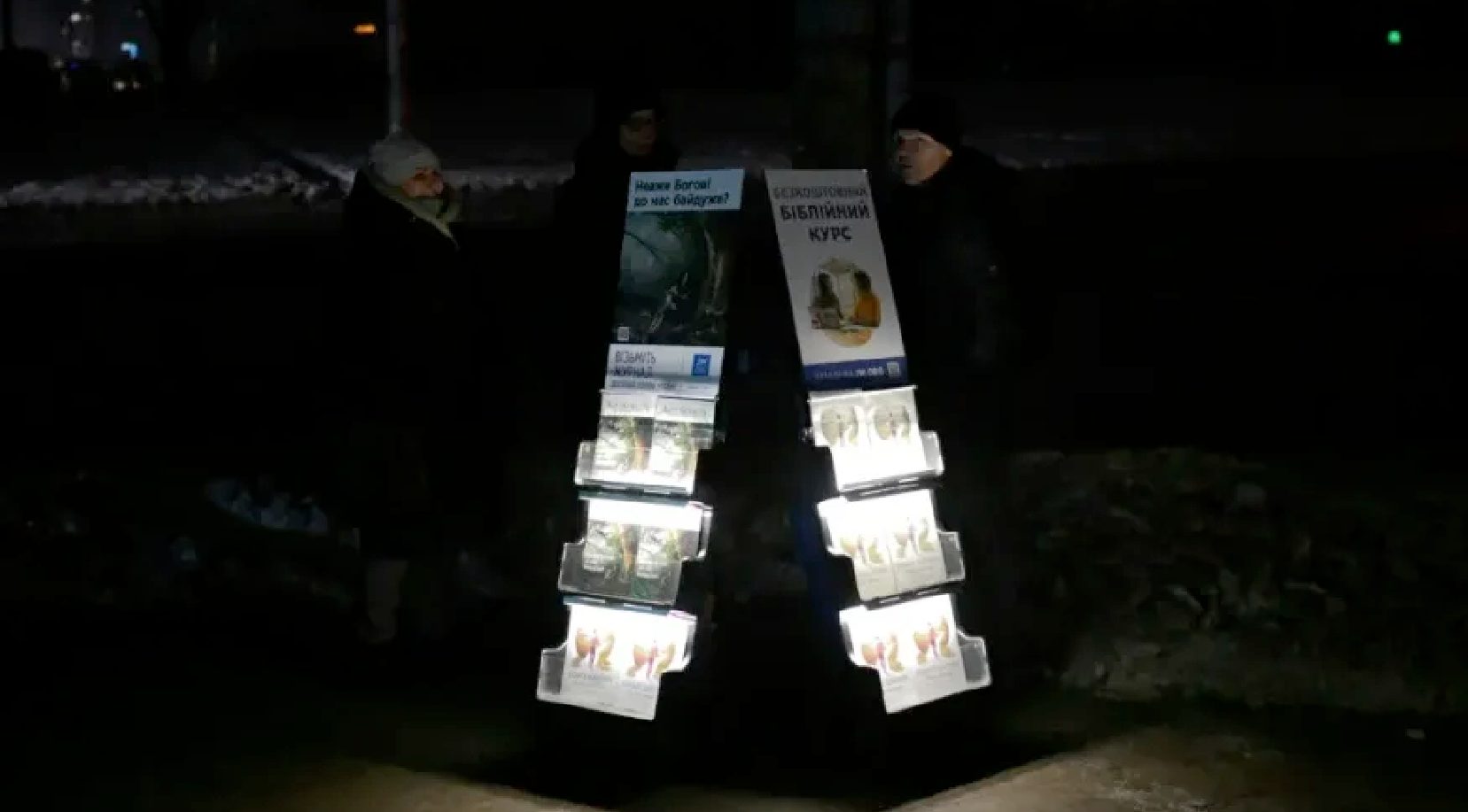
(ZENIT News / Madrid, 04.24.2026).- A recent decision by the Provincial Court of Madrid upheld the right to describe Jehovah’s Witnesses as a “destructive sect” within the framework of public discourse. At the same time, it affirmed that an association formed by former members may legitimately define itself as representing “victims.” The judgment emerged from a legal dispute initiated by Jehovah’s Witnesses, who had filed a lawsuit for the protection of honor against the Spanish Association of Victims of Jehovah’s Witnesses.
The court’s reasoning is notable not so much for endorsing a doctrinal judgment about a religious group, but for clarifying the legal scope of expression in matters of public interest. According to the ruling, characterizations such as “destructive sect,” however offensive they may appear, fall within the protection of free speech when they are grounded in testimonies and contribute to a broader social debate. The judges emphasized that numerous individuals claim to have suffered harm as a result of their experience within the religious community, and that preventing them from using such language would amount to unjustified censorship.
This distinction is crucial. The court did not declare the group to be a “destructive sect” as a matter of legal fact. Rather, it recognized that this description can be used as a value judgment supported by personal accounts and therefore protected under the rights to freedom of expression and information. In doing so, the ruling reinforces a well-established principle in European jurisprudence: in matters of public interest, especially those involving personal testimony and social impact, expressive freedom tends to prevail over the right to honor.
Legal representatives for the association highlighted that the decision consolidates a significant judicial criterion, particularly in contexts where competing fundamental rights are at stake. The court accepted that the language used by former members was not merely insulting, but based on “sufficient factual grounding,” rooted in lived experiences. This framing is decisive, as it separates defamation from critical discourse supported by evidence or testimony.
The case itself is built on a substantial body of accounts. Approximately 70 testimonies were presented during the proceedings, describing patterns of internal control, social and familial pressure, and relational isolation. According to the legal summary, these experiences were associated in some cases with serious psychological consequences, including anxiety, depression, and even suicidal ideation. Such claims, the court argued, contribute to a legitimate public conversation that cannot be silenced simply because it is uncomfortable.
Beyond the legal technicalities, the ruling touches on a broader and more delicate question: how democratic societies should approach the evaluation of religious movements. The Catholic Church, particularly since the Second Vatican Council, has consistently defended religious freedom as a fundamental human right, grounded in the dignity of the person and the freedom of conscience. At the same time, Catholic social teaching also recognizes that not all religious expressions are immune from moral or social scrutiny, especially when credible claims of harm arise.
In this sense, the Madrid court’s decision reflects a tension: the need to safeguard both religious liberty and the right of individuals to speak openly about their experiences, including negative ones. The ruling does not resolve that tension definitively, but it clarifies that open debate—even when sharp or unsettling—is an essential component of a free society.
It also raises practical implications for other countries, as legal experts note that the reasoning could influence similar cases beyond Spain. The balance struck by the court suggests that religious groups, like other institutions, may be subject to robust public criticism, provided that such criticism is not fabricated but anchored in verifiable or sincerely reported experiences.
Thank you for reading our content. If you would like to receive ZENIT’s daily e-mail news, you can subscribe for free through this link.

Publicaciones relacionadas:
 Cardinal Joseph Zen, Archbishop Emeritus of Hong Kong, Is Nominated for the Nobel Peace Prize
 Catholic Church Sues American Government: Goes to Court for Restrictions on Visas to Priests
 Ukrainian Parliament Declares Illegal Orthodox Church in Communion with Moscow
 USA: VT Christian school, families appeal to 2nd Circuit challenging discriminatory expulsion from state athletics
