

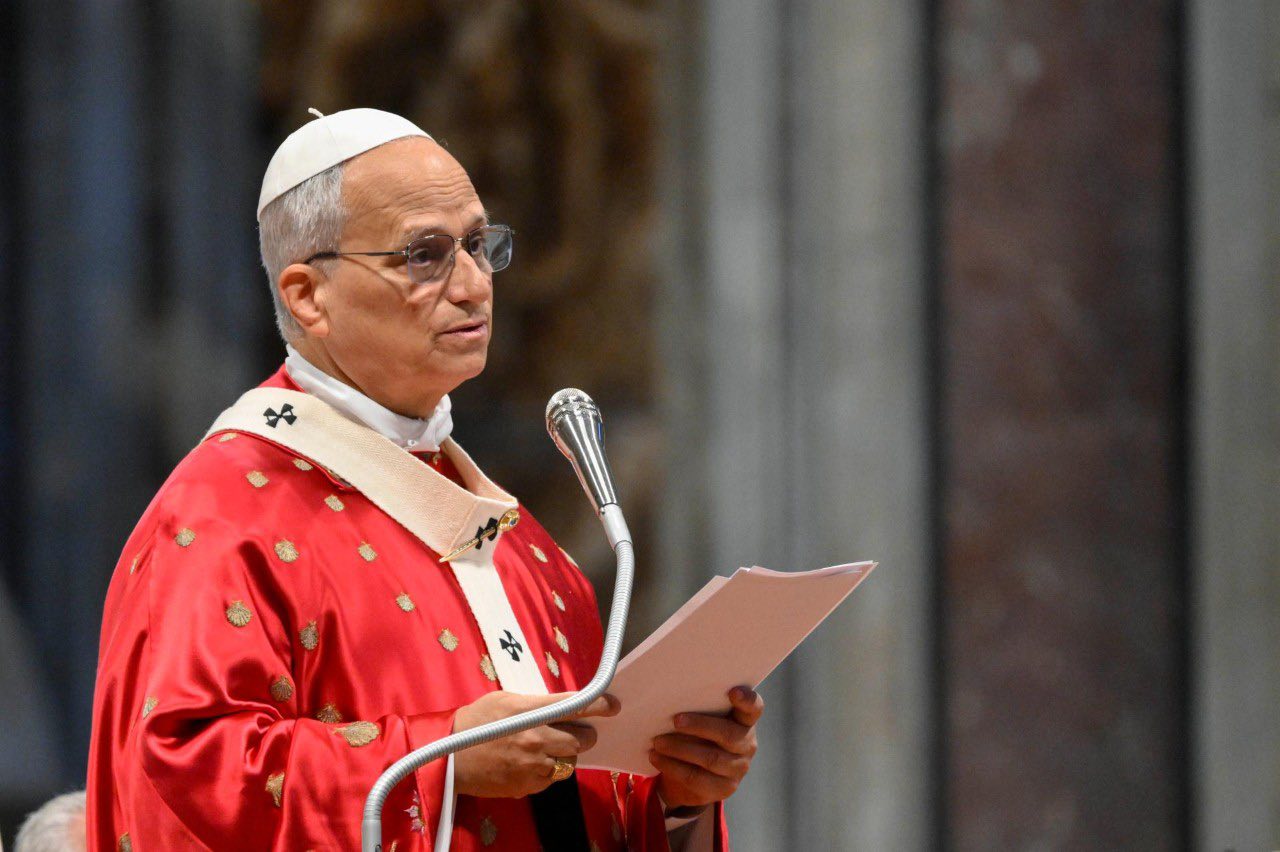
(ZENIT News / Madrid, 06.03.2026).- A a newly released survey offers an illuminating portrait of the more than 550,000 registered participants expected to take part in the papal events in Spain. Far from reflecting a crowd driven by politics or curiosity alone, the findings reveal a faithful to hear a message centered on the future, family life, and the transmission of faith to new generations.
The poll, commissioned by the organizers of the papal visit and conducted by GAD3 among registered participants and volunteers, provides a snapshot not of Spanish society as a whole, but of those who have already committed themselves to attending the events. The results suggest that Leo XIV will encounter a public deeply motivated by spiritual concerns and remarkably united in its expectations.
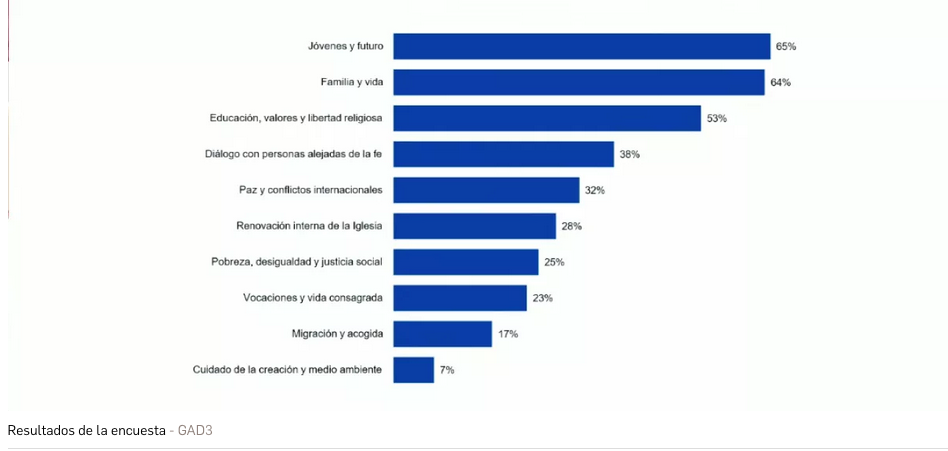
When asked which themes they most hope to hear addressed by the Pope, respondents placed young people and the future at the top of the list, with 65 percent selecting the topic. Close behind came family and life issues, cited by 64 percent. Education, values, and religious freedom ranked third, attracting support from 53 percent of participants.
The hierarchy of concerns is noteworthy because it differs significantly from some of the themes that have often dominated public debate in recent years. Migration and hospitality—subjects closely connected to the Pope’s planned visit to the Canary Islands and one of the stated pastoral priorities of the journey—were selected by only 17 percent of respondents. Environmental issues and care for creation finished last, mentioned by just 7 percent.
Other priorities occupied a middle ground: dialogue with those distant from faith was chosen by 38 percent, peace and international conflicts by 32 percent, Church renewal by 28 percent, poverty and social justice by 25 percent, and vocations and consecrated life by 23 percent.
Beyond the issues themselves, the survey reveals a fascinating paradox surrounding Leo XIV. While 90 percent of respondents hold a positive or very positive opinion of the Pope, a majority—57 percent—acknowledge that they still know relatively little about his biography, teachings, and pastoral vision. Given that his pontificate is only slightly more than a year old, many see this visit as the moment when the new Pope will truly introduce himself to a broad European audience.
Participants nevertheless have a clear perception of his personality. They describe Leo XIV as a leader who communicates clearly, inspires closeness rather than distance, and projects a predominantly pastoral rather than bureaucratic image. He is also perceived as somewhat more oriented toward modern engagement than toward institutional traditionalism, although without being viewed as a figure of rupture.
The motivations for attending reveal the profoundly religious character of the pilgrimage. Sixty-nine percent say they are coming primarily to express their faith. Sixty-two percent hope to deepen their spiritual life, while 60 percent wish to share the experience with relatives or friends. More than half want to see the Pope in person and participate in a major communal celebration of faith.
The emotions participants most expect to experience are equally revealing. Joy leads the list at 59 percent, followed by hope at 53 percent, spiritual connection at 47 percent, and peace at 44 percent. The data suggest that many pilgrims are seeking not merely an event but a moment of renewal.
Perhaps the most intriguing aspect of the survey concerns younger generations. According to GAD3 president Narciso Michavila, evidence points to a growing search for meaning among those born after 2000. While this trend does not necessarily translate into a straightforward return to institutional Catholicism, it appears to be accompanied by renewed interest in spirituality, moral reference points, and even an increase in religious conversions, particularly among young men.
This observation may help explain why themes such as youth, future, family, and religious freedom resonate so strongly among those preparing to hear Leo XIV. The priorities emerging from the survey are not primarily institutional or political. They reflect a desire for guidance, belonging, and purpose in a rapidly changing cultural landscape.
The practical dimensions of the pilgrimage also underline its scale. Parishes remain the primary source of information about the visit, accounting for 52 percent of responses, ahead of official papal channels, family networks, and social media. Forty-one percent will attend with religious movements or associations, while many others will travel with parishes or family members. Free buses will serve as the principal means of transportation for a majority of pilgrims, highlighting the enormous logistical effort required for the first papal visit of this magnitude to Spain since Benedict XVI’s journey for World Youth Day in 2011.
When participants were invited to send a message to the Pope through an open-ended question analyzed by artificial intelligence, one word emerged above all others: “Thank you.”
That response may ultimately capture the spirit surrounding Leo XIV’s arrival. The registered pilgrims do not appear to be gathering primarily to demand change or seek solutions to political controversies. They are coming to celebrate their faith, strengthen their sense of belonging to the Church, and hear a Pope whom many still barely know but in whom they already place considerable trust and hope.
Thank you for reading our content. If you would like to receive ZENIT’s daily e-mail news, you can subscribe for free through this link.

Publicaciones relacionadas:
 This is the first YouTube video message from Pope Leo XIV to USA
 First Italian poll shows Pope Leo XIV surpasses Francis and Benedict in popularity
 The encounter with the risen Christ that changes existence and illuminates affections, desires, and thoughts: Leo XIV’s homily to young people
 Confirmed: The 4th Mediterranean Meeting will take place in Barcelona with the Pope in attendance
