

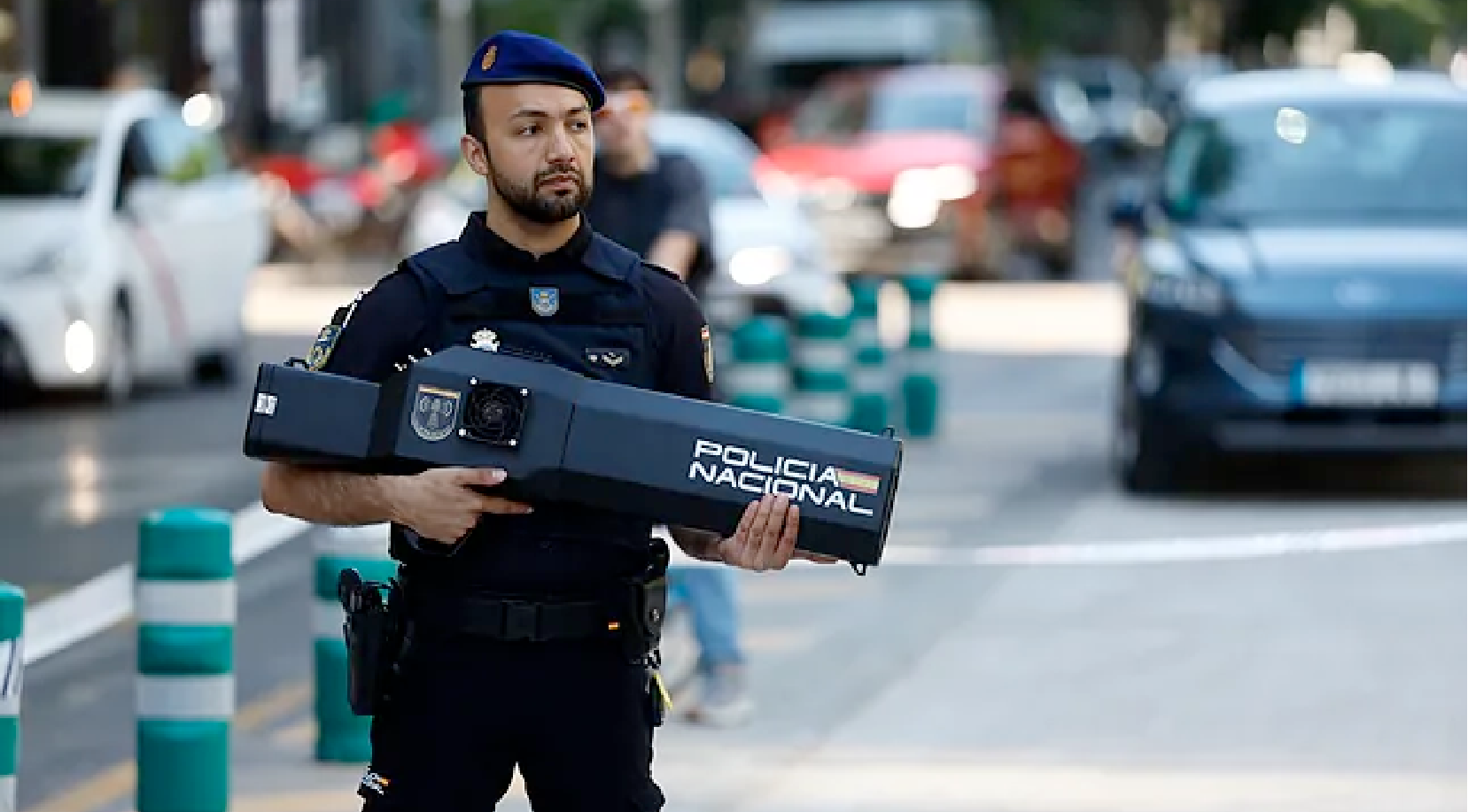
(ZENIT News / Madrid, 06.03.2026).- As Spain prepares for the arrival of Pope Leo XIV, a journey expected to draw hundreds of thousands of pilgrims and attract worldwide attention, security concerns have intensified following the circulation of a threatening propaganda image attributed to supporters of the so-called Islamic State. The episode has reignited discussion not only about counterterrorism measures, but also about a broader issue often overlooked in Europe: the persistence of hostility toward religious believers and places of worship.
The propaganda poster, distributed through online channels associated with Islamist extremism, targets several of the Pope’s most prominent public appearances during his June visit. The image depicts a decaying papal figure holding a football emblazoned with the FIFA logo, while some of the most recognizable venues on the papal itinerary appear under scenes of destruction and chaos.
One side of the montage portrays Madrid’s Santiago Bernabéu Stadium beneath storm clouds and lightning. The other shows Barcelona’s Basilica of the Sagrada Familia surrounded by flames in an apocalyptic landscape. Accompanied by the Spanish-language phrase “A two-faced visit” and the word “coming soon,” the poster appears designed to exploit the coincidence between the Pope’s visit and the opening days of the 2026 FIFA World Cup.
The imagery references several major events on Leo XIV’s schedule, including his June 8 gathering with the diocesan community at the Santiago Bernabéu, the June 10 Mass and inauguration of the Tower of Jesus Christ at the Sagrada Familia, and his June 11 journey to Gran Canaria, where he is expected to meet organizations working with migrants before celebrating Mass at the Gran Canaria Stadium.
Security experts note that such propaganda follows a familiar pattern. Jihadist organizations have frequently targeted Christian symbols, internationally recognized landmarks, major sporting events, and large public gatherings in an effort to maximize psychological impact. The objective is often not only to threaten specific individuals or locations but also to generate fear and amplify a narrative of confrontation between civilizations and religions.
The timing of the message has heightened concern among organizations monitoring religious freedom in Spain. During a recent meeting of the government’s commission overseeing the national action plan against hate crimes, representatives of the Observatory for Religious Freedom and Conscience urged authorities to strengthen security measures around churches, religious celebrations, and large public events connected to the papal visit.
Their concerns extend beyond extremist propaganda. The organization argues that anti-Christian incidents often receive less public attention than other forms of religious hostility, despite continuing to occur. According to cases highlighted by the Observatory, Spain has witnessed several violent attacks against believers in recent months. Among them were the assault of a Jehovah’s Witness in Barcelona in February, an attack against a woman in Barcelona in April accompanied by anti-Christian insults, and a separate incident in Granada province in which a man allegedly injured three neighbors with an axe while declaring that “all Christians must die.”
The group has also called on Spanish authorities to improve the way religiously motivated hate crimes are recorded. Current official statistics distinguish between Islamophobia, antisemitism, and a broader category of religiously motivated offenses. Critics argue that attacks specifically directed against Christians should be identified separately in order to provide a more accurate picture of the phenomenon and facilitate effective responses.
At the same time, the Observatory has emphasized that concern about anti-Christian hostility should not overshadow other forms of religious discrimination. It has pointed to recent incidents involving Jewish citizens, including reports of harassment and exclusion linked to visible expressions of Jewish identity. In the organization’s view, defending religious freedom requires equal vigilance regardless of the faith community affected.
The threats directed at Pope Leo XIV are therefore being interpreted within a wider context. Europe has experienced a growing awareness of antisemitism, while concerns about anti-Christian incidents and attacks on churches have also increased in several countries. Religious liberty advocates argue that safeguarding freedom of worship requires more than legal protections; it also demands practical measures to ensure that believers can participate in public religious life without intimidation or fear.
There is no indication that the propaganda message will alter the Pope’s itinerary. If anything, it highlights the symbolic significance of the visit itself. Leo XIV’s journey is expected to bring together vast crowds in some of Spain’s most iconic religious and civic spaces. The challenge for authorities will be to ensure that these celebrations remain what they are intended to be: public expressions of faith, hope, and peaceful coexistence rather than opportunities for extremists to spread fear.
Thank you for reading our content. If you would like to receive ZENIT’s daily e-mail news, you can subscribe for free through this link.

Publicaciones relacionadas:
 The Pope’s ecumenical and interfaith message in Lebanon
 How to build a solid priest in formation and happiness? 3 answers from Pope Leo XIV
 Pope Leo XIV grants his first “doctorate”: this is the saint named the 38th Doctor of the Church
 Why does Leon XIV appear in TIME magazine’s ranking of the 25 most important thinkers on artificial intelligence?
