

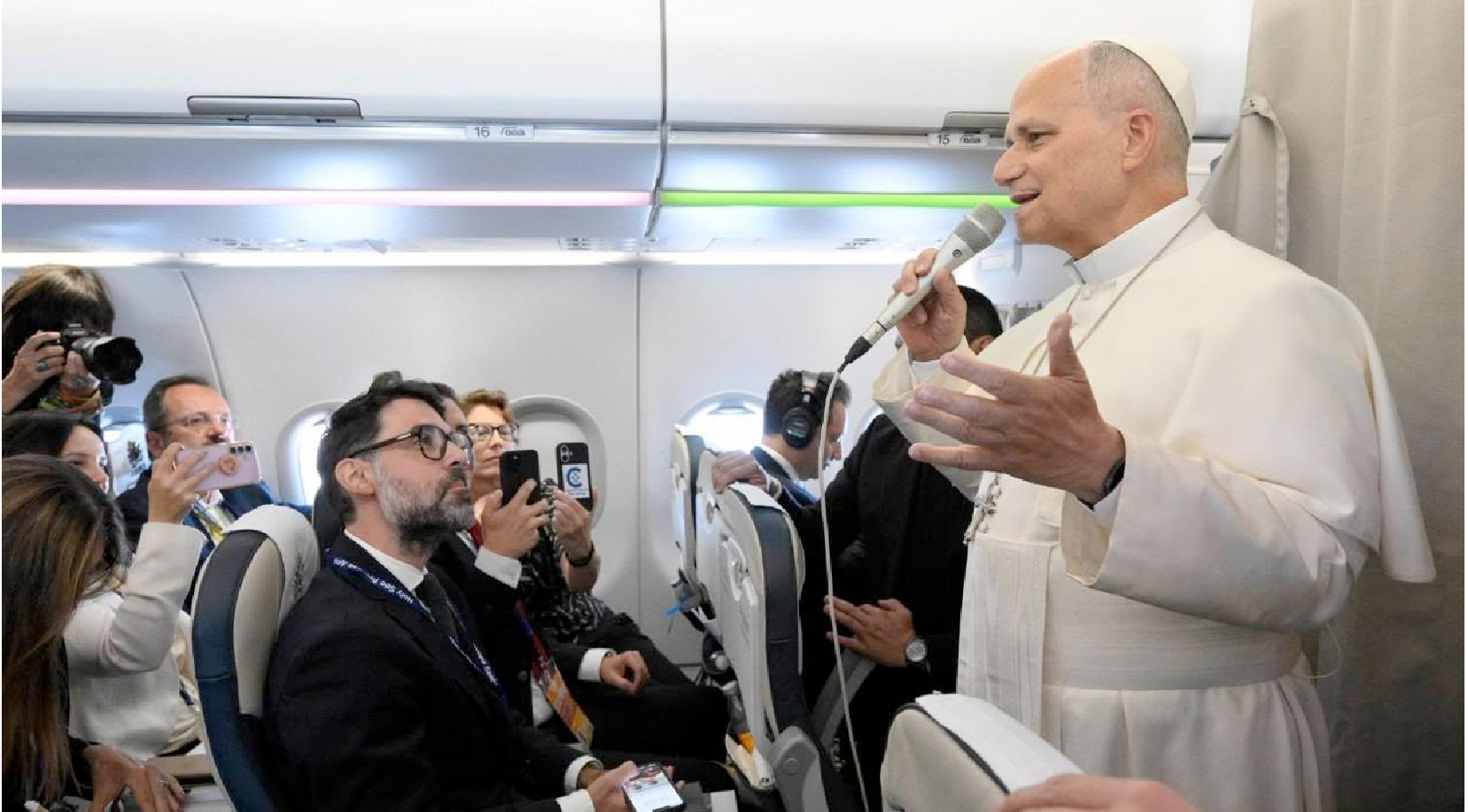
(ZENIT News / Rome-Madrid, 06.06.2026).- Before setting foot in Spain, Pope Leo XIV had already delivered some of the strongest messages from his trip to Spain. Speaking aboard the papal flight from Rome to Madrid on the morning of June 6, the Pontiff used his traditional meeting with journalists not only to offer greetings and lighthearted remarks, but also to outline key concerns that increasingly define his young pontificate: peace in a world armed with unprecedented destructive power, care for abuse victims, dialogue amid international conflicts, and the Church’s mission of bringing hope to contemporary society.
Ver esta publicación en Instagram
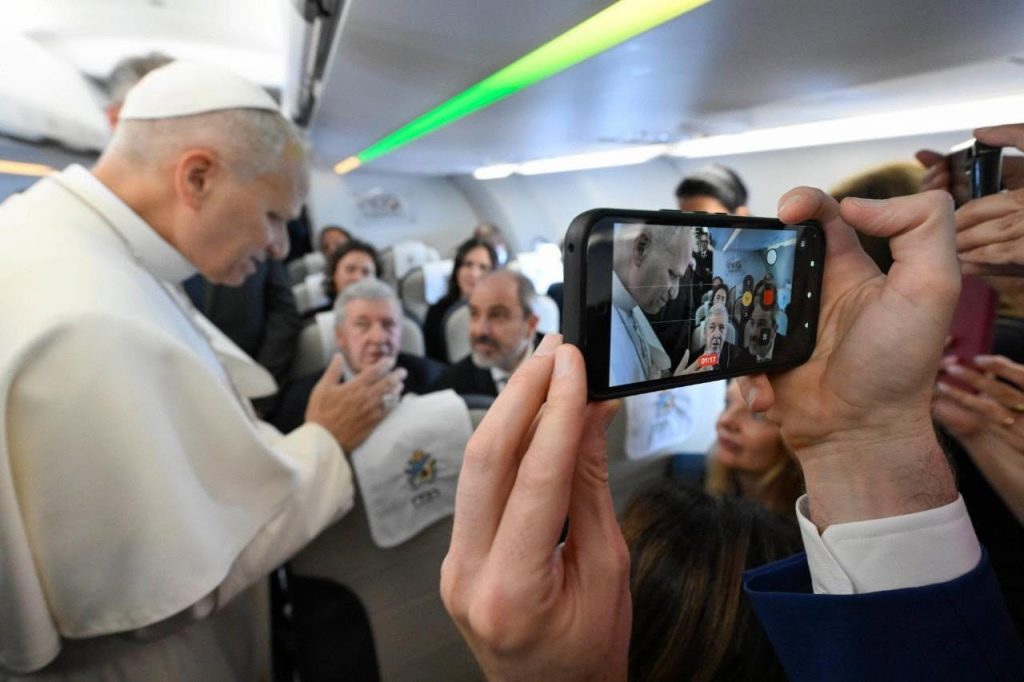
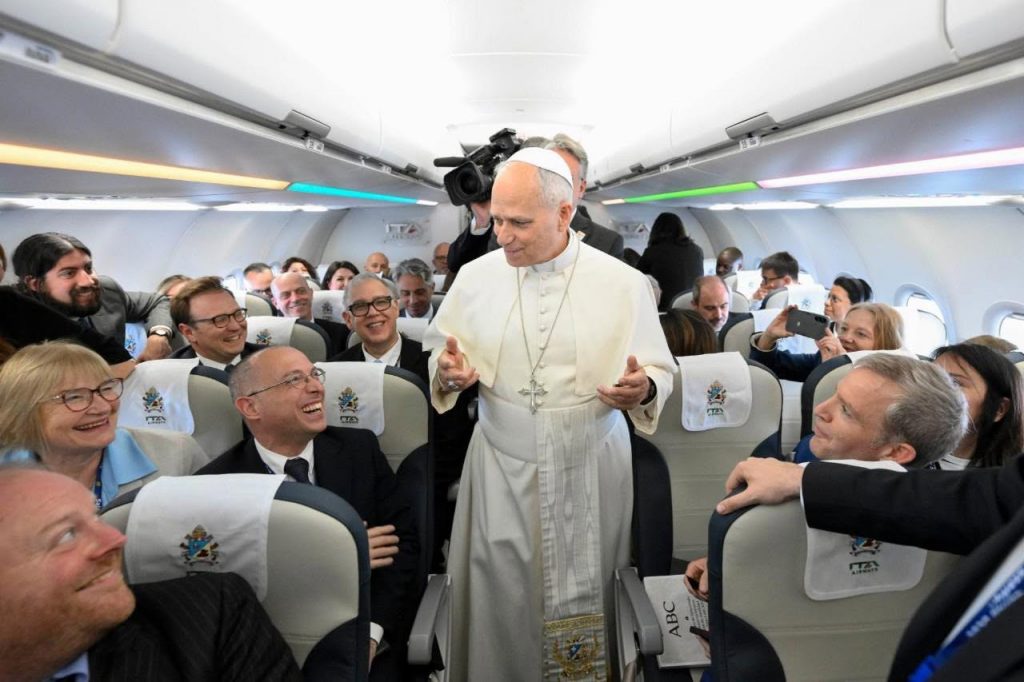
More than eighty journalists accompanied the Pope on what is one of the first major international visits of his pontificate. Shortly before arrival, Leo XIV walked to the rear of the aircraft to greet reporters personally, continuing a custom long associated with papal journeys. Yet beyond the cordial exchanges and handshakes, the conversation quickly turned to some of the most pressing issues facing the Church and the world.
The Pope expressed particular joy at visiting Spain, describing the trip as an opportunity not only to meet Catholics and celebrate the faith, but also to engage society as a whole. For Leo XIV, the Church’s message is never directed exclusively to believers. It is addressed to every person, a theme that echoes the broader vision he presented in his recent encyclical Magnifica Humanitas.
His expectations for the Spanish visit are closely tied to the participation of young people. While acknowledging Spain’s deep Catholic roots, the Pope emphasized the enthusiasm of younger generations expected to gather in large numbers in Madrid, Barcelona and the Canary Islands. Their presence, he suggested, offers an opportunity to present Christianity not as a relic of the past but as a living proposal centered on faith, charity, human dignity and respect for every person.
One of the most significant moments of the exchange came when Leo XIV addressed the ongoing crisis of clerical sexual abuse. Confirming that he will meet victims during the visit, the Pope described abuse as “a wound that remains open,” reaffirming both his personal commitment and that of the entire Church to confronting the scandal. The decision to include such an encounter early in the journey underscores the Vatican’s determination to keep the issue at the forefront rather than treating it as a closed chapter.
International affairs occupied a prominent place in the conversation. Asked about the conflict involving Iran and whether the circumstances could justify military action, Leo XIV offered a response that sheds further light on his developing teaching regarding war. He argued that the traditional framework of the “just war” theory emerged in historical periods incapable of imagining the destructive capabilities available today. Modern weaponry, he suggested, has fundamentally altered the moral landscape.
His comments are particularly noteworthy because they reinforce arguments already advanced in Magnifica Humanitas, where the Pope questions the continued adequacy of concepts that for centuries shaped Catholic reflection on armed conflict. Rather than focusing on criteria that might justify war, Leo XIV increasingly directs attention toward preventing conflicts and building conditions for peace before violence erupts.
The Pontiff also returned to the war in Ukraine, insisting that efforts toward dialogue must continue despite setbacks and frustrations. At the same time, he highlighted the Holy See’s ongoing concern for Lebanon, noting that Vatican attention to the country remains active through regular contacts with religious authorities. In both cases, the Pope presented diplomacy not as a secondary option but as an essential responsibility.
Yet perhaps the most moving image of the flight did not come from politics or ecclesiastical affairs. As the aircraft crossed the Mediterranean, every journalist on board received a rosary from Spanish cloistered communities. The contemplative nuns had committed themselves to praying individually for each member of the media contingent covering the papal visit.
The gesture offered a striking reminder of a reality often overlooked in contemporary Church life. While journalists report events visible to the world, countless contemplative religious spend their lives in hidden prayer, rarely appearing in headlines yet forming an invisible spiritual network that many Catholics believe sustains the Church’s mission. The rosaries created a symbolic bridge between those who communicate events and those who accompany them through silence and intercession.
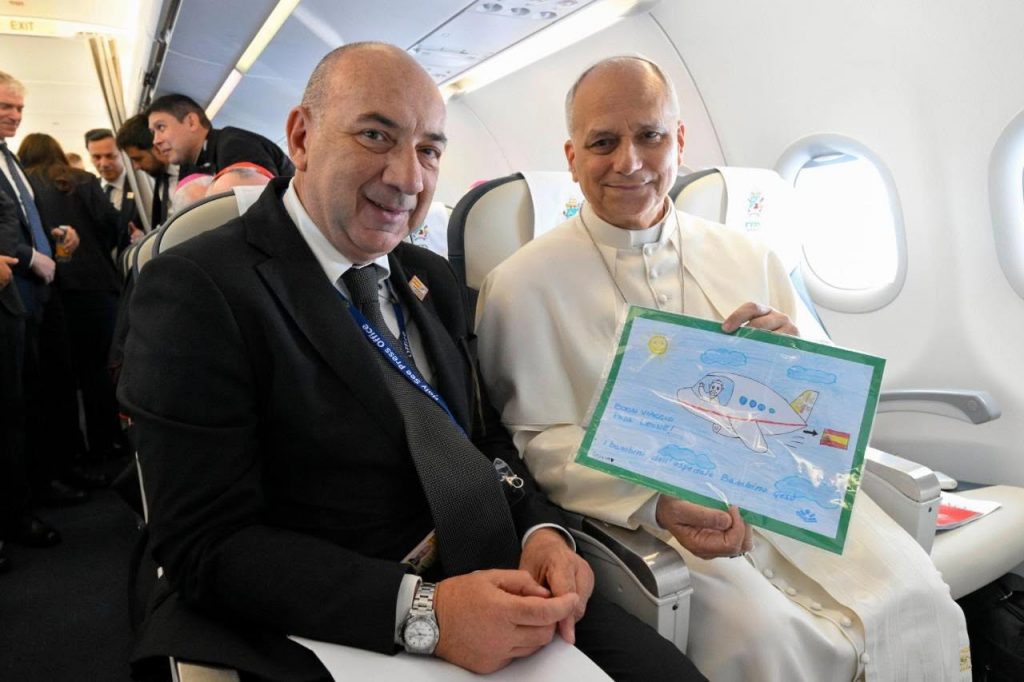
Adding a personal touch to the journey, Leo XIV also received a drawing prepared by young patients from Rome’s Bambino Gesù Hospital, carrying with him a sign of affection from children facing illness as he embarked on a mission focused on hope and encouragement.
Meanwhile, church bells rang throughout dioceses across Spain to welcome the Successor of Peter. By the time the papal aircraft approached Madrid, the visit was already taking shape around themes that have become hallmarks of Leo XIV’s leadership: a conviction that peace is more urgent than ever, a willingness to confront painful realities within the Church, confidence in the vitality of young believers, and a determination to proclaim human dignity in a world increasingly marked by conflict and division.
Long before the Pope reached Spanish soil, his message had already landed.
Thank you for reading our content. If you would like to receive ZENIT’s daily e-mail news, you can subscribe for free through this link.

Publicaciones relacionadas:
 Liturgy and the Roman Curia are left out as topics for Leo XIV’s first consistory: this was discussed
 Charism, governance, and communion: Three reflections from the Pope to the consecrated lay members of Regnum Christi
 Leo XIV’s view of sport in a letter about the Winter Olympics
 Pope Leo XIV Speaks Again About Trump and the War (and It Is Announced That the Pope Will Carry the Cross Throughout the Stations of the Cross on Good Friday)
