

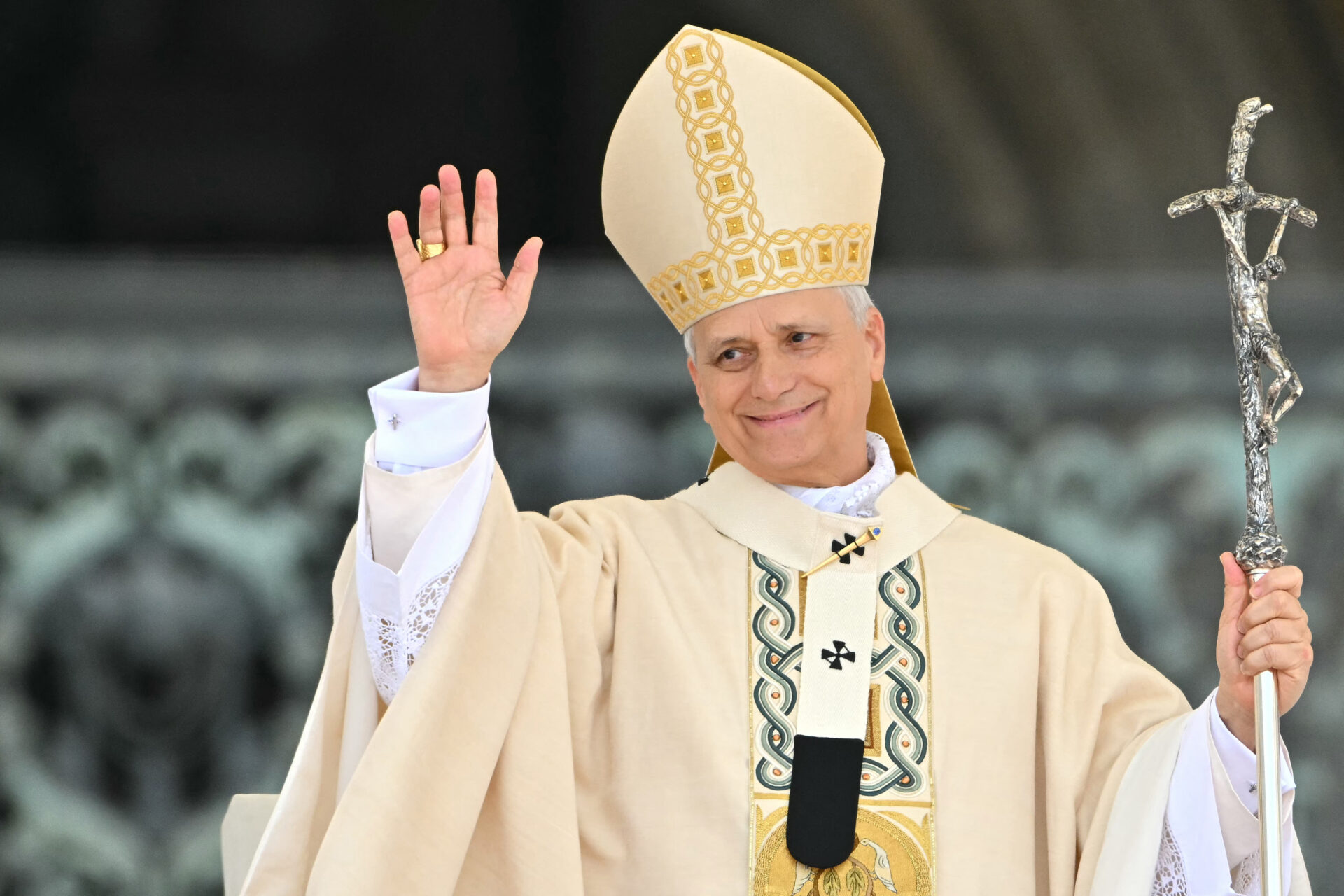
(ZENIT News / Lima, 08.14.2026).- Peru is preparing for a homecoming with the potential to become one of the defining journeys of Pope Leo XIV’s early pontificate. The Peruvian government has declared his November 11–17 visit a matter of “national interest,” setting in motion an extraordinary state apparatus for a journey that will take the Pope from the capital to the Andes, the Amazon and the northern diocese where he spent some of his most formative years as a Catholic shepherd.
The decision, approved by the Council of Ministers on August 12, is more than a protocol measure. It enables the government to coordinate security, logistics, customs procedures, and public services for a trip that is expected to involve between 700,000 and 1 million people nationwide.
The largest gathering is projected in Lima, where approximately 350,000 people are expected. Cusco could receive between 100,000 and 150,000, while Pucallpa and Chiclayo are each expected to draw around 75,000 people.
Those figures give the visit a distinctly national character. Leo XIV will not be returning simply to the country where he once served as a missionary and bishop; he will be traveling through several of Peru’s very different geographical and cultural realities, bringing the papacy into direct contact with communities separated by thousands of miles of terrain and markedly different social circumstances.
Chiclayo, however, will inevitably occupy a special place in the journey.
Before becoming Pope, Robert Francis Prevost spent nearly two decades in Peru as an Augustinian missionary and later served for eight years as bishop of Chiclayo. He became a Peruvian citizen in 2015. His return therefore has an unusual personal dimension: the Pope will be visiting a country in which he did not merely exercise an ecclesiastical assignment, but built a substantial part of his priestly and episcopal life.
For the Catholic community in Chiclayo, the significance is difficult to separate from that history.
Bishop Edinson Farfán has welcomed the prospect of Leo XIV’s return to the diocese, describing the news as a source of joy and emphasizing the Pope’s affection for the Church he once led. The president of the Peruvian Bishops’ Conference, Archbishop Carlos García Camader, has similarly described the visit as a gift for the country and an opportunity to renew faith, strengthen hope and encourage the Church to continue walking together.
That language points to an important feature of papal journeys that can easily be overlooked. They are not simply international diplomatic trips. For Catholics, the presence of the Pope can serve as a powerful moment of ecclesial unity, particularly in countries where the Church encompasses urban centers, remote rural communities and indigenous populations with very different experiences of daily life.
The Peruvian government is treating the event accordingly. An Extraordinary High-Level Commission will be established to determine the strategies and measures required for the visit. The Ministry of Foreign Affairs will coordinate the national effort and provide the commission’s technical secretariat, while the various ministries will appoint representatives. Regional and municipal authorities may also join the structure depending on the cities and activities included in the final itinerary.
The government will additionally facilitate customs procedures for equipment, goods and other materials needed during the Pope’s stay. Once the visit is over, the commission will have 30 days to submit a report detailing the measures undertaken and the results obtained.
The scale of the expected crowds explains the level of preparation. Even without knowing the precise composition of each gathering, 700,000 people represent a major logistical challenge in a country whose geography can make travel between regions particularly demanding.
And the Peru visit will come at the end of a broader South American journey. Leo XIV is scheduled to travel to Uruguay from November 6 to 8 and Argentina from November 8 to 11 before continuing to Peru until November 17.
The South American itinerary will thus have an unmistakable biographical dimension. Born in Chicago, Leo XIV became deeply connected to Latin America through his missionary work, his service in Peru and his later responsibilities in the Church’s episcopate. His return to the continent as Pope will allow him to encounter a region that was central to his life long before he occupied the chair of Peter.
For Peruvians, however, the most compelling aspect may be simpler: they will see one of their former bishops return as Pope.
That gives the November journey an emotional quality that cannot be manufactured by diplomatic protocol. The state can build the logistical framework, bishops can organize pastoral preparations and hundreds of thousands can travel to see him. But the meaning of the visit will ultimately be found in the encounter between a Pope and a people who remember him from before he became one of the world’s most recognizable religious figures.
Thank you for reading our content. If you would like to receive ZENIT’s daily e-mail news, you can subscribe for free through this link.

Publicaciones relacionadas:
 Pope Leo XIV receives documented report on religious persecution in Nicaragua
 Ireland: After 500 years, Pope Leo XIV could solve the problem of Dublin’s lack of a cathedral
 Pope Leo XIV reverses Pope Francis’ decision regarding the organization of the Diocese of Rome
 This is the new Catholic bishop appointed by Pope Leo XIV for London: he is from Africa, enjoys horse riding, and was a soldier
