

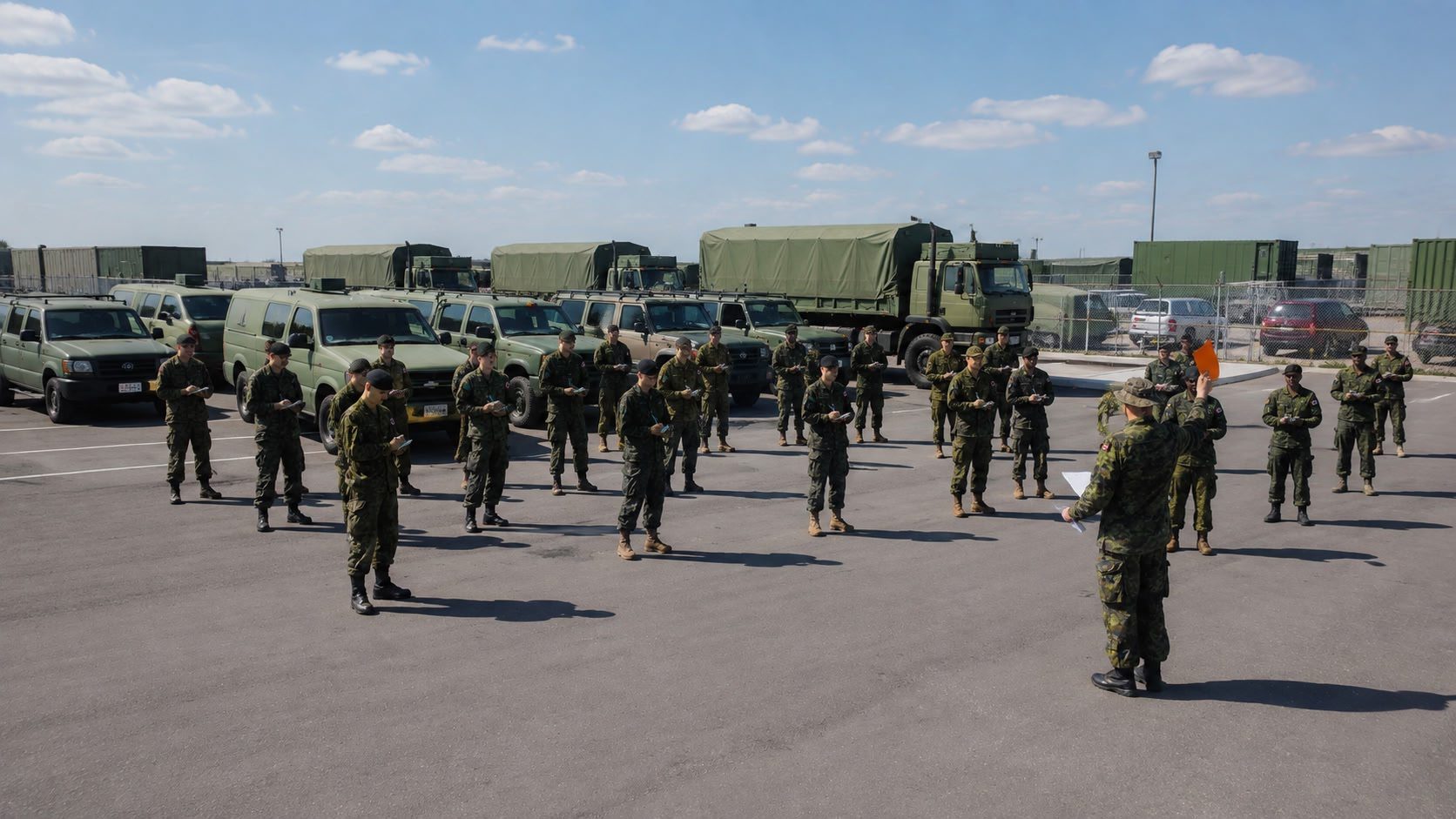
(ZENIT News / Otawwa, 08.22.2026).- A dispute over how military chaplains may speak about spirituality has opened a broader question in Canada: can an institution committed to religious freedom require believers to set aside the language of their faith when addressing matters of spiritual meaning?
The Canadian Conference of Catholic Bishops has entered that debate after backing Bishop Scott McCaig, the Catholic Military Ordinary, who sharply criticized new Canadian Armed Forces guidelines governing “spiritual reflections” at military events.
The controversy centers on rules introduced in July 2025 that define spiritual reflections as public remarks intended to promote meaning, purpose and spiritual well-being. The guidelines seek an inclusive format and instruct those delivering such reflections to avoid specifically religious language, including references to God. Instead, speakers are encouraged to draw on lessons, beliefs, values and personal experiences to evoke gratitude, remembrance, hope and integrity.
The policy does provide exceptions. Religious language remains possible at funerals, voluntary religious gatherings and private counseling, while Indigenous spiritual practices are also treated separately. Yet Bishop McCaig argues that the distinction goes too far when applied to chaplains and service members whose understanding of spiritual life is inseparable from belief in God.
“For many people,” McCaig argued in his August 10 statement, separating spiritual meaning and well-being from God is not simply a matter of changing vocabulary. For a religious believer, he maintained, such a separation can conflict directly with conscience.
The bishops’ conference endorsed that concern on August 18, saying it was examining the policy particularly for its implications for freedom of conscience and religion and for the place of religious expression within the Canadian Armed Forces. Rather than calling for confrontation, the bishops urged Catholics and other people of goodwill to inform themselves, pray for Canada’s military personnel, chaplains and families, and follow how the policy is implemented.
At stake is an important distinction. Protecting military personnel from religious coercion is a legitimate objective in a pluralistic society. But religious liberty does not normally mean merely the freedom to believe privately; it also encompasses the freedom to express one’s convictions. The Canadian Charter of Rights and Freedoms protects freedom of conscience and religion, as well as thought, belief, opinion and expression.
That is why the bishops’ intervention goes beyond the wording of a military protocol. The underlying question is whether neutrality requires the public removal of religious language or whether genuine neutrality means allowing religious and nonreligious perspectives to coexist without either being imposed on others.
The Catholic leadership’s concern also reflects a pattern that has developed within the Canadian military in recent years. In 2023, the Armed Forces introduced restrictions on public prayer that were subsequently withdrawn following significant criticism. In 2024, prayer was prohibited at Remembrance Day ceremonies, prompting objections from members of the public, military personnel and political figures. The following year, chaplains were instructed to avoid particular words, actions and symbols associated with religious traditions, including metaphysical references, in Remembrance Day prayers.
The latest policy therefore arrives in a context in which religious expression within official military ceremonies has already become contested territory.
For Canada’s Catholic military community, the issue is not whether soldiers of different beliefs should be respected. It is whether that respect is best achieved by requiring everyone to speak in deliberately nonreligious terms, even when the subject itself is spiritual.
The bishops have left room for dialogue. They have also offered the Church’s educational and pastoral network to assist with initiatives critical thinking and awareness of rights. Their position suggests that freedom is sustained not only by regulations, but by citizens capable of exercising judgment and respecting convictions different from their own.
The dispute may ultimately be decided not by whether Canada chooses religion or secularism, but by how convincingly it can protect both conscience and pluralism. A genuinely diverse military should have room for the soldier who speaks of God, the one who does not, and the chaplain whose ministry depends upon doing so—without requiring any of them to surrender their convictions in order to participate in public life.
Thank you for reading our content. If you would like to receive ZENIT’s daily e-mail news, you can subscribe for free through this link.

Publicaciones relacionadas:
 Poignant: Was the Departure of Mother Teresa’s Nuns, Expelled from Nicaragua by Daniel Ortega’s Regime
 Nicaragua will be left without nuns and religious: government expels them all and sets date for their departure
 After one month of Nicolás Maduro’s imprisonment, the Venezuelan government restores Cardinal Porras’ passport
 Colombian President Harasses Catholic Priest Live on Air for Speaking Out Against Communism
