

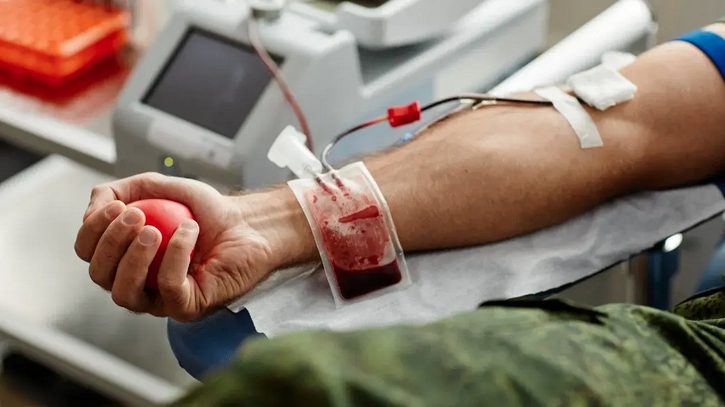
(ZENIT News / Salt Lake City, 09.21.2026).- The Jehovah’s Witnesses have made one of the most consequential changes to their doctrine in decades, allowing members to decide according to personal conscience whether to receive four major blood components: red cells, white cells, plasma and platelets. The decision, announced by the Governing Body on September 18, marks a striking departure from a policy that for generations treated blood transfusion as a religious prohibition.
The organization continues to reject transfusions of whole blood and maintains that its biblical interpretation of the command to “abstain from blood” has not changed. But the practical significance of the new rule is considerable. Modern transfusions are commonly based on the particular blood component a patient requires rather than on whole blood, meaning that the change potentially permits many procedures that previously would have been refused on religious grounds.
The announcement follows another significant step taken in March 2026, when Jehovah’s Witnesses authorized members to store their own blood before planned surgery for possible later use. That had also previously been prohibited. The new decision goes further by permitting blood components donated by another person.
The organization presents the change not as an abandonment of the sacred character it attributes to blood, but as a transfer of responsibility from a uniform religious prohibition to individual conscience. Paul Gillies, an international spokesperson for the Jehovah’s Witnesses, said members continue to regard blood and life as gifts from God and that decisions concerning blood components are now matters between each believer and Jehovah. Congregations, according to the organization, will not intervene in such personal decisions.
That formulation is precisely what makes the announcement so significant. For decades, the question was not simply whether a Witness personally wished to undergo a transfusion. Refusing blood was part of a doctrinal system in which accepting prohibited treatment could have serious religious and social consequences. Critics of the organization argue that the new language of individual conscience will have to be measured not only against the wording of the new rule, but against how it is actually applied inside congregations.
The Association of Spanish Victims of Jehovah’s Witnesses has welcomed any measure that gives believers greater freedom over medical treatment, while arguing that the reform remains incomplete because whole-blood transfusions are still prohibited. The association says members should be able to choose any medically appropriate treatment without facing religious sanctions, isolation or the loss of their social circle. It has also called for a public explanation and apology to people who, it argues, suffered serious harm or died under the previous policy.
The change also exposes the unusual historical weight carried by the blood doctrine. Since 1945, Jehovah’s Witnesses have interpreted biblical references to abstaining from blood as prohibiting transfusions. According to the supplied reports, the organization has honored members who maintained that position even at the cost of their lives. The same principle could apply when parents refused transfusions for children, making the issue particularly acute because medical decisions concerning minors involve not only parental convictions but the child’s right to receive necessary care.
The new policy does not erase that history. Nor does it settle the question of why particular blood components were previously subject to religious prohibition but are now left to individual conscience. Those are questions the organization has not, in the announcement described here, addressed in detail.
What has changed is nevertheless substantial. Red cells, white cells, plasma and platelets are no longer automatically placed on the forbidden side of the religious boundary. Alongside the March decision on autologous blood, the September announcement represents a significant loosening of the rules governing medical treatment.
Thank you for reading our content. If you would like to receive ZENIT’s daily e-mail news, you can subscribe for free through this link.

Publicaciones relacionadas:
 USA: 18 states, advocates support WA church challenging state abortion mandate
 England: Teacher Refuses to Teach LGBT Ideology in “Christian” School and Is Persecuted
 The situation in Gaza as told by the parish priest of the only Catholic community in that martyrized land
 U.S. Grants $240 Million to Catholic Humanitarian Aid Organization: The Government’s Trust in the Catholic Church
