

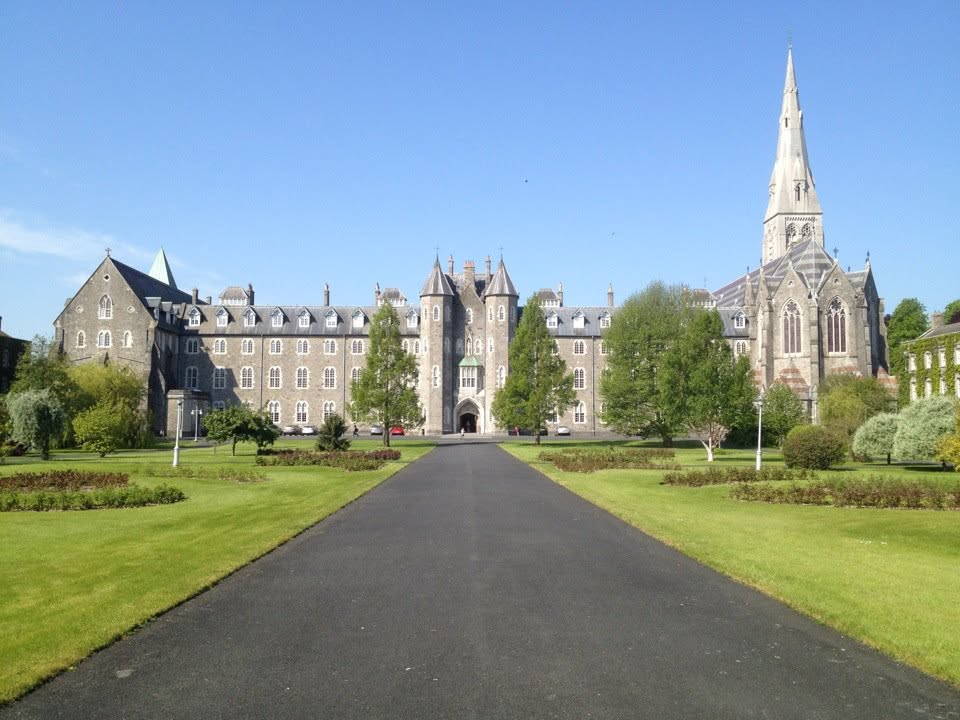
(ZENIT News / Dublin, 09.21.2026).- Ireland’s seminaries are beginning the 2026–2027 academic year with a modest increase in men preparing for the diocesan priesthood, a development bishops describe as a sign of renewed openness to a vocation that remains difficult to discern in an increasingly secular culture.
Fifteen new students have entered the Propedeutic Year, bringing the total number of diocesan seminarians currently in formation in Ireland to 74. Of these, 51 are studying at the national seminary at St Patrick’s College, Maynooth, and the Redemptoris Mater Seminary in Dundalk, while another eight are pursuing formation in seminaries elsewhere in continental Europe.
For Bishop Phonsie Cullinan of Waterford and Lismore, who chairs the Vocations Council of the Irish Bishops’ Conference, the increase is significant precisely because it comes against a cultural background in which religious belief can no longer be taken for granted. He said that young people, as well as older candidates, are discovering a personal relationship with Jesus Christ and are refusing to settle for what he described as the “emptiness and superficiality” surrounding much of contemporary culture.
Father Willie Purcell, the national coordinator for diocesan priestly vocations, likewise said the arrival of the new seminarians demonstrates that the call to diocesan priesthood remains present in Ireland. Their decision, he said, shows that ordinary lives can be transformed in extraordinary ways and that people today are still capable of hearing and responding to a call that demands a substantial commitment of their time, freedom and future.
The first step for the 15 newcomers is not yet theological specialization or preparation for parish ministry. It is a year deliberately designed to establish the human and spiritual foundations on which the rest of formation will depend.
The Propedeutic Year is the first of four compulsory stages in Irish seminary formation: Propedeutics, Discipleship, including philosophical studies, Configuration, including theological studies, and Vocational Synthesis. The initial stage takes place in a seminary approved by both the Irish Bishops’ Conference and the Holy See. Its principal purpose is to give candidates a solid foundation for spiritual life while helping them develop the self-awareness needed for continued spiritual growth.
That emphasis is important. Before a candidate is asked to assume the responsibilities of priestly ministry, the formation process seeks to give him time to examine more deeply who he is, how he relates to God and whether the vocation he believes he has received can withstand the demands of a lifelong commitment.
At the end of the Propedeutic Year, and with the nomination of his bishop, a seminarian applies to enter a seminary where he will continue the remaining stages of formation for service in an Irish diocese.
The numbers remain modest, and the Church in Ireland faces no sudden reversal of its long-term challenges in sustaining priestly vocations. Yet the arrival of 15 new candidates changes the immediate picture: 74 men are now at different points on a path that, if completed, will lead them toward diocesan ministry.
For the Irish bishops, the most important question is not simply how many have entered seminaries, but whether these men can be accompanied patiently enough for a vocation to mature. Cullinan called for prayer and encouragement so that what he described as a “spark” placed in the hearts and minds of those responding to the call may grow.
In that sense, Ireland’s new academic year begins with a relatively small number that carries a larger significance. In a country where Catholicism remains deeply woven into its history but no longer automatically determines the choices of younger generations, 15 men have chosen to begin by asking whether they are being called to give their lives to the Church.
Thank you for reading our content. If you would like to receive ZENIT’s daily e-mail news, you can subscribe for free through this link.

Publicaciones relacionadas:
 Which U.S. dioceses have vocational replacement, which do not and why? Study answers
 One in five Catholics worldwide is African, as is one in three seminarians: the impressive statistics of African Catholicism
 Priestly vocations in England and Wales: data pointing to either stabilization or decline
 Austria Opens a New Path to the Priesthood for Midlife Professionals
