

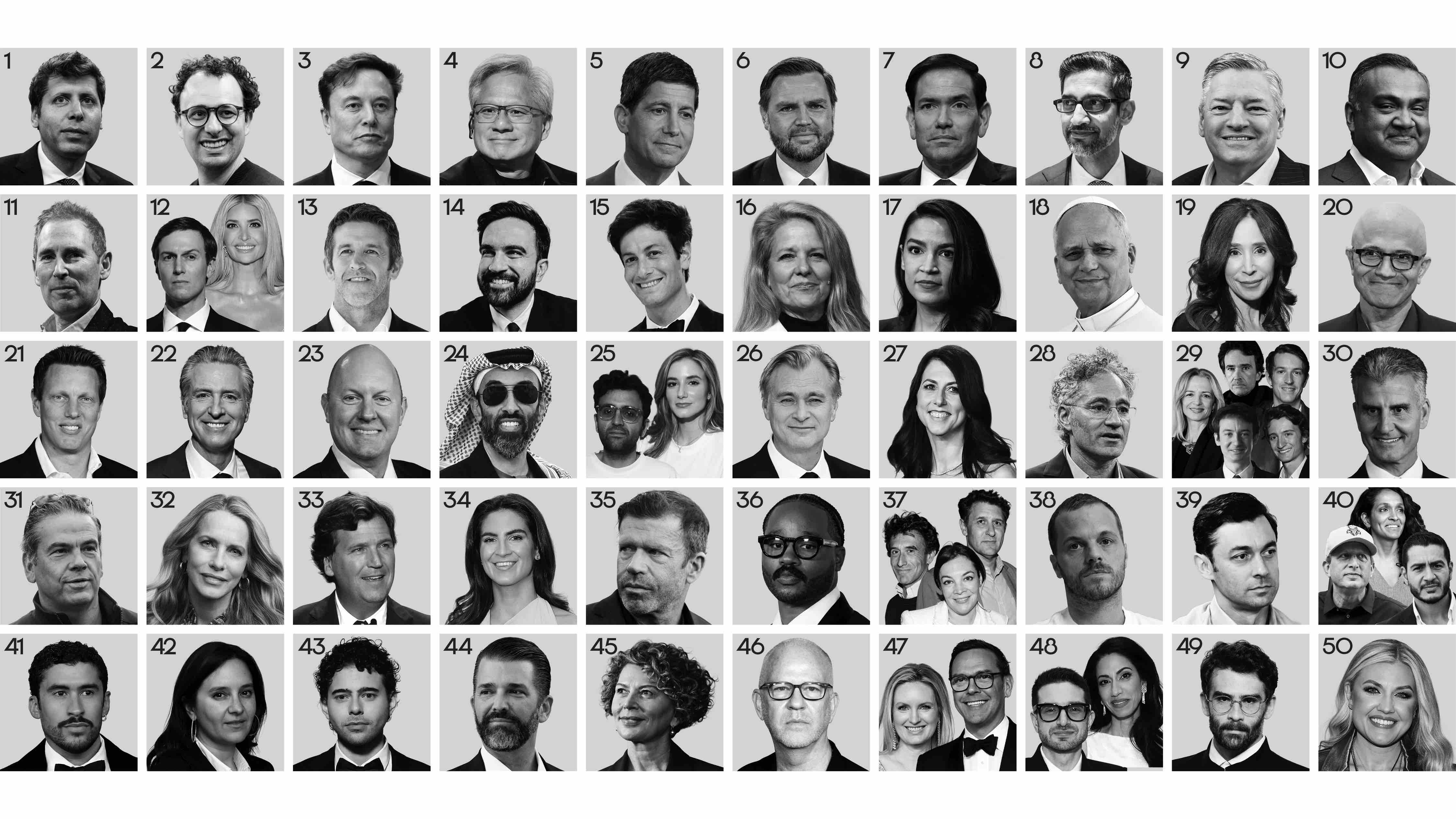
(ZENIT News / Rome, 10.06.2026).- Pope Leo XIV has entered an unusual company. In Vanity Fair’s 2026 New Establishment list, the pontiff appears alongside the technology executives, political figures and financial power brokers who are helping shape an increasingly unsettled world. He ranks No. 18, below figures such as JD Vance, Marco Rubio and Alexandria Ocasio-Cortez, but ahead of countless figures whose influence is measured in money, followers or institutional authority.
His inclusion is striking for another reason: Vanity Fair says it normally excludes heads of state. Leo is the exception, not because of the sovereignty of Vatican City, but because the magazine considers his influence to be fundamentally humanistic.
That distinction reveals why the Pope’s place on the list matters. He is not being presented as another political operator. He is being recognized as someone attempting to influence the moral framework within which some of the world’s most powerful technologies and institutions will operate.
The contrast with those above him could hardly be sharper. The first four places belong to Sam Altman of OpenAI, Dario Amodei of Anthropic, Elon Musk of Tesla and SpaceX, and Nvidia chief executive Jensen Huang. Their power derives from their ability to build, finance and deploy technologies that are rapidly changing the economy and potentially human society itself.
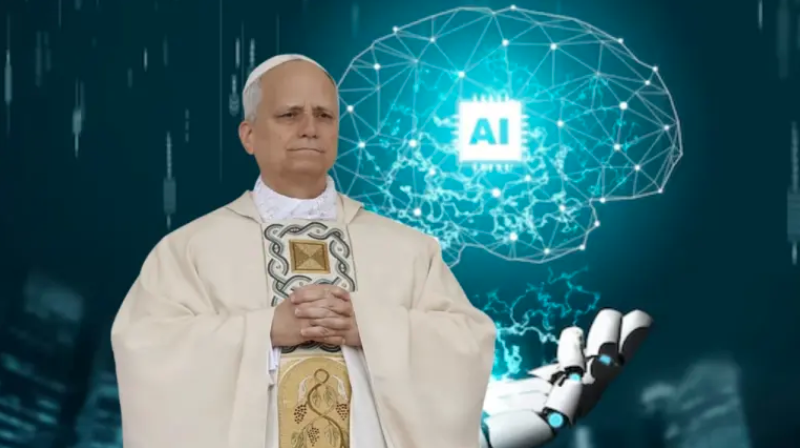
Leo’s influence is of another kind. His intervention in the debate over artificial intelligence rests on a simple proposition: technological progress cannot be allowed to determine its own moral limits. His encyclical Magnifica Humanitas argues that technology must remain at the service of human beings rather than becoming the framework within which human beings are expected to live.
That message places the Pope in an increasingly consequential conversation with Silicon Valley. The Vatican has not confined its discussion of artificial intelligence to theological circles. Leo has continued to address the subject publicly, including on September 28, when he said on his flight back from France that concerns about artificial intelligence posing catastrophic risks to humanity should be taken seriously.
The significance is not that the Pope has suddenly become a technology expert. It is that he is insisting that technological power requires a moral vocabulary beyond efficiency, investment and market dominance.
There are already signs that this argument is reaching beyond Catholic circles. During the summer, Silicon Valley congressman Ro Khanna wrote to technology executives in his district asking how they intended to align their work with the Pope’s teaching on artificial intelligence. Microsoft founder Bill Gates likewise wrote that Leo’s document provided a solid foundation for the work ahead.
Whether technology companies and political leaders will actually allow those principles to constrain their decisions remains a much harder question.
Vanity Fair’s description of its own list helps explain why. The magazine argues that power has changed. A founder’s moral assumptions can now be embedded in artificial intelligence systems used by millions; an influential personality can mobilize an enormous following almost instantly; and financial networks can extend into virtually every dimension of contemporary life. The old definition of influence has therefore become inadequate.
This is precisely where the Pope’s presence becomes more than an intriguing ranking.
Leo’s public interventions suggest that the central question is not merely who possesses power, but what power is for. His experience as a missionary in Peru and his defense of the poor form part of the background to his approach. His disagreements with the Trump administration over the United States’ war in Iran have also demonstrated that his political influence is unlikely to fit neatly into any American ideological camp.
Vanity Fair itself recognized the tension. A Pope from the United States who emphasizes the dignity of immigrants and criticizes the concentration of economic power among a small number of people, the magazine observed, was almost bound to provoke controversy.
That may ultimately prove more important than his position at No. 18.
The New Establishment is deliberately described by Vanity Fair as subjective and eclectic rather than a conventional ranking of wealth or popularity. The magazine says it is measuring coercive power and influence in a world in which individual decisions can have extraordinary consequences. Its list therefore offers an accidental portrait of the age: the people capable of changing systems are increasingly concentrated in technology, politics and finance.
The Pope’s presence introduces a different proposition. Moral authority can also become a form of influence when it enters debates over the direction of civilization.
For the Catholic Church, however, recognition by a major cultural magazine should not be mistaken for victory. The harder task is ensuring that the Church’s warnings about artificial intelligence, human dignity and concentrated power translate into principles capable of influencing policy and corporate decisions. A papal document can challenge the conscience of those building the future, but it cannot by itself determine what they will do.
Leo XIV’s unusual position on Vanity Fair’s list therefore says something about both the Pope and the moment. The magazine has placed him among people who possess enormous capacity to shape the future. His challenge is different: to persuade those people that possessing the power to transform humanity does not give them the right to redefine humanity.
Thank you for reading our content. If you would like to receive ZENIT’s daily e-mail news, you can subscribe for free through this link.

Publicaciones relacionadas:
 Pope Leo XIV Opens the Vatican Doors to the Only Orthodox Apostolate Accompanying Homosexual People to Live in Chastity
 Listening and Fasting: Lent as a Time of Conversion. This is what Pope Leo XIV’s first message for Lent 2026 says
 Trump Opens Another War Front: The Pope and the Vatican, Leo XIV Responds: «I Am Not Afraid of the Trump Administration»
 Pope Leo XIV calls the liturgy the “driving force of evangelization” and urges priests to respect liturgical texts and norms
