

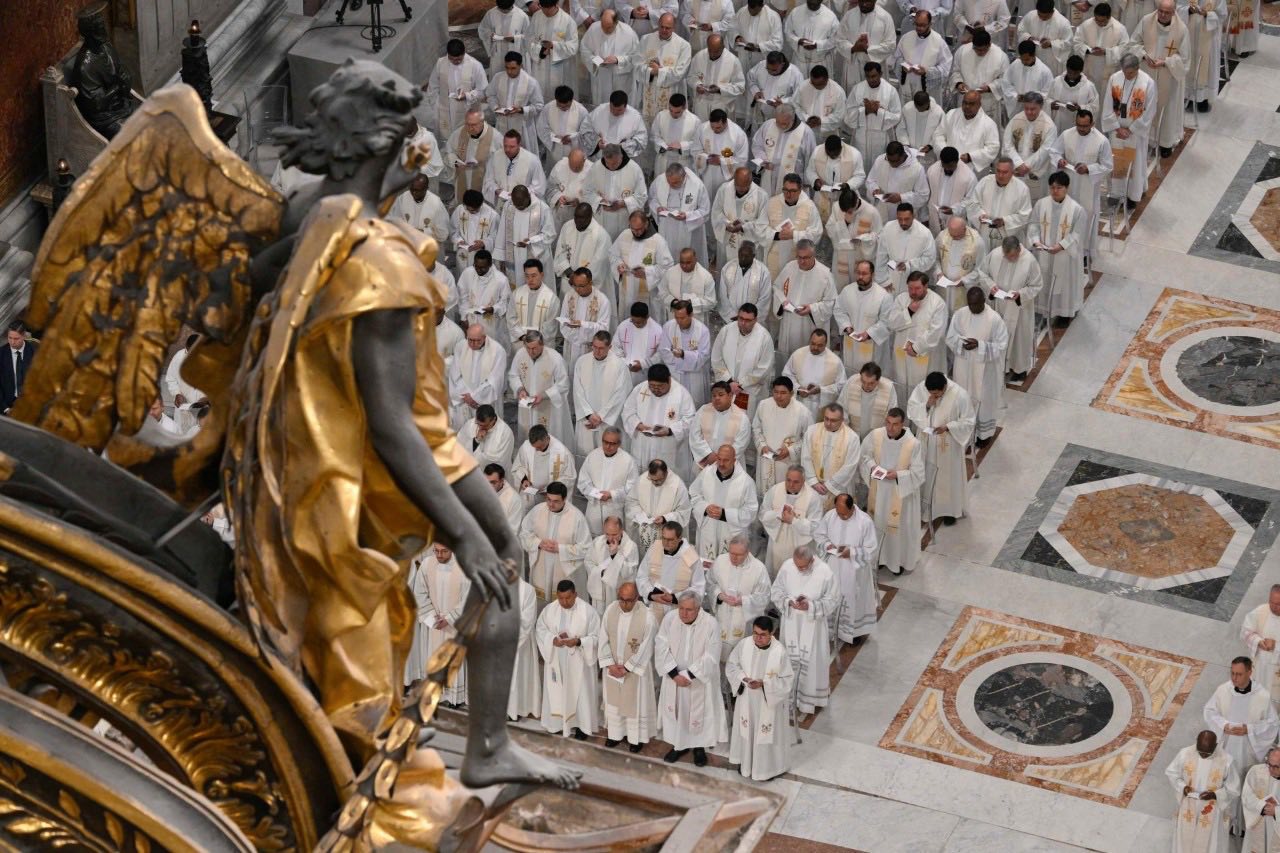
(ZENIT News / Rome, 10.17.2026).- The worldwide number of Catholic priests increased in 2024 for the first time in five years, according to statistics released by the Vatican’s Fides news agency ahead of the 100th World Mission Sunday, celebrated on October 18 under the theme “One in Christ, United in Mission.” The modest recovery, however, comes alongside a continued decline in priestly vocations, highlighting the contrasting demographic realities shaping the Catholic Church across continents.
Figures drawn from the Statistical Yearbook of the Church show that the number of priests rose by 425, from 406,996 to 407,421. Yet this increase remains insufficient to keep pace with the expanding Catholic population, which reached 1.422 billion by June 30, 2024, an increase of 16.69 million over the previous year.
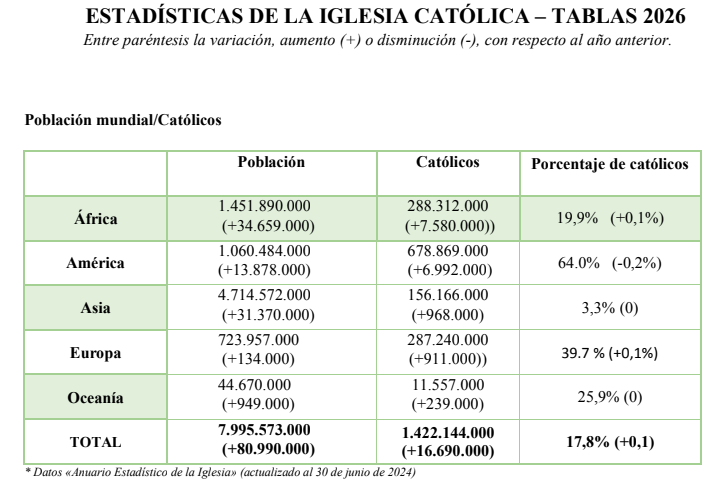
The figures reveal a Church experiencing growth in its membership while facing mounting challenges in ensuring that its faithful have access to priests, the sacraments and sustained pastoral care.
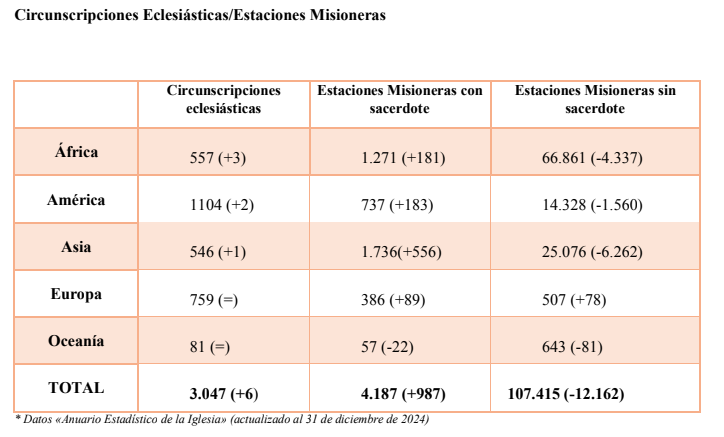
Africa is emerging as a particularly important center of this transformation. The continent added 1,676 priests in 2024, the largest regional increase, followed by Asia with 1,065. The Americas, after recording a decline in the previous reporting period, also returned to growth, gaining 199 priests.
Europe, by contrast, lost 2,483 priests in a single year, while Oceania recorded a decrease of 32. The geographical imbalance illustrates how the Church’s are increasingly shifting away from regions historically associated with Catholicism toward areas experiencing stronger ecclesial growth.
More priests, but fewer future candidates
The overall increase was driven by diocesan clergy, whose numbers reached 279,238, up 496. Religious priests, who belong to religious orders and congregations, declined by 71 to 128,183.
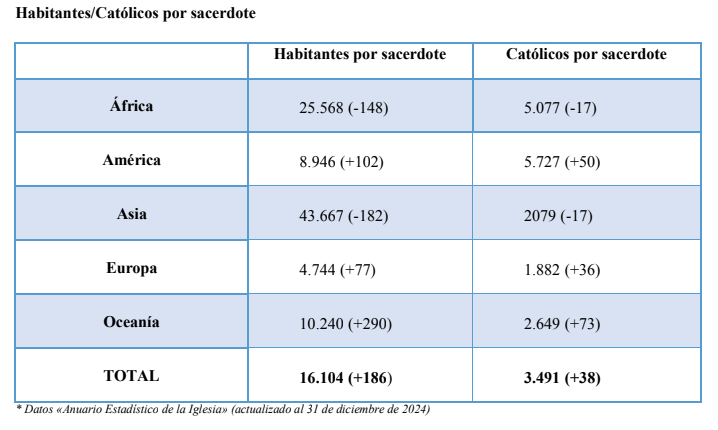
Despite the recovery, the ratio of Catholics to priests worsened. In 2024, there were an average of 3,491 Catholics per priest, 38 more than in the previous year. The average number of inhabitants per priest also increased to 16,104.
These figures point to a central pastoral challenge: the Church is growing faster than its priestly workforce in terms of the number of people it serves. The global average also conceals substantial differences between regions, with some communities enjoying relatively close access to clergy while others must contend with limited pastoral coverage.
More concerning for the longer term is the continued decline in seminary enrollment. The number of major seminarians, men undertaking advanced formation for the priesthood, fell by 2,891 to 103,604 worldwide.
Africa was the only continent to register an increase, adding 786 candidates. Asia experienced the sharpest decline, with 2,733 fewer seminarians, followed by Europe, which lost 701. The Americas recorded a decrease of 227, while Oceania lost 16.
The decline also extends to minor seminaries, whose enrollment fell by 980 to 94,041. Africa added 132 candidates and Oceania 20, but Europe lost 872, Asia 182 and the Americas 78.
The contrast between rising priestly numbers and falling seminary enrollment is significant. The first reflects the accumulated results of previous years of formation and ordination; the second offers a warning about the potential availability of clergy in the years ahead. The latest figures do not establish how future ordination numbers will evolve, but they highlight the importance of sustaining vocations and providing adequate formation.
A growing Catholic population, increasingly centered on Africa
The Church’s membership reached 1,422,144,000 in 2024, equivalent to 17.8% of the world’s population. Every continent recorded an increase, but Africa led decisively, gaining 7.58 million Catholics.
The Americas followed with nearly seven million additional Catholics. Asia added 968,000, Europe 911,000 and Oceania 239,000.
This expansion reinforces Africa’s growing significance in the universal Church. Its contribution is not limited to demographic growth: it is also the only continent reporting an increase in both major seminarians and the number of women religious in the broader Fides statistical report.
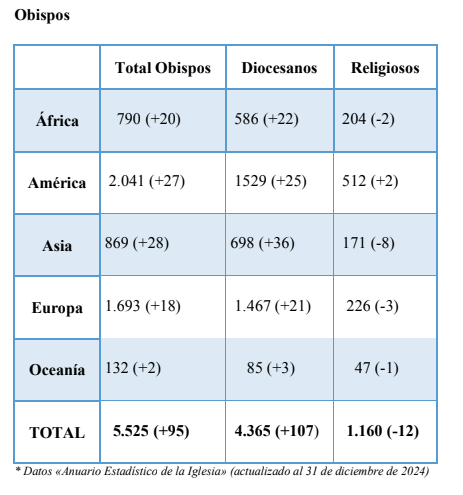
The figures suggest that the Church’s future will depend increasingly on its ability to support communities in regions where Catholicism is expanding, while responding to the difficulties confronting established Catholic populations elsewhere.
The challenge of turning growth into pastoral strength
Published for the centenary of World Mission Sunday, the statistics offer a mixed picture of the Catholic Church’s worldwide position. Its membership continues to expand, and the number of priests has finally returned to growth. Yet the decline in seminarians raises questions about whether the Church will be able to maintain sufficient pastoral resources as its population increases.
Thank you for reading our content. If you would like to receive ZENIT’s daily e-mail news, you can subscribe for free through this link.

Publicaciones relacionadas:
 A predominantly Catholic community dedicated to the Latin Mass sets a record for priestly ordinations in a single year: more than in all of Germany
 Opus Dei gives to the Church 29 new priests from 19 countries
 Asia’s Oldest Seminary Turns 360 Years: Where Is It?
 A Priest’s 3 Secrets: Leo XIV’s Beautiful Homily (and Task) at His Second Mass for Priestly Ordinations as Pope
