

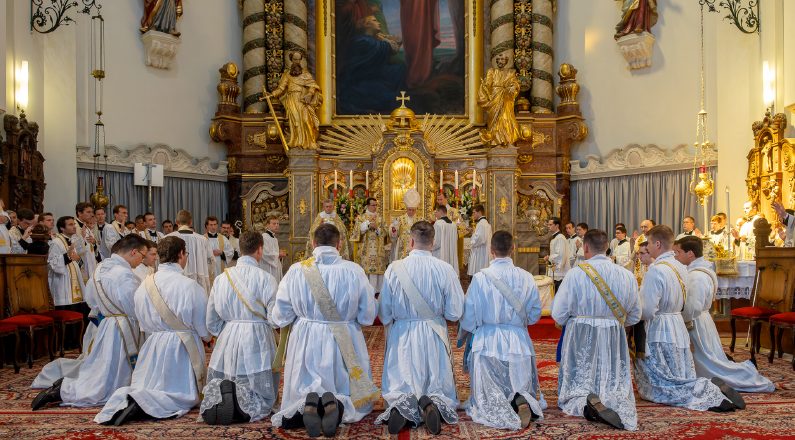
(ZENIT News / Rome, 06.22.2026).- While many Western dioceses continue to struggle with declining vocations, recent developments on both sides of the Atlantic suggest that a distinct current within Catholicism is showing remarkable vitality. The Priestly Fraternity of Saint Peter (FSSP), a society founded in 1988 and dedicated to the celebration of the Traditional Latin Mass, has reached a historic milestone with 25 priestly ordinations in 2026—the highest annual total in its history.
The figure is striking not merely because it sets a record for the fraternity itself, but because it equals the total number of diocesan priestly ordinations recorded throughout Germany in 2025. In a country with 27 Catholic dioceses and more than 19 million Catholics, that represented fewer than one new priest per diocese, a symbolic indicator of a long-term vocational crisis that continues to challenge one of Europe’s most influential local Churches.
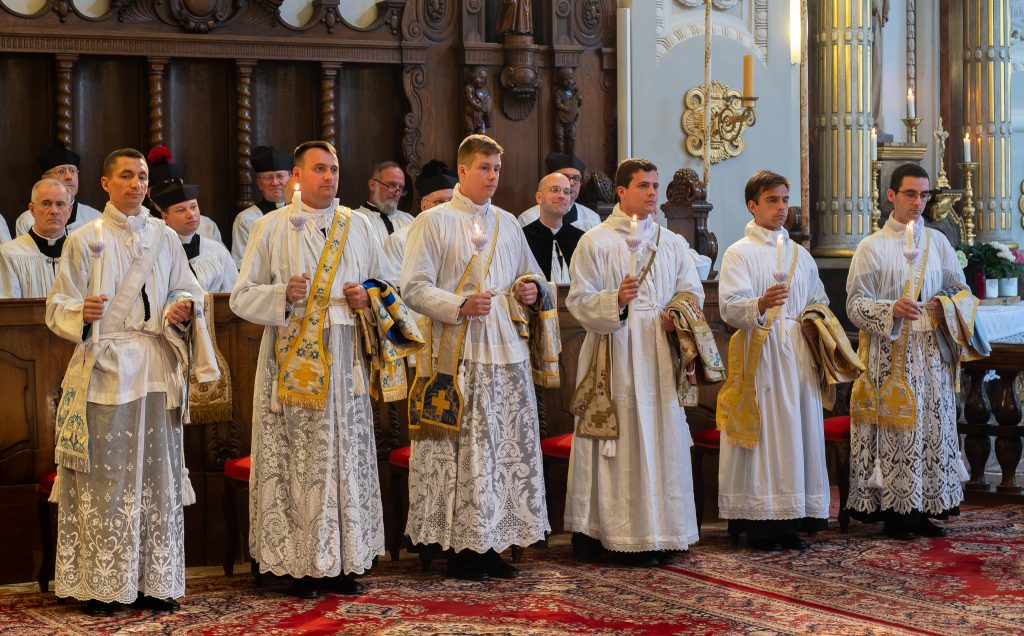
The FSSP’s record year unfolded across two continents. Twelve men were ordained on May 28 at St. Cecilia Cathedral in Omaha, Nebraska, by Archbishop Thomas Wenski of Miami. In his homily, Wenski reminded the ordinands that priestly ministry demands complete self-giving without falling into destructive exhaustion. The new priests had completed their formation at Our Lady of Guadalupe Seminary in Denton, Nebraska, the fraternity’s North American seminary.
A second ceremony followed on June 20 in Lindenberg, Bavaria, where Bishop Marc Aillet of Bayonne ordained thirteen additional deacons to the priesthood. The group reflected the increasingly international character of the fraternity, including candidates from France, Portugal, the Czech Republic, Austria, Croatia, Hungary, Italy, Poland, and Sweden.
With these ordinations, the fraternity now counts more than 400 priests among its 579 members worldwide. Its average age, including seminarians and deacons, is just 39 years old—an unusually youthful demographic profile compared with many Western ecclesiastical institutions.
Among Catholic priests who were ordained in the late 1960s:
68% describe their theology as progressive.
16% said it was conservative.Among priests ordained in the last few years:
2% describe their theology as progressive.
84% said it was conservative. pic.twitter.com/t4LzLEYdKR— Ryan Burge 📊 (@ryanburge) April 21, 2026
The contrast with broader trends has attracted growing attention. For decades, Catholic practice and vocations have declined across much of Europe and North America. Yet communities associated with traditional liturgy and classical Catholic spirituality have often demonstrated greater stability and, in some cases, sustained growth. The FSSP has become one of the most visible examples of this phenomenon.
Recent research from the United States points to a broader generational shift within the clergy. Studies conducted through the National Study of Catholic Priests and later confirmed by a 2025 survey commissioned by The Catholic Project at The Catholic University of America indicate that younger priests are significantly more likely to describe themselves as theologically and politically conservative than previous generations.
According to the data, approximately 84 percent of priests ordained after 2020 identify as conservative. Among priests ordained since 2010, a majority describe their political outlook as conservative or very conservative, while only a small minority identify as liberal. The findings stand in notable contrast to the decades following the Second Vatican Council, when progressive self-identification was far more common among American clergy.
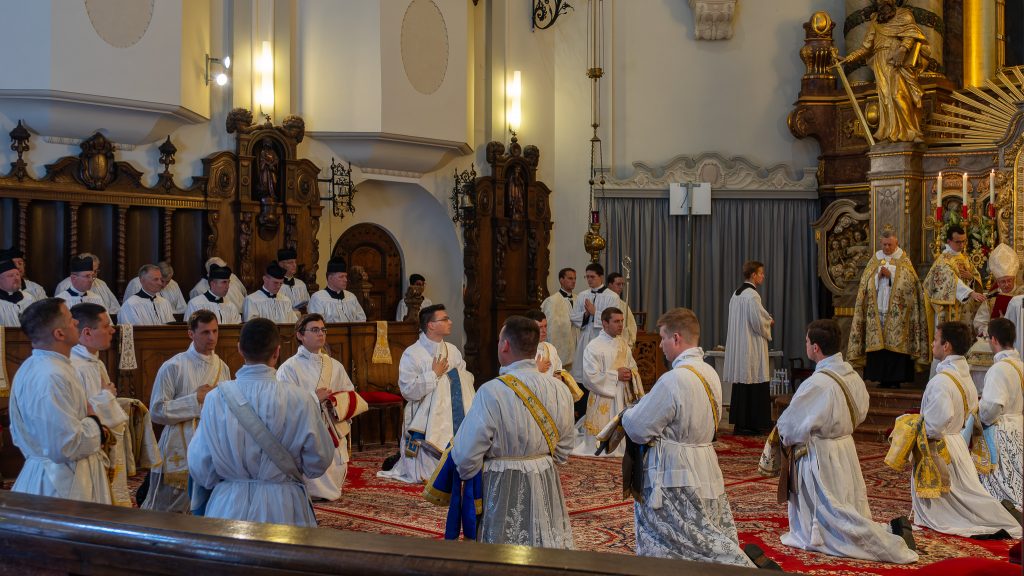
These trends have fueled renewed debate about the future direction of Catholic life. Some observers see in them the lasting influence of Pope Benedict XVI, whose emphasis on doctrinal continuity, liturgical reverence, and priestly identity shaped a generation of seminarians. Others caution that ideological labels alone cannot fully explain vocational vitality and that the Church’s future will depend on balancing fidelity to tradition with effective evangelization in increasingly secular societies.
The discussion has also intensified around the place of the Traditional Latin Mass. Interest grew further after a recent papal message to the French hierarchy, transmitted through Cardinal Pietro Parolin, encouraged generosity toward Catholics sincerely attached to the older liturgical form while maintaining the liturgical principles of the Second Vatican Council. The message prompted speculation among commentators that Pope Leo XIV could eventually adopt a more accommodating approach toward communities attached to the Vetus Ordo, potentially revisiting some of the restrictions introduced under Pope Francis’ 2021 document Traditionis Custodes.
Thank you for reading our content. If you would like to receive ZENIT’s daily e-mail news, you can subscribe for free through this link.

Publicaciones relacionadas:
 Opus Dei gives to the Church 29 new priests from 19 countries
 A Priest’s 3 Secrets: Leo XIV’s Beautiful Homily (and Task) at His Second Mass for Priestly Ordinations as Pope
 Three Bits of Advice from the Pope for Newly Ordained Priests: Leo XIV’s Words to a Group of Legionaries of Christ
 The number of priestly ordinations in Catholic Poland is plummeting: here are the figures for 2026
