

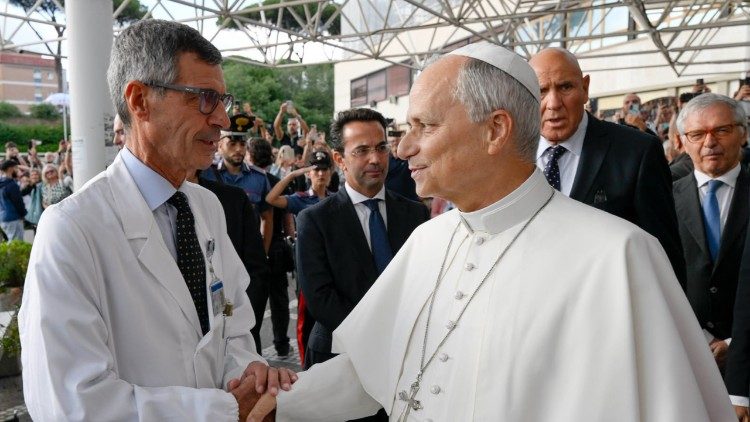
(ZENIT News / Rome, 10.17.2026).- Pope Leo XIV could still undertake his planned visit to Uruguay, Argentina and Peru from November 6 to 17, according to the surgeon who operated on him for lung cancer, although the pontiff needs more time to complete his recovery. Professor Stefano Margaritora, head of thoracic surgery at Rome’s Gemelli Hospital, said there were currently no medical reasons to rule out the demanding journey following the Pope’s discharge from hospital.
The operation took place on October 13 and removed the lower lobe of the Pope’s right lung, where an adenocarcinoma had been found. By the time he left hospital, his clinical condition was satisfactory: blood tests were normal, his heart function was sound, and the remaining lung tissue was re-expanding according to the expected timetable. The surgery was completed without complications.
Margaritora estimated that Leo XIV would need approximately another ten days to achieve a full physical recovery. In his assessment, a journey involving long flights and extensive travel, scheduled roughly three weeks after the interview, remained medically feasible. The final decision, however, will depend on the Pope’s recovery as the departure date approaches.
The case has also highlighted how lung cancer can develop without obvious warning signs. The tumor was discovered by chance during routine abdominal imaging, which happened to include the lower portions of the lungs. The Pope had experienced no respiratory symptoms and had been feeling well.
For Margaritora, that circumstance underscores the importance of early detection, particularly among people at increased risk. While established screening programs exist for certain cancers, he argued that greater attention should also be paid to lung cancer, which may remain asymptomatic in its initial stages. The Pope’s experience illustrates how a medical examination undertaken for an unrelated reason can reveal a potentially serious condition before it produces noticeable symptoms.
The surgeon was careful not to portray the procedure as an extraordinary technical feat. Removing an affected lung lobe is a standard approach for tumors of this size, he explained. What made the operation exceptional was not its surgical complexity but the the patient.
As a physician, Margaritora said, he had to concentrate on performing an operation he had carried out many times before. Yet he was acutely aware that he was treating a Pope whose health matters deeply to Catholics across the world. He described the experience as an intense personal emotion that was difficult to put into words.
He recalled greeting Leo XIV in the operating room alongside the surgeons, anesthesiologists and other members of the team, telling him they were the hospital’s “dream team.” The Pope responded with a smile before anesthesia began.
Margaritora also praised the pontiff’s discipline during his postoperative recovery. Leo followed dietary instructions and respiratory physiotherapy, got back on his feet promptly and often did more than the medical team asked of him. On the second day after surgery, the staff even found him arranging chairs in the hospital chapel, prompting them to remind him that they could take care of the task themselves.
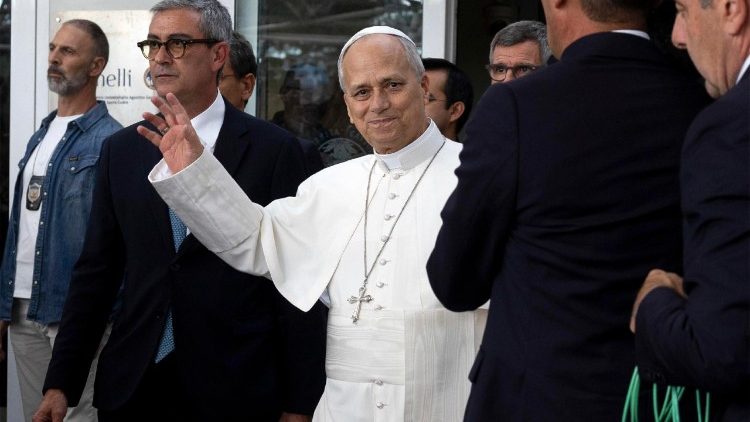
The surgeon described him as an ideal patient: calm, cheerful and remarkably cooperative, despite the discomfort that inevitably accompanies such an intervention.
He concluded by emphasizing that the outcome depended on much more than the work of the lead surgeon. Nurses, operating-room staff, laboratory and radiology technicians, physiotherapists and other healthcare professionals all played essential roles in the Pope’s treatment. Margaritora also thanked the leadership of Gemelli Hospital and the Catholic University of the Sacred Heart for their support.
For now, the medical assessment offers a reason for cautious optimism about Leo XIV’s November itinerary. His recovery is progressing as expected, but the immediate priority remains allowing him to regain his strength before undertaking a journey that will place significant physical demands on him.
Thank you for reading our content. If you would like to receive ZENIT’s daily e-mail news, you can subscribe for free through this link.

Publicaciones relacionadas:
 Dates and Locations Announced for Mass Events with Pope Leo XIV in Spain
 A Priest’s 3 Secrets: Leo XIV’s Beautiful Homily (and Task) at His Second Mass for Priestly Ordinations as Pope
 Funding projects also means contributing to the Church’s evangelizing mission: Leo XIV to the “Papal Foundation”
 French bishops announce the Pope’s visit for September 2026: here’s what we know
