

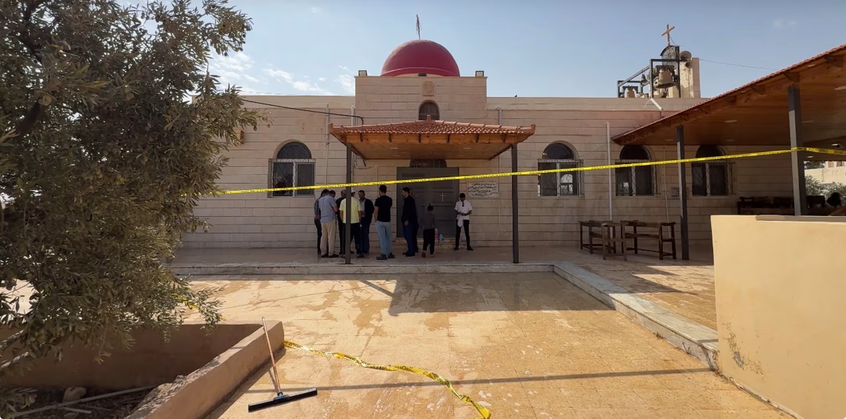
(ZENIT News / Amman, 10.26.2026).- The killing of nine people during a funeral at a Greek Orthodox church in southern Jordan has shaken a country long regarded as a rare example of Christian-Muslim coexistence in the Middle East. The October 23 attack at St George’s Church in Hammoud, in the Karak governorate, prompted Pope Leo XIV to express his solidarity with the victims, while Christian leaders across the region warned that the assault must not be allowed to undermine the religious and social bonds that extremists seek to destroy.
Around 250 mourners had gathered inside and outside the church to bid farewell to a woman who had died the previous day, when armed men opened fire. Survivors described several minutes of indiscriminate shooting, with people desperately seeking shelter as bullets struck those gathered near the entrance and in the church courtyard. Nine people ultimately died, while reports put the number of wounded at between 25 and around 40.
🇯🇴🚨BREAKING: ISIS claims responsibility for DEADLY church attack in Jordan
Gunmen opened fire directly on a funeral at a Greek Orthodox church in Karak, turning a mourning family’s grief into an absolute massacre.
At least six people were slaughtered and 28 others wounded as the terrorists ambushed the gathering 110 miles south of Amman.
Writer: Bri
https://t.co/oFVQSpSRXu— Mario Nawfal (@MarioNawfal) October 23, 2026
The brutality of the attack was compounded by its setting: a funeral, where relatives, friends and neighbours had assembled to grieve. Nour, a survivor who spoke to Spain’s EFE news agency, recalled that the gunfire began at approximately 2:10 p.m. and continued for eight to ten minutes. Among those attending were Muslim friends and acquaintances of the deceased, an indication of the close community relationships that the violence threatened to rupture.
Jordanian authorities classified the shooting as a terrorist attack and launched an investigation. Interior Minister Mazen al-Faraya described the perpetrators as extremists, while Prime Minister Jafar Hassan condemned the violence as the product of blind radicalism. On October 26, reports said that three suspects had been arrested after a security operation in which they were wounded. Although officials blamed extremist ideology, no confirmed evidence established an organisational link to the Islamic State, which had not officially claimed responsibility. The distinction matters: the investigation must establish responsibility through evidence rather than unverified statements circulating online.
King Abdullah II visited the affected area and promised severe punishment for those responsible. The government declared three days of national mourning, while security was strengthened at sensitive locations. The king also stressed that the attackers would fail in any attempt to divide Jordanians through violence.
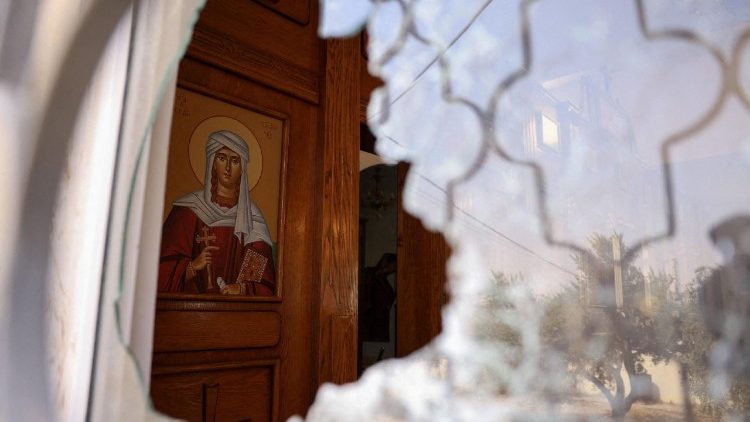
For the country’s Christian minority, the attack struck at both personal grief and a deeper sense of security. Christians represent only a small proportion of Jordan’s predominantly Muslim population, but their communities have longstanding roots in the country. Karak, in particular, has a history of interreligious solidarity. The assault was therefore widely experienced not simply as an attack on one congregation, but as a threat to the social fabric that allows Christians and Muslims to share neighbourhoods, traditions and moments of family sorrow.
Pope Leo XIV addressed the tragedy during the Angelus on October 25, offering prayers for the dead and wounded and expressing his closeness to the Greek Orthodox community and to Jordan as a whole. He highlighted the country’s tradition of peaceful coexistence and respect among different religions. His intervention was welcomed beyond Christian circles, according to Archbishop Giovanni Pietro Dal Toso, the apostolic nuncio to Jordan and Cyprus.
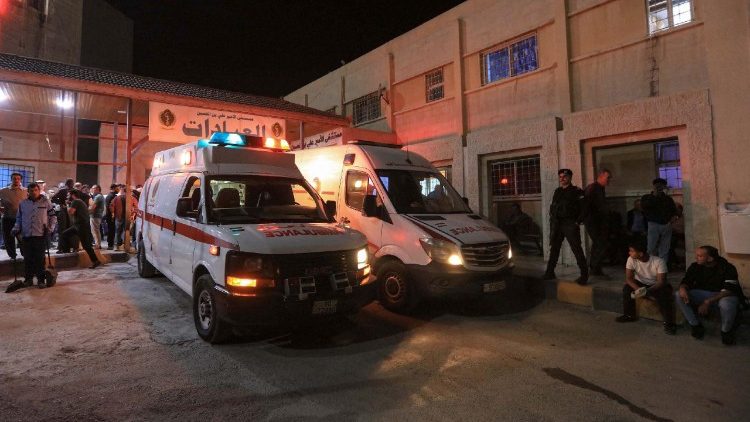
Dal Toso had visited three hospitals in Karak, accompanied by Monsignor Iyad Twal, the patriarchal vicar in Amman, to convey the Pope’s condolences and support to the injured and bereaved. At one of the hospitals, run by Comboni Sisters, three victims were receiving treatment. The nuncio said that many Jordanians, including Muslims he met, had condemned the attack and stressed that it was incompatible with their understanding of Islam and with the country’s tradition of familiarity between the two communities.
The response from Christian leaders was equally forceful. Greek Orthodox Patriarch Theophilos III of Jerusalem declared that the attack would not drive Christians from their homeland. Christians, he said, were part of the land’s past, present and future, and would remain there as witnesses to their faith despite the dangers. He argued that violence intended to uproot them would instead strengthen their attachment to their homeland and deepen ties between Christians and Muslims.
The Latin Patriarchate of Jerusalem condemned the shooting as a grave violation of the sanctity of a place of worship and of the fundamental rights to life, security and religious freedom. It also praised Jordan’s Hashemite monarchy for promoting moderation and tolerance. Patriarchs and heads of Churches in Jerusalem called on congregations throughout the region to ring their bells at noon on October 24 in memory of the victims. Churches in Jordan and Palestine answered the appeal, turning a local tragedy into a collective act of mourning.
Ecumenical Patriarch Bartholomew of Constantinople also contacted Theophilos III to express his condolences. The World Council of Churches called for the protection of all places of worship, including churches and mosques, so that people could gather to pray without fear. These appeals underscored a principle extending beyond any one denomination: freedom of religion means little if believers cannot safely enter their places of worship, particularly at moments of vulnerability.
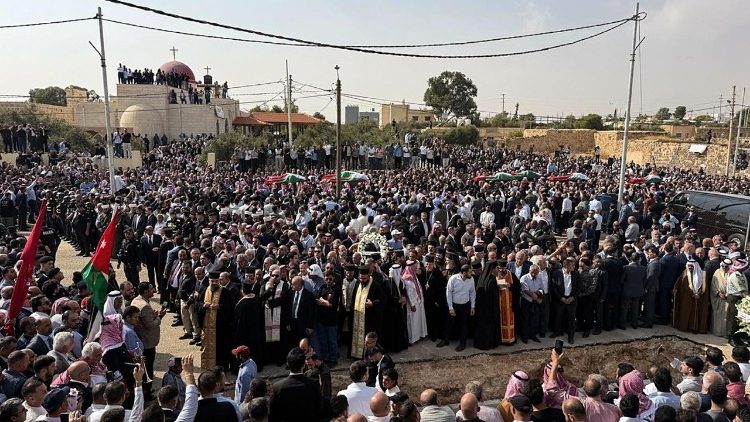
The Catholic response continued in the days that followed. Cardinal Pierbattista Pizzaballa, the Latin Patriarch of Jerusalem, joined Theophilos III at the funeral for the victims, as the damaged church remained marked by bullet holes and traces of blood. Father Rif’at Bader, a Jordanian priest, described the attack as a shock to the entire country, precisely because Jordan has sought to uphold security, dialogue and religious harmony. Father Louis Salman added that Christian forgiveness should never be confused with abandoning the demand for justice, insisting that those responsible must be held fully accountable.
Jordan has experienced terrorism before, including the December 2016 attack in Karak, claimed by the Islamic State, in which ten people were killed. Yet attacks specifically targeting a Christian community have been exceptionally rare in the kingdom. The present tragedy has exposed the vulnerability of that coexistence without erasing its strength.
Thank you for reading our content. If you would like to receive ZENIT’s daily e-mail news, you can subscribe for free through this link.

Publicaciones relacionadas:
 Attacks Against Christians Increase in India So Far in 2024: These Are the Data
 New Wave of Violence Against Christian Communities in Syria: Greek-Catholic Church Attacked and Bomb Plot Foiled at Maronite Church
 Statement by Christian leaders on the latest attack by Jewish settlers against Christians in the Holy Land
 Wave of Church Attacks in 2024 Sparks Concern Over Religious Freedom in the United States
