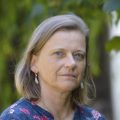

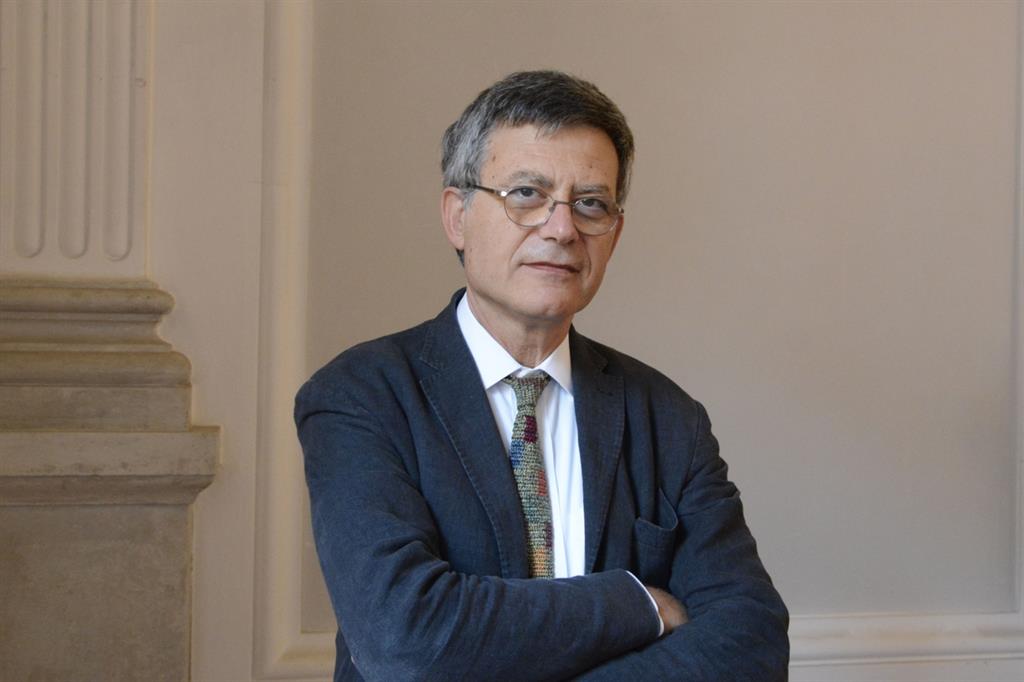
(ZENIT News / Rome, 10.29.2026).- Just days before stepping down from his role as Prefect of the Dicastery for Communication — a position he has held since July 2018 — Italian-born Paolo Ruffini granted an interview to ZENIT. In Rome, he reflected on his eight years at the helm of this Dicastery, as Maria Monserrat Alvarado prepares to succeed him on November 1, 2026.
Paolo Ruffini shares his vision of a humble and authentic form of communication, one that serves human dignity and the common good, and reflects a deeply lived Christian life: «Loving one another and being in communion with one another is the most powerful way to change the world!»
* * *
ZENIT: You were the first layman to hold the position of Prefect of the Dicastery for Communication. How did you react to your appointment in 2018?
Paolo Ruffini: It was a challenge for me to be the first layman appointed to this position. In a sense, the Church’s communication would also «depend» on me. It was such a significant undertaking that it might have made anyone tremble, but I knew that we all share in the «common priesthood of the faithful» and that every baptized person bears a measure of responsibility within the Church. And as Saint Paul said, it is when we are at our weakest that grace comes to our aid.
When Pope Francis unexpectedly called me for this role, I had been working for the Italian Episcopal Conference since 2014, where I was in charge of the programs for TV2000. Initially, I said to the Pope: «There might be a misunderstanding; I am a believer, I am Catholic, but I am also a layman and I am married. I have worked in journalism and communication, but I have never written anything about the Church. I am not an expert on the Vatican.»
I had the most incredible job interview of my life: the Pope himself was interviewing me! The strangest part is that I only spoke against myself. But the Holy Father said to me: «Send me your curriculum vitae, let me conduct a few interviews, and then I will let you know.» A few weeks later, he called me: «It will be you.» And I accepted, in a spirit of service.
ZENIT: How did your mission begin?
Paolo Ruffini: Above all, it was a joy to work for the universal Church. We are Catholics; we are at the service of the Pope, and, while maintaining our own autonomy, we strive to be a point of reference for communication worldwide. This was what inspired and motivated me most when I first arrived. Yet, it was also challenging, as we had to work within a Dicastery that encompasses 50 different languages, handles communication and journalism, includes a theological and pastoral section, and maintains contact with Bishops from all over the world. We had to understand how communication could be used to serve the truth and the Good News, rather than merely providing «quick news.»
It was also necessary to learn how to live in unity within this Dicastery, which comprised 40 different sections. We had to work together and share our reflections, our interpretations of current events, and our understanding of contemporary science — all with the goal of building a «universal communication ecosystem» that is open, transparent, meaningful, and accessible even to those who are not believers.
ZENIT: What significant changes have taken place in this department over the last few years?
Paolo Ruffini: In 2015, three years before my appointment, the various media outlets and communication bodies of the Vatican were consolidated into a single Dicastery, with each retaining its specific function. When I arrived in 2018, L’Osservatore Romano was a printed newspaper; today, it has become a digital publication covering a wide range of in-depth topics. As for Vatican Radio, we transformed it into an Internet-based radio station and subsequently began producing podcasts and documentaries.
Over the years, we have worked intensively to strengthen and consolidate relationships with the Church’s communication systems worldwide, particularly with the Bishops’ Conferences. We have endeavored to explore various subjects in greater depth by fostering dialogue, especially with writers, philosophers, and musicians, to reflect together on the challenges of our time.
Another significant change: nowadays, our media outlets offer many languages that were not previously available, such as certain Indigenous languages of Canada, various Indian languages, Mongolian, and the African language Lingala. We even provide sign language for deaf or hard-of-hearing individuals. We also offer training in communication, something we did not do before. Specifically, we provide training to religious Sisters, and we have worked with young people on a project concerning the digital world. Furthermore, we now have a network of young people working across every continent, with whom we have updated the Vatican’s visual identity and communication strategy. Finally, we have created a widget that any parish or Catholic institution worldwide can integrate into its website to display, in real time, our institutional publications, articles, and accounts of charitable works, a way to remain united as a Church, wherever we may be.
ZENIT: How can one communicate authentically and maintain trust in a world saturated with disinformation?
Paolo Ruffini: As Catholic communicators, we must be «pure water» and serve as a point of reference in the world as it is, so that people may discern between what is corrupt and what is pure. But we face an even greater challenge: to place our creativity at the service of the dignity of every human being. I am thinking of the magnificent encyclical Magnifica Humanitas of Pope Leo XIV regarding artificial intelligence. Certain points — particularly those related to communication — strike me as especially relevant, above all when the Pope asserts that we must rediscover the meaning of the common good, a concept that is often forgotten. We must recognize that communication is a common good, that truth itself is a common good! Therefore, preserving and protecting the voices and faces of our fellow human beings is of the utmost importance for those of us who are communicators and journalists.
ZENIT: How has your role as Prefect transformed you in a profound way?
Paolo Ruffini: First of all, I learned that the beauty of the Church also flourishes in unexpected places.
The Holy See should be, as much as possible, a bridge that connects and a means to build communion among all. We are truly one in Jesus, and we must connect with one another, embracing our vocation as missionary disciples through communication.
Personally, my faith has been enormously strengthened in recent years, thanks to the challenges we have faced, but also thanks to the example of many people I have had the good fortune to meet. I am thinking, of course, of Popes Francis and Leo XIV, and those who work in the Roman Curia, but also of all the people I have encountered around the world who have bolstered my faith. I am convinced that the Church must keep pace with the times. However, this does not mean that it should address challenges in a purely functional way.
Communication within the Church operates on a different level: we must take advantage of the benefits of technology and utilize the talents of our modern era, yet we must absolutely preserve our Catholic identity, which is rooted in the Gospel. The challenge, therefore, is to ensure that our communicators, those who convey the Christian vision to the world, understand this: loving one another and living in communion with each other is the most powerful way to transform the world! We must all keep this in mind: rather than remaining in our comfort zones, we should feel the call to open our windows and doors, to be in the world without fear, and without falling into the temptation of conquest or domination.
ZENIT: Finally, do you have any specific plans for the coming months?
Paolo Ruffini: Not yet! I have changed jobs many times throughout my life, and I continue to do so. Until the very last day in this position — even though that day is drawing near — I will focus on what I need to do right now. Afterward, I will reflect and see if I can offer my help as a volunteer somewhere. For now, I am living in the present as a gift from life that God has given me.

Publicaciones relacionadas:
 Russia, China and Nuclear Arms: Interview with the Vatican Secretary of State
 Interview with Filipino Cardinal Luis Antonio Tagle on the Renewal of the China-Vatican Agreement
 Consistory of Cardinals: Exclusive Interview with Monsignor Felipe Arizmendi
 Doctrine of the Faith announces new document to discern Marian apparitions