

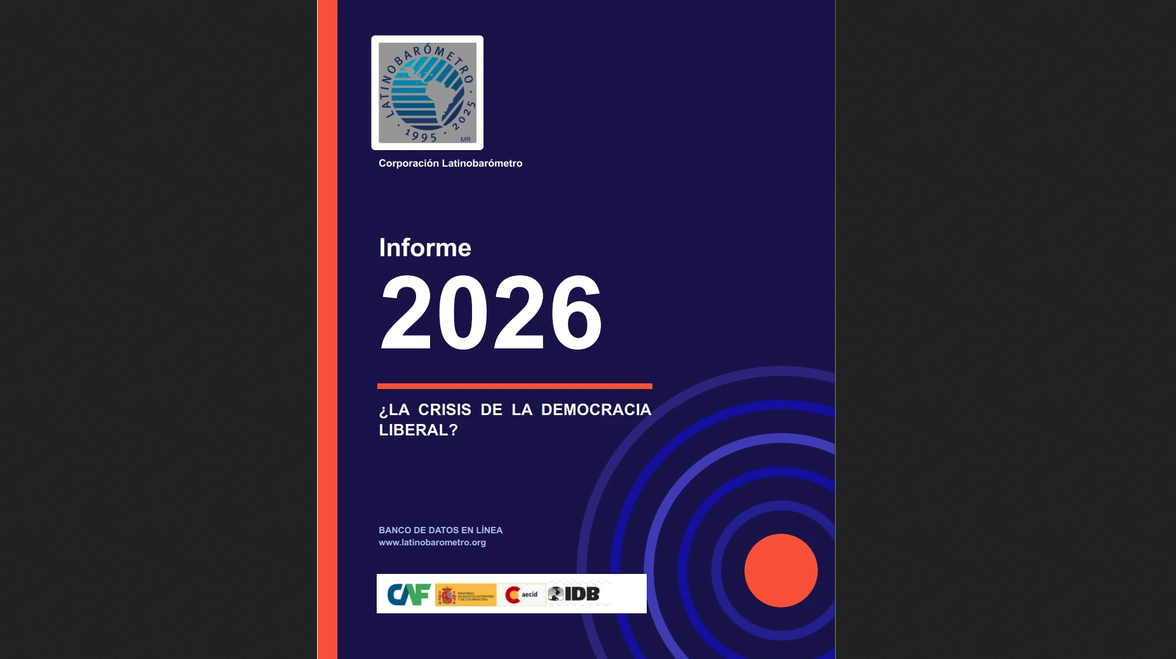
(ZENIT News / Mexico City, 10.29.2026).- The Church remains the most trusted institution in Latin America, according to the 2026 Latinobarómetro report, which places its average level of public confidence at 63%. The figure puts it well ahead of radio and the armed forces, both at 43%, while political parties languish at just 15% — a striking measure of the distance between religious institutions and much of the region’s political establishment.
The findings are based on 19,207 face-to-face interviews conducted across 17 countries in May and June 2026. They offer a broad picture of how Latin Americans view the institutions that shape public life, although the results require an important distinction: the survey measures confidence in the Church as an institution, not exclusively in the Catholic Church. Nor does it indicate how many respondents identify as Catholics or regularly practise their faith.
Behind the regional average, however, lies a markedly uneven landscape. Honduras and Guatemala share the highest level of confidence, at 77%, followed by Paraguay at 76%, El Salvador at 76% and the Dominican Republic at 75%. Panama also records a strong result, with 72%, while Peru stands at 66%.
At the other end of the scale, Uruguay registers only 42%, the lowest figure among the countries listed. Argentina follows at 44%, while Chile reaches 54% and Mexico 55%. Brazil and Ecuador both stand at 59%, Venezuela at 61%, and Bolivia, Colombia and Costa Rica each match the regional average of 63%.
Uruguay’s result is particularly notable given the country’s long-standing secular character. Yet the contrast between its figures and those of Central American countries also illustrates why a regional average cannot tell the whole story: the Church’s standing varies considerably according to each nation’s social, cultural and historical circumstances.
The Latinobarómetro findings do not establish why the Church enjoys greater confidence than other institutions, nor do they prove that this trust translates into stronger religious practice. They do, however, reveal a significant feature of Latin American public life: despite substantial differences between countries, the Church continues to occupy a distinctive position in the region’s institutional landscape. That standing is also a responsibility, requiring credibility to be sustained through service, integrity and a consistent commitment to the communities it seeks to accompany.
Thank you for reading our content. If you would like to receive ZENIT’s daily e-mail news, you can subscribe for free through this link.

Publicaciones relacionadas:
 Orthodox Copts Will Celebrate Mass in Pope’s Cathedral: Vatican Explains Why
 Ireland: Catholics take a nosedive on the island of saints
 Polonia: Sunday Mass Attendance Rises as Sacramental Life Continues to Thin
 American missiles, persecuted Christians, and a country that cannot protect them: why did Trump bomb part of Nigeria?
