

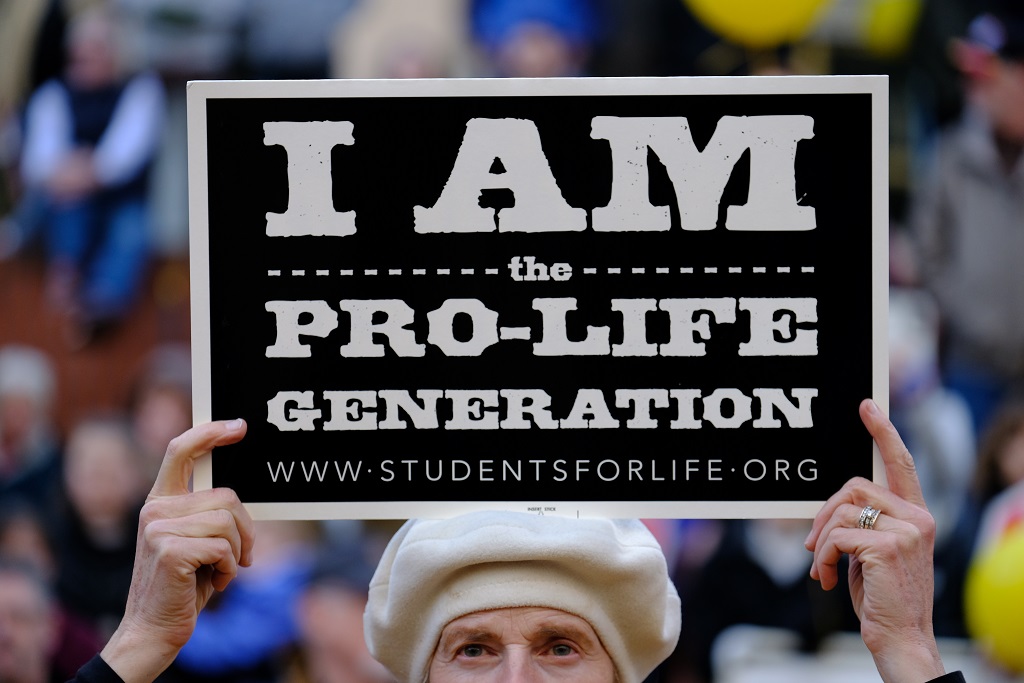
(ZENIT News / Washington, 11.04.2026).- The American pro-life movement faces a difficult new political landscape following the November 3 midterm elections, in which abortion-rights advocates prevailed in three of four state referendums and Democrats secured control of both chambers of Congress. The results have intensified questions about how defenders of unborn children should respond to an electorate increasingly influenced by economic concerns, shifting political loyalties and competing interpretations of reproductive rights.
Yet the results were not uniformly unfavourable. Idaho rejected a proposal that would have introduced a constitutional right to reproductive freedom, demonstrating that pro-life campaigns can still prevail when they establish a clear message and mobilise voters effectively. The contrast between the four states offers an important indication of the challenges facing the movement in the aftermath of the Supreme Court’s 2022 decision overturning Roe v. Wade.
In Virginia, more than 62% of voters approved a constitutional amendment establishing a right to abortion. The measure’s broad wording, referring to the rights of every person, prompted particular concern among Catholic leaders, who warned that it could undermine existing health and safety regulations and weaken parental involvement in decisions affecting underage girls. Bishops Michael Burbidge of Arlington and Barry Knestout of Richmond described the outcome as deeply tragic, arguing that the amendment could leave unborn children and vulnerable women with fewer legal protections.
The result was similarly decisive in Nevada, where more than 63% supported a constitutional amendment protecting abortion until fetal viability, without additional restrictions. The Nevada Catholic Conference expressed disappointment but insisted that an electoral decision could not change the inherent dignity of human life. It pledged to continue supporting pregnant women, mothers and families while defending the unborn from conception to natural death.
Missouri delivered another significant defeat for pro-life advocates. Approximately 55.5% of voters rejected Amendment 3, which sought to overturn the constitutional abortion protections approved in 2024 and restore substantial legal restrictions. That earlier referendum had passed with 51.6% support. Despite improved coordination among Catholic dioceses and state authorities during the latest campaign, the pro-life coalition struggled to compete with the financial resources of abortion-rights organisations, which maintained a stronger advertising presence in major population centres, particularly St. Louis and Kansas City.
Jamie Morris, executive director and general counsel of the Missouri Catholic Conference, acknowledged that the campaign had been better organised but described the outcome as profoundly disappointing. He nevertheless questioned whether the result necessarily reflected a fundamental change in voters’ convictions about abortion, pointing instead to the political climate and the effectiveness of the opposition campaign.
Idaho provided the counterpoint. Approximately 56% of voters rejected Proposition 1, which would have established a constitutional right to reproductive freedom and privacy. Emily Naugle, president of Right to Life of Idaho, credited the victory to a campaign that successfully challenged the proposal’s claims and brought together pro-life organisations. The result demonstrated that constitutional abortion protections are not inevitable, even in a political environment in which abortion-rights campaigns have enjoyed considerable success elsewhere.
For Catholic bishops, the immediate response has been to reaffirm that the Church’s responsibility does not begin and end with electoral campaigns. The Missouri bishops pledged to continue accompanying mothers and fathers facing difficult pregnancies, offering practical assistance and support to those suffering after abortion. In Nevada, Catholic leaders similarly stressed that disappointment over the referendum would not diminish their commitment to women and unborn children.
This emphasis reflects a central challenge for the pro-life movement: legal restrictions alone cannot resolve the circumstances that lead women to consider abortion. Economic insecurity, family instability, inadequate support and fear of raising a child can all contribute to decisions made under considerable pressure. Defending unborn life therefore requires not only political advocacy but also sustained assistance for mothers, fathers and families. As Morris argued, the long-term objective should be to create a culture in which abortion becomes unthinkable, even where it remains legally available.
The national political results add another dimension to the debate. Democrats gained at least seven Senate seats, took control of the House of Representatives and secured a substantial advantage in the lower chamber. Pro-life organisations fear that the new congressional balance could revive efforts to repeal the Hyde Amendment, which restricts the use of federal funds for most abortions, while making the confirmation of judges supportive of pro-life legal arguments more difficult.
The election has also exposed divisions within the Republican Party over how to address abortion. Marjorie Dannenfelser, president of Susan B. Anthony Pro-Life America, blamed Republican political advisers for encouraging candidates to downplay their pro-life commitments, arguing that the strategy discouraged supporters from turning out. National Right to Life president Carol Tobias likewise warned that the movement would face a more difficult legislative environment but insisted that the defeats represented a setback rather than the end of the struggle.
The electoral figures suggest that abortion was not necessarily the decisive issue for many Republican voters. A Pew Research Center survey published in October found that 82% considered the economy very important when deciding how to vote, compared with 43% who said the same about abortion. Immigration, foreign policy and violent crime also ranked prominently among Republican concerns. These priorities help explain why pro-life candidates and organisations cannot assume that agreement with their position on abortion will automatically translate into electoral support.
Michael New, a professor at the Catholic University of America and senior associate scholar at the Charlotte Lozier Institute, identified several factors behind the defeats, including the financial advantage enjoyed by abortion-rights groups, dissatisfaction among some pro-life voters with the Trump administration’s handling of abortion, and the difficulty of building public support for broader restrictions since the overturning of Roe.
The lesson, he argued, is that changing the law is important but insufficient. Public attitudes and the wider culture must also change. The Supreme Court’s decision removed the constitutional protection established by Roe, returning much of the authority over abortion regulation to elected representatives, but it did not settle the underlying moral and political dispute.
For the Catholic Church, this means continuing to defend the dignity of unborn life while making its support for women and families tangible. The bishops’ statements after the elections have consistently emphasised that mothers facing difficult pregnancies must not be abandoned and that assistance should continue regardless of political circumstances.
The November results may force pro-life organisations to reconsider their electoral strategies, their messaging and their relationship with Republican politicians. But the deeper question is whether they can build a broader culture of solidarity with both mother and child. Idaho suggests that victories remain possible. More importantly, the Church’s mission to protect human life cannot be reduced to the outcome of a referendum or the balance of power in Congress.
Thank you for reading our content. If you would like to receive ZENIT’s daily e-mail news, you can subscribe for free through this link.

Publicaciones relacionadas:
 New report shows that nearly 90,000 babies were saved from abortions since Roe v. Wade was overturned in the U.S.
 Woman in jail for 11 years for abortion: Canadian who opposed baby killing freed
 USA: Bishop Thomas Responds to Supreme Court’s Planned Parenthood and Medicaid Decision
 European Catholic Principality Headed by a Bishop Moves Toward Decriminalizing Abortion Amid Vatican Obstacles
