

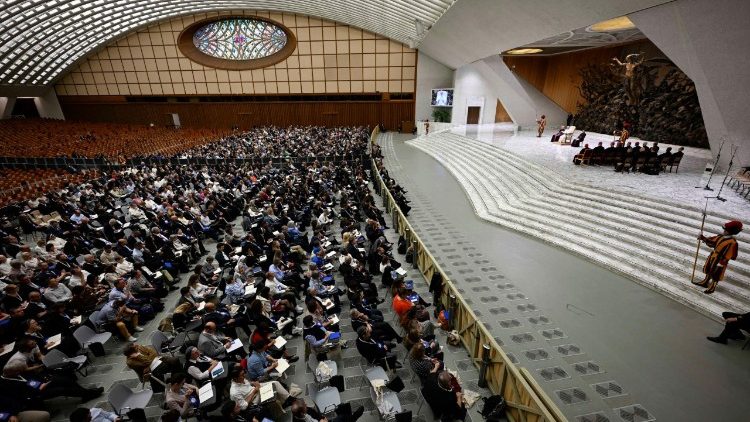
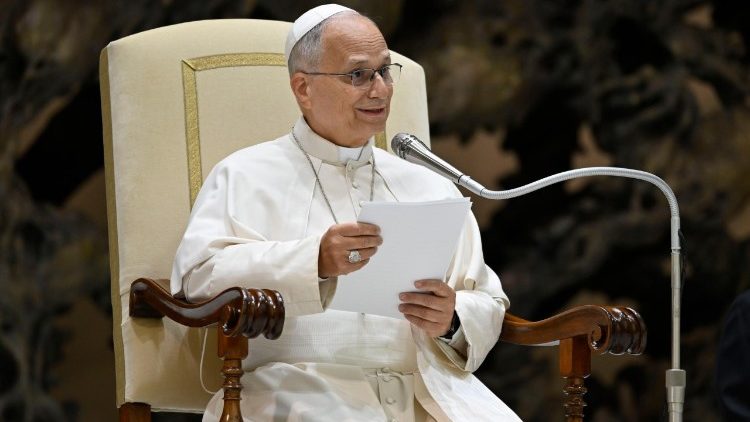
(ZENIT News / Vatican City, 10.22.2026).- On the occasion of the International Congress on School and University Pastoral Care, Pope Leo XIV received the participants in a special audience in the Paul VI Hall at the Vatican City. Below is the English translation of the Holy Father’s address:
***
Let us begin with the sign of the Cross with which we were all baptized.
In the name of the Father, of the Son and of the Holy Spirit.
Peace be with you.
Your Eminence,
Your Excellencies,
Dear brothers and sisters,
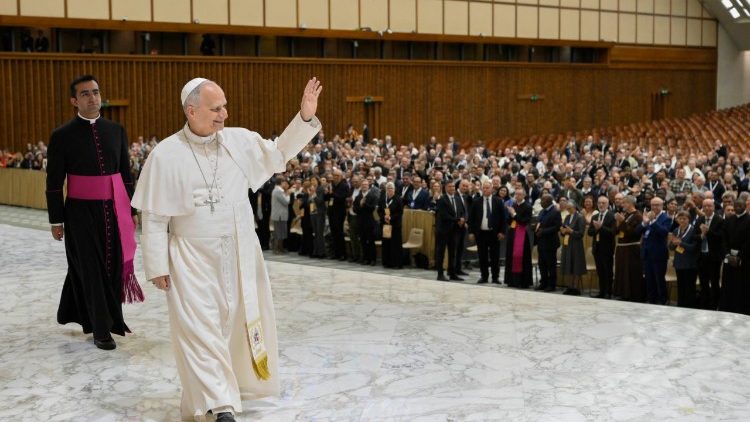
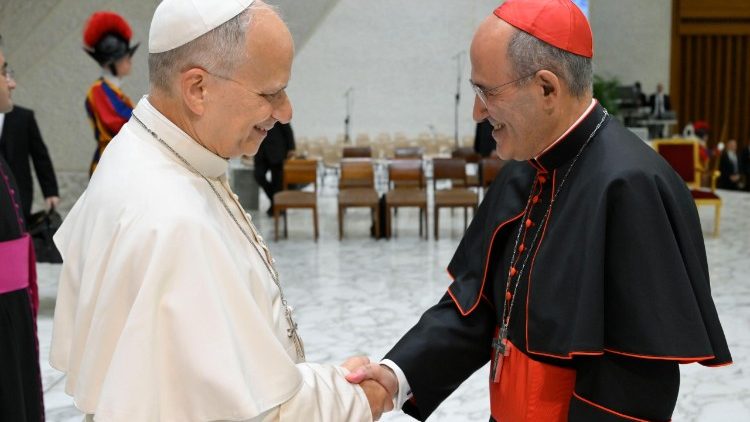
It is with great joy that I greet you at the start of this Conference on School and University Pastoral Ministry. I thank the Prefect of the Dicastery for Culture and Education, the Secretaries and Officials, as well as those who will be responsible for promoting reflection and deeper understanding; and I warmly welcome all of you who have come from so many parts of the world. I congratulate you on the work you carry out in educational and academic institutions in support of the proclamation of the Gospel and the dignity of the person.
It is essential that school and university pastoral ministry be able to respond to the desire that each person harbours within them, and to undertake a human and Christian journey together. Those to whom your ministry is addressed are characterized by the enthusiasm, generosity and spirit of service so typical of young people. And yet, how many students also face existential hardship! Broken families, digital loneliness, feelings of inadequacy or fear in the face of a future that seems uncertain. Many walk the corridors of our schools and universities and perhaps feel anonymous. How important it is that Catholic schools and universities should be, first and foremost, a “home”, a familiar place where one is welcomed. The first proclamation often takes the form of a welcoming attitude: someone who looks you in the eye, who remembers your name, who notices your absence, who rejoices at your return.
In a welcoming environment, the student can express his or her profound desire to understand, to give meaning to reality. Here we touch upon the vocation proper to schools and universities: the common search for truth. I therefore encourage you to stimulate the intelligence of young people, to value their questions. May your passion – especially for those of you working in Catholic institutions – be to help young people experience the beauty of an encounter with Christ, and the fruitfulness of the synergy between faith and reason, between the knowledge of the faith and other forms of knowledge.
Pastoral ministry in schools and universities is called to accompany the gradual germination of thought, to teach discernment and to seek with perseverance. The educational process “is a long journey requiring patience, and therefore needs time for development and for engagement with reality beyond appearances”. We must “protect our young people … from that subtle temptation which renders human thought seemingly superfluous precisely when it is most needed” (Encyclical Letter Magnifica Humanitas, no. 140).
A significant number of young people today are as if paralysed by the fear of making mistakes, of not measuring up, of being misunderstood, of failing to live up to expectations. We live in a performance-driven culture that constantly compares and ranks people, sometimes in a ruthless manner. A misguided meritocracy ultimately fails to respect people. This is why many end up giving up before they have even tried.
Help the young people you meet to be agents of a new way of dwelling in the world, builders of humanity, of a more just society. Courage grows out of a covenant of trust: from the experience of someone who believes in you before you believe in yourself. Jesus did not choose the Twelve because they were courageous; He called them and, through His trust in them, enabled them. We must be able to repeat to our young people the words that the disciples addressed to the blind Bartimaeus: “Take heart; rise, He is calling you” (Mk 10:49).
Beneath the armour that so many teenagers build up to protect themselves from suffering lies a desire to love and be loved. Pastoral care in schools and universities will be all the more fruitful the more it focuses on the education of the heart. Educating the heart in compassion, in gratitude, in the capacity to be moved by the suffering of others; educating it in praise and in the longing for God. Service to the poor, voluntary work and care for creation are not merely ancillary activities, but places where the heart learns to expand. Let us not forget: charity and prayer are inseparable.
Dear brothers and sisters, false teachers and deceptive messages promise to provide quick answers to young people’s questions. You, however, have chosen to do something greater: to walk alongside them on their journey, until they discover the gifts that God has already placed within them. Just as the Risen Lord did with the disciples on the road to Emmaus, drawing near, walking with them, listening, explaining, setting their hearts alight and, finally, revealing Himself to them as He broke bread (cf. Lk 24:13–35).
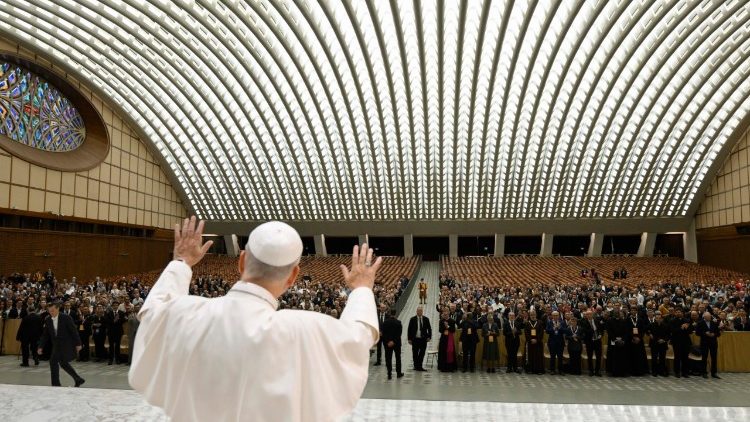
May His Holy Spirit always enlighten and sustain your service. May Mary Most Holy, Seat of Wisdom, accompany you, together with my blessing. Thank you.
Thank you for reading our content. If you would like to receive ZENIT’s daily e-mail news, you can subscribe for free through this link.

Publicaciones relacionadas:
 The authentic experience of sports, team spirit, and its temptations, according to Pope Leo XIV
 Some Reflections on the Life of the Church, Looking Ahead to the Coming Years (by Pope Leo XIV)
 Pope Leo XIV continues to restructure the Roman Curia: new Vatican No. 3 and prefect of the Papal Household
 Neither the Sum of What We Have, Nor Algorithms, Nor Matter Assembled at Random: What Are We? Two Questions Posed in Pope Leo XIV’s Address to University Students
