

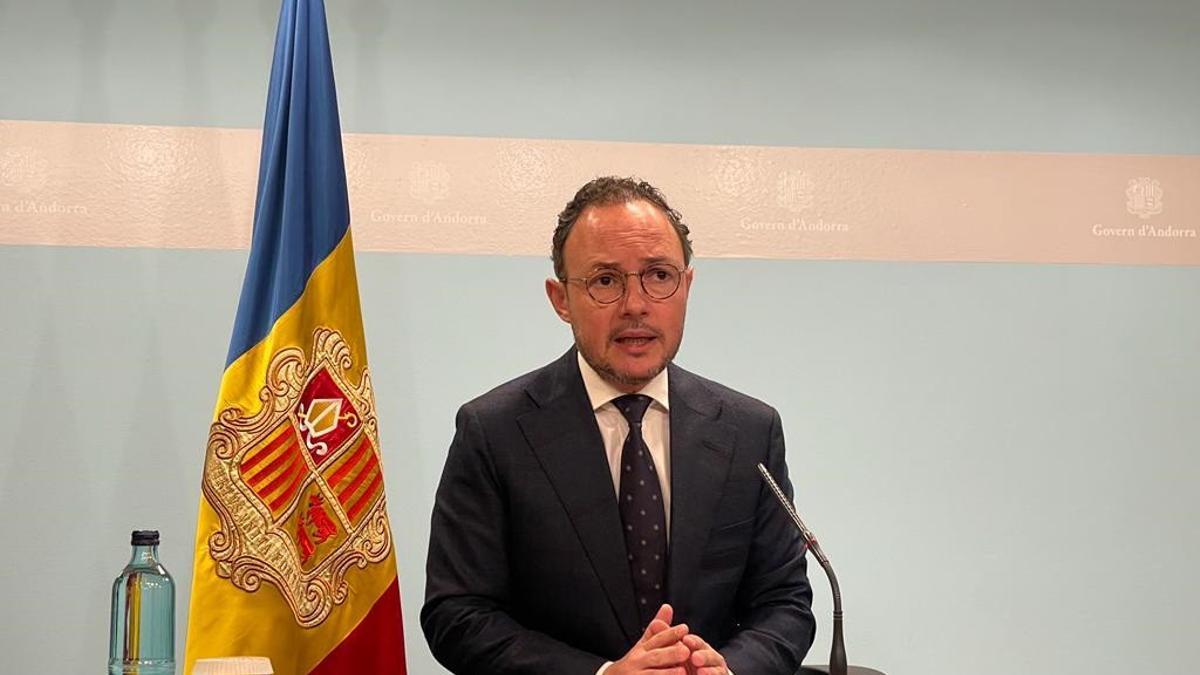
(ZENIT News / Andorra, 08.20.2026).- Following years of discreet negotiations between Cardinal Pietro Parolin and the Andorran Government, the General Council of the small principality, located between Spain and France, is set to reform the Penal Code to decriminalize abortion. Indications suggest this will proceed with the knowledge, and without the public opposition, of the Vatican Secretariat of State.
On August 11, the Andorran newspaper La Veu Lliure reported on the bill drafted during initial talks held in 2019 between the Andorran executive branch and the Holy See. Head of Government Xavier Espot insists on the distinction between decriminalization and legalization, noting that abortion procedures will remain unfeasible within Andorran territory and that the Principality’s Social Security system (CASS) will not fund abortions performed abroad. The reform would merely eliminate criminal penalties for women who undergo an abortion.
The Principality is governed by two Heads of State: the Catholic Bishop of Urgell, currently Monsignor Josep-Lluís Serrano Pentinat, and the President of France, Emmanuel Macron. Consequently, any constitutional reform in the small country involves the Vatican. The decision expected in September will not be a matter independent of the Church; if the reform proceeds without being blocked by either the episcopal Co-Prince or Rome, the law will come into effect.
The Andorran Government proposed a more ambitious plan for 2025 involving the transfer of women to abortion clinics in France or Spain, where abortion is legal, with medical accompaniment from Andorra and public funding for those in «situations of vulnerability.» Because of the complexity of the negotiations, it was decided to process the initiative in phases.
The Vatican’s point of contact has been Cardinal Pietro Parolin, in his capacity as Vatican Secretary of State. He met with Andorran Head of Government, Espot, the latest in a series of meetings begun years ago. Following the meeting, the Andorran Government confirmed that the reform would reach Parliament in September and expressed appreciation for the «climate of trust and discretion» maintained with the Holy See.
The Government’s expression of gratitude publicly acknowledged the discretion shown by the Secretariat of State, a hallmark of Vatican diplomacy. This silence had already been evident during Cardinal Parolin’s 2023 visit to the Principality, when he reiterated the Church’s stance on the defense of life as an «inalienable principle.» La Veu Lliure concluded that the Vatican had accepted, or at least decided not to block, a limited decriminalization. Rome has not denied this interpretation.
The «decriminalization is not legalization» approach follows the pattern seen at the start of abortion liberalization in many countries: first, the woman alone is decriminalized; next, specific grounds or exceptions are decriminalized; then, it becomes a healthcare service; and finally, it is a protected «right.» The Andorran Government is taking the first step toward a predictable outcome. If criminal law ceases to protect the unborn, the State effectively stops acknowledging the existence of a victim.
Monsignor Serrano Pentinat, Bishop of the Diocese of Urgell since May 2025, has commented on the reform, noting that there is «dialogue» and that care is being taken regarding «accompaniment for women in difficult situations.» Given that the Bishop of Urgell is a Head of State, his signature, silence, or abstention have a direct impact on the law’s enactment.
The outstanding question is whether a Catholic Bishop, who is also a Co-Prince of a State, can allow the promulgation of a law that removes criminal protection for unborn life. The Church’s firm doctrine stands in stark contrast to such diplomatic creativity.
Emmanuel Macron exerted pressure during the Holy See’s discreet negotiations. He raised the issue during his visit to Andorra in April 2026, pressuring members of the Government.
It’s true that, according to La Veu Lliure, the accession of Leo XIV complicated the talks and contributed to scaling back the draft legislation compared to the plans from 2025. Since the beginning of his pontificate, the new Pope has consistently reiterated his defense of human life. Yet, that defense of life would be undermined if the generic statements of diplomacy were to result in a law that runs counter to it.
Rome is poised to silently witness the fall of one of the last legal frameworks in Europe that provided criminal law protection for the life of the unborn. Along with Malta and a few other territories, Andorra was a place in Europe where the legal system fully protected the life of the unborn child.
The Social Democratic Party of Andorra criticized the lack of progress and called for greater determination to align Andorran legislation with so-called «sexual and reproductive rights.» It urged the Government to move beyond merely raising expectations and to take concrete measures.
It remains to be seen what the final text submitted to the General Council in September will look like. A precedent has been set: when the life of the unborn enters the agenda of Vatican diplomacy, even non-negotiable principles end up having a price, and discretion, it seems, is part of the payment.

Publicaciones relacionadas:
 Andorra will approve abortion despite the fact that its head of state is a Catholic bishop
 The Holy See and Vietnam at a turning point that comes from afar
 Pope Leo XIV comments on Trump’s peace plan for Gaza (and other current topics of general interest)
 Cardinal Zuppi’s New Visit to Ukraine: The Pope’s Special Envoy Visits Russian Prisoners, Many of Whom Are Catholic
