

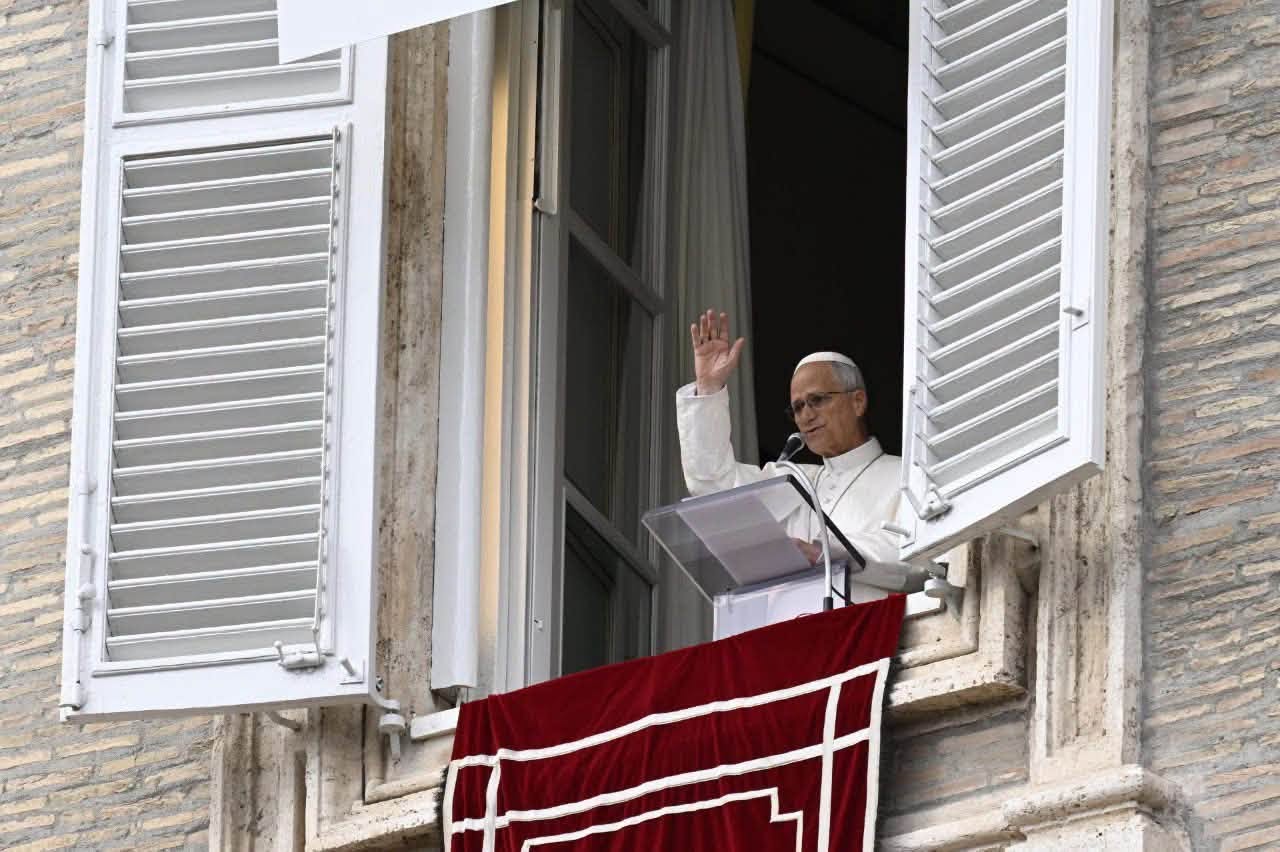
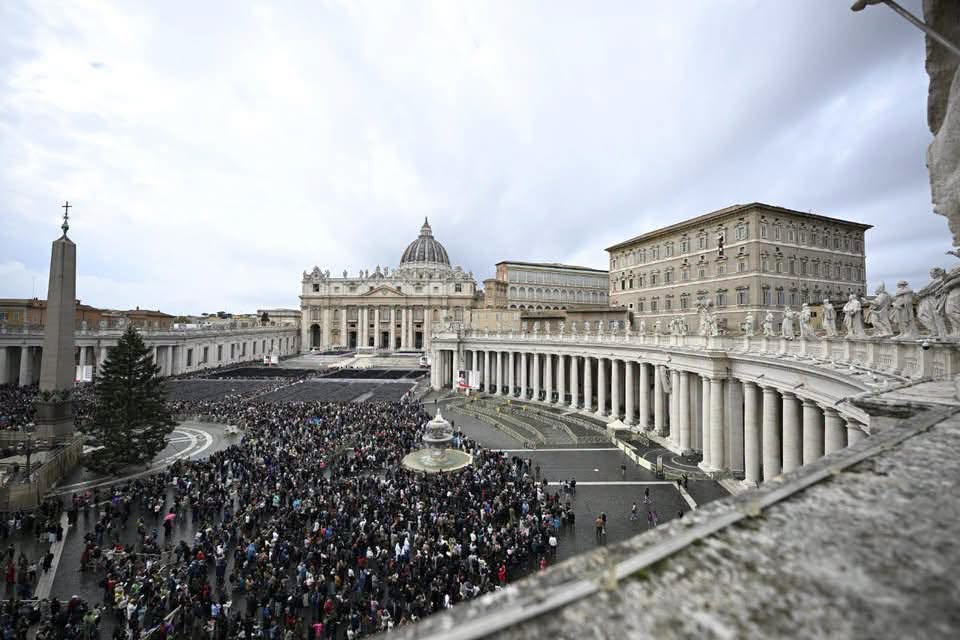
(ZENIT News / Vatican City, 11.22.2026).- At noon on Sunday, November 22—the liturgical solemnity of Christ the King—Pope Leo XIV appeared on the balcony of the papal apartment overlooking St. Peter’s Square to recite the Marian prayer of the Angelus with hundreds of pilgrims gathered in the square. In his address preceding the Angelus, Leo XIV reflected on a truth found in that Sunday’s Gospel: Christ the King as the Lord who reveals the true meaning of justice. Below is the English translation of the Holy Father’s words:
***
Dear brothers and sisters, happy Sunday!
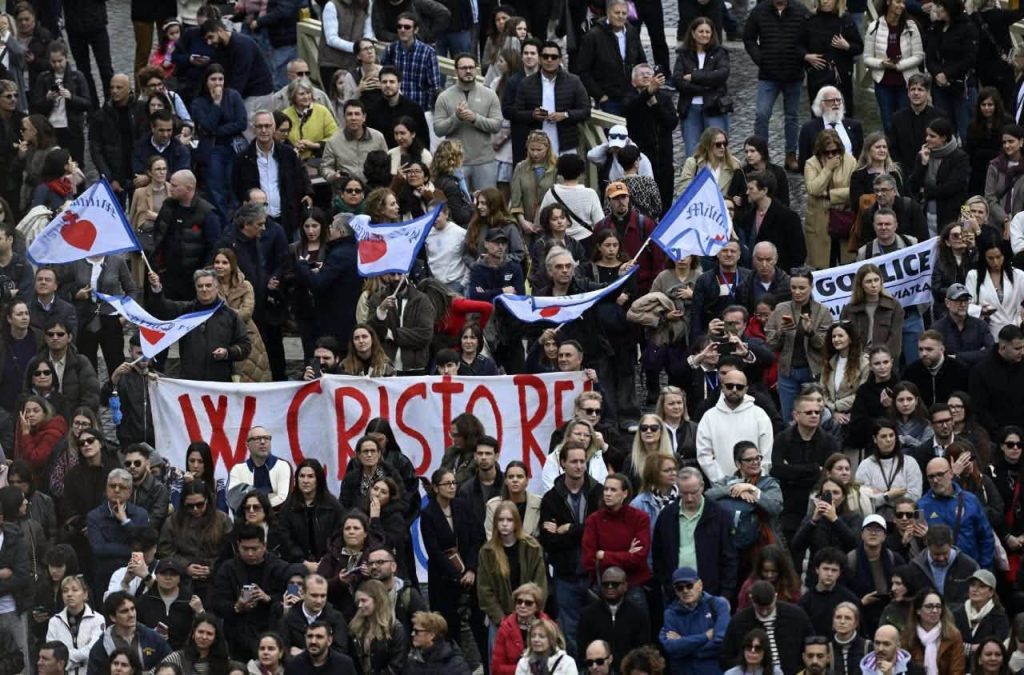
Today we celebrate the Solemnity of Our Lord Jesus Christ, King of the Universe. The Gospel we have just heard presents him to us as the Lord who reveals the true meaning of justice through a dialogue in which everyone is involved — both the righteous and the wicked (cf. Mt 25:31-46). Christ is the measure of justice because he is the author of salvation; by illuminating our relationships, he reveals their truth in himself, in opposition to all forms of corruption.
Indeed, justice is that which sustains life: as the Lord says, “I was hungry and you gave me food” (v. 35). Justice establishes bonds of fraternity among peoples: “I was a stranger and you welcomed me” (ibid.). Justice upholds human dignity: “I was naked and you gave me clothing” (v. 36). Justice restores freedom: “I was in prison and you visited me” (ibid.). Jesus’ discourse applies to all times and all peoples (cf. v. 32); we are all equal before the law of God.
The One who speaks o us is neither a despot who threatens nor a tyrant who crushes others with his power. He is the true King who, through his omnipotence, redeems us; he is the true man, the Master of humanity. Christ therefore lifts us up from the dust of passing time, raising all peoples from death to the new life to which he calls them. In this work, the Son is one with the Father who creates all things out of nothing and gives life to all through his Holy Spirit. Thus, the one God reveals his justice.
Dear friends, the Solemnity of Christ the King is celebrated at the end of the liturgical year because it points to the fulfillment of all history: the encounter with God, which is realized in the Last Judgment — that is, in the word that the Lord addresses to all humanity for the sake of our lives. This judgment is, in fact, salvation. The word that God speaks to the world is a proclamation of mercy. It is his Word made flesh for us, Jesus Christ. At the same time, this judgment is the condemnation of all iniquity: “Just as you did not do it to one of the least of these, you did not do it to me” (v. 45). Thus, the King of the universe stands alongside the least and the oppressed to redeem them from all evil.
As we ponder these words, let us recall Pope Pius XI’s intention in establishing today’s solemnity. In an era marked by tensions and conflicts, my predecessor wished to emphasize that the Lord of history is the King of peace and justice for all the peoples of the world. As a pilgrim through the centuries, the Church renews this teaching, proclaiming that the Kingdom of God is coming and will endure forever.
May the Virgin Mary, whom we venerate as Queen of Heaven, accompany us as we persevere in this expectant waiting.
Thank you for reading our content. If you would like to receive ZENIT’s daily e-mail news, you can subscribe for free through this link.

Publicaciones relacionadas:
 How Can We Recognize God’s Presence? Leo XIV Offers a Thoughtful Response Based on a Passage from the Gospel
 How does God guide history by helping us when we fall? Leo XIV’s answer
 The Parable of the Wedding Banquet, Briefly Explained by Pope Leo XIV
 The personal relationship that God asks of every Christian, as explained by Pope Leo XIV
