

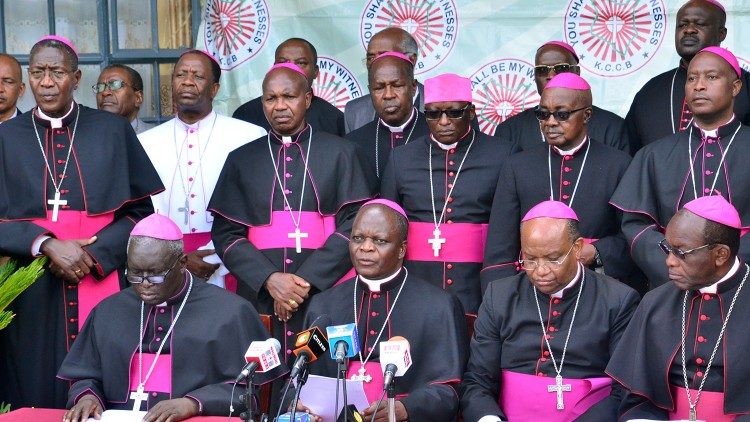
(ZENIT News / Embu, 11.21.2026).- Kenya’s Catholic bishops have warned that growing political tensions, threats to civil liberties and attempts to undermine electoral transparency risk eroding public confidence ahead of the country’s 2027 general elections. In a declaration issued after a meeting at the Cardinal John Njue Pastoral Centre in Embu, the bishops called on political leaders, state institutions and citizens to put national stability and the common good ahead of partisan interests.
One of their most pressing concerns is a proposed parliamentary initiative to ban the live broadcasting of the presidential vote-counting process. The bishops believe restricting public access to election results could fuel suspicion and unnecessary tensions, particularly in a country where disputed electoral processes have previously triggered deadly violence.
They urged parliamentary leaders to prevent divisive legislation from advancing and insisted that transparency must remain a cornerstone of the democratic process. The credibility of an election, they argued, depends not only on the official announcement of results but also on whether citizens trust the procedures through which those results are obtained.
The bishops also called on the Independent Electoral and Boundaries Commission (IEBC) to safeguard its independence from political pressure while improving voter registration, electoral logistics, officials’ training, results verification and the handling of disputes. Past electoral failures, they recalled, have cost lives and destroyed property, making institutional credibility essential to preventing a repeat of violence.
Their warning extends beyond the ballot box. The bishops expressed alarm over reports of abductions, forced disappearances, harassment of journalists and human rights defenders, and violations of freedom of expression and association. They alleged that some kidnappings involved armed individuals acting in cooperation with police officers, while security personnel in other cases allegedly failed to intervene when citizens were targeted for exercising their rights.
The Church called on security agencies to enforce the law impartially, regardless of political affiliation, while urging citizens and political leaders alike to reject inflammatory rhetoric, tribal appeals, deliberate misinformation and language designed to humiliate opponents. Freedom, they stressed, must be exercised responsibly rather than turned into a weapon of hatred.
The bishops were equally firm about keeping partisan politics out of Catholic churches. Priests were explicitly instructed not to allow political speeches in churches anywhere in the country. Worship spaces, they said, must remain places of prayer, peace and unity, welcoming people regardless of their political convictions. Politicians seeking to reach voters should use public meetings, community gatherings and the media rather than turn sacred spaces into campaign platforms.
Young Kenyans, whose involvement could prove decisive in the next election, received a particular appeal. The bishops encouraged them to obtain national identity documents and register to vote, warning against politicians who might exploit their economic vulnerability by offering money in exchange for participation in unlawful activities or political violence. They urged young people to use their creativity and influence on social media to promote justice, accountability and peaceful coexistence rather than deepen polarization.
Presidential aspirants and other political leaders were also asked to commit publicly to peaceful campaigning and respectful debate. The bishops criticized personal attacks and offensive language already circulating despite the official campaign period not yet having begun, warning that the tone of political competition can shape the country’s wider climate.
The declaration further raised concerns about six education bills currently before the National Assembly. While acknowledging the government’s responsibility to modernize education, the bishops questioned provisions they believe bypassed consultation and could weaken institutions with a long record of serving the country.
At the heart of their appeal is a warning that Kenya’s political future cannot be secured through institutional manipulation, intimidation or ethnic and partisan loyalties. The bishops called for a culture of dialogue instead of confrontation, accountability instead of impunity, and a renewed commitment to dignity, truth, justice and peace as the country moves toward the 2027 elections.
Thank you for reading our content. If you would like to receive ZENIT’s daily e-mail news, you can subscribe for free through this link.

Publicaciones relacionadas:
 Religious Freedom Gains Momentum Across the United States, New Survey Reveals
 Church Bell Rings Daily for Aborted Babies: Left Attacks Bishop
 Brazil Against Christianophobia: Proposal to Ban Costumes Mocking Christianity at Carnival
Catholic Church in the US publishes its 2026 annual report on religious freedom in the country
