

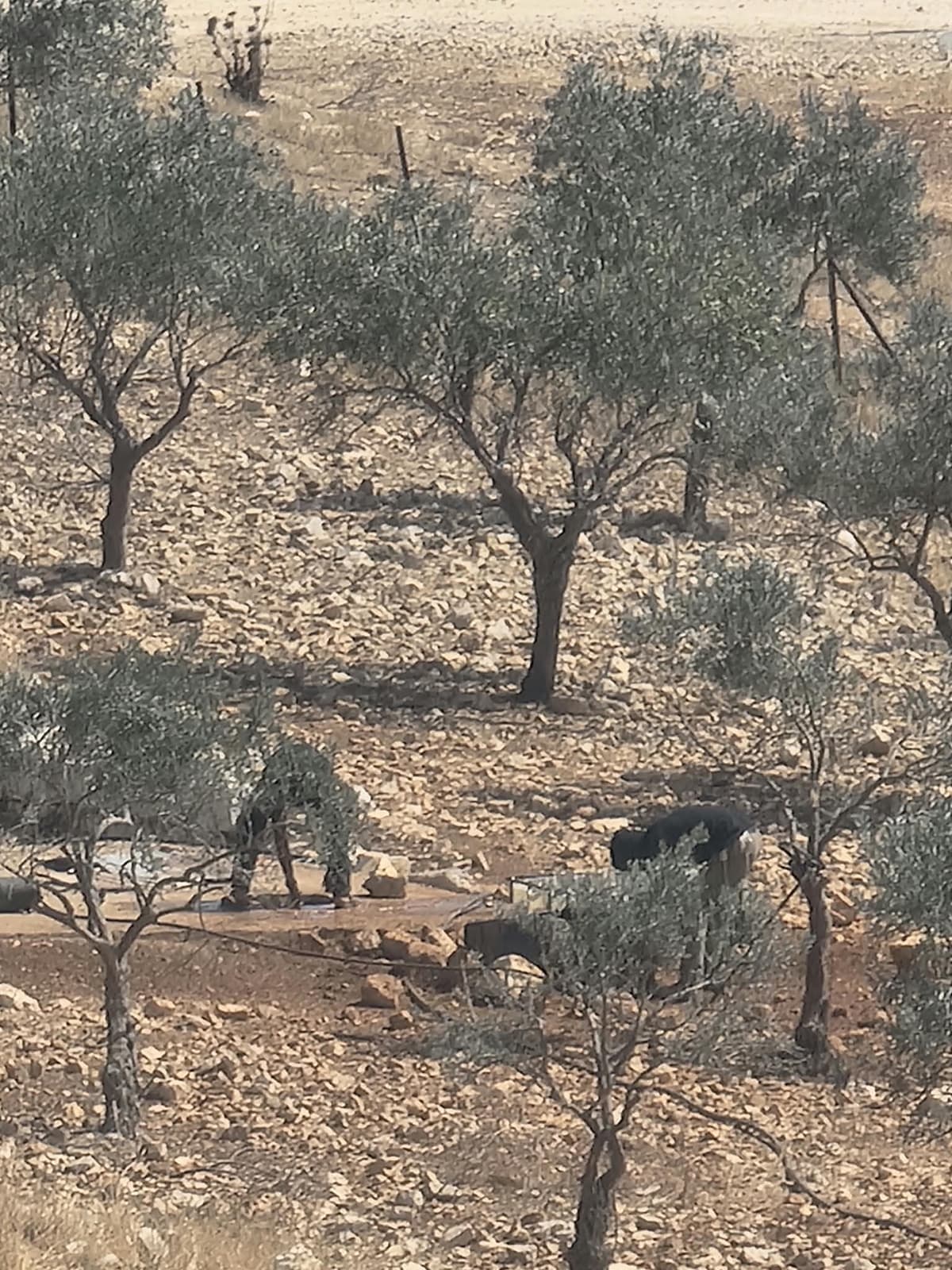
(ZENIT News / Taybeh, 10.10.2026).- Settlers entered agricultural land east and south of the Palestinian Christian town of Taybeh, northeast of Ramallah, on Wednesday October 7, 2026 and picked olives from trees owned by Palestinians, while sheep believed to belong to the settlers were seen grazing among olive trees and crops.
Photos and video documented by local sources show settlers moving between the trees and collecting olives from Palestinian-owned land. The footage also shows people using sticks to strike olive branches and knock down fruit, breaking branches and damaging trees. The damage has affected part of this season’s harvest and could reduce the trees’ future yields.
Among the settlers seen on farmland south of Taybeh was Neriya Ben Pazi, who was sanctioned by the United States in 2024. At the time, the U.S. State Department said he had been involved in violence against Palestinians and had expelled Palestinian shepherds from hundreds of acres of land. The U.S. Treasury Department also designated entities linked to him.
In Wednesday’s incident, Ben Pazi was seen with members of his family on agricultural land, participating in olive picking. They also filmed their activities and posted images on social media, according to available documentation.
Earlier Wednesday, settlers also took olive-picking mats from the home of Bashir Kuna in Taybeh and used them to collect olives from Palestinian-owned trees, according to witnesses and local documentation.
Kuna’s home has been repeatedly targeted in recent months, with incidents including property damage and the theft of surveillance cameras. On one occasion, sheep entered the area around the house and damaged trees and plants. The Kuna family has been unable to move into its new home after facing repeated harassment and attacks.
A foreign activist was also beaten on Wednesday after filming settlers while they were in the agricultural area picking olives. His injuries were not serious, according to witnesses, but the assault occurred while he was documenting the events.
The incidents follow similar events in recent days. On October 5, Palestinian farmers from the nearby town of Rammun were attacked while harvesting olives southeast of Taybeh. According to local accounts, Israeli forces intervened and restrained several farmers, while roads and entrances leading to Taybeh were closed. A Palestinian ambulance was unable to reach those injured.
The same day, settlers entered the Jabbas area east of Taybeh and picked olives from land belonging to Palestinian families. Damage to several trees was also reported.
Local sources say the incidents are taking place as Palestinian landowners themselves face restrictions on accessing large areas of their agricultural land, particularly east and west of the town. At the same time, settlers have been able to enter some of the same areas and harvest their crops.
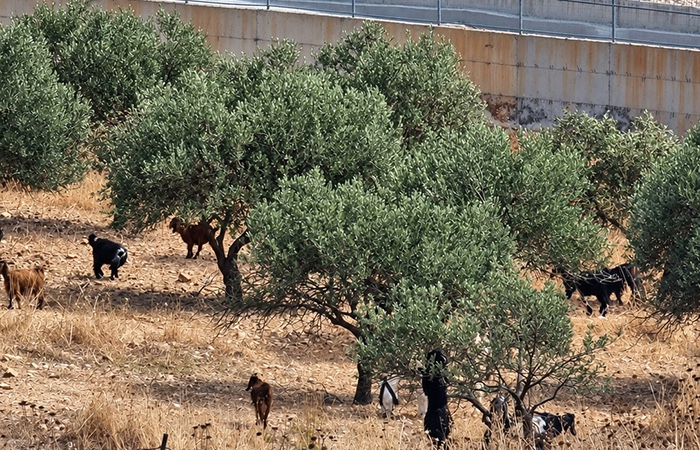
More than 16,000 dunums of land in Taybeh are planted with olive trees, according to figures provided by Father Bashar Fawadleh, the Latin Patriarchate priest in Taybeh. He has warned that access restrictions and attacks are threatening the olive harvest and the income of families whose livelihoods are tied to the land.
The developments carry particular significance in Taybeh, one of the prominent Palestinian Christian communities in the West Bank. For its residents, olives are more than a seasonal crop: they are a source of income, a historic connection to the land and part of what enables families to remain there.
This year’s olive harvest has exposed a stark contradiction: landowners face restrictions and fear when trying to reach their trees and harvest their crops, while settlers enter the same lands and collect the fruit — at times using equipment taken from the Palestinian owners themselves.
As the theft of olives, damage to trees and grazing of livestock continue, residents fear the losses may extend beyond a single harvest season and undermine families’ ability to maintain their land, trees and livelihoods in the years ahead.
Thank you for reading our content. If you would like to receive ZENIT’s daily e-mail news, you can subscribe for free through this link.

Publicaciones relacionadas:
 Israeli government of Jerusalem municipality freezes bank accounts of Greek Orthodox Church
 53 Humanitarian Organizations Denounce «False Narratives» to Sabotage Those Saving Lives in Palestine
 Between Drones, Settlers and Classrooms: How Violence and Administrative Israeli Pressure Are Reshaping Palestinian Life
 Israeli Jewish army causes death of Catholic priest in Lebanon and displaces thousands of Catholics from southern Lebanon
