

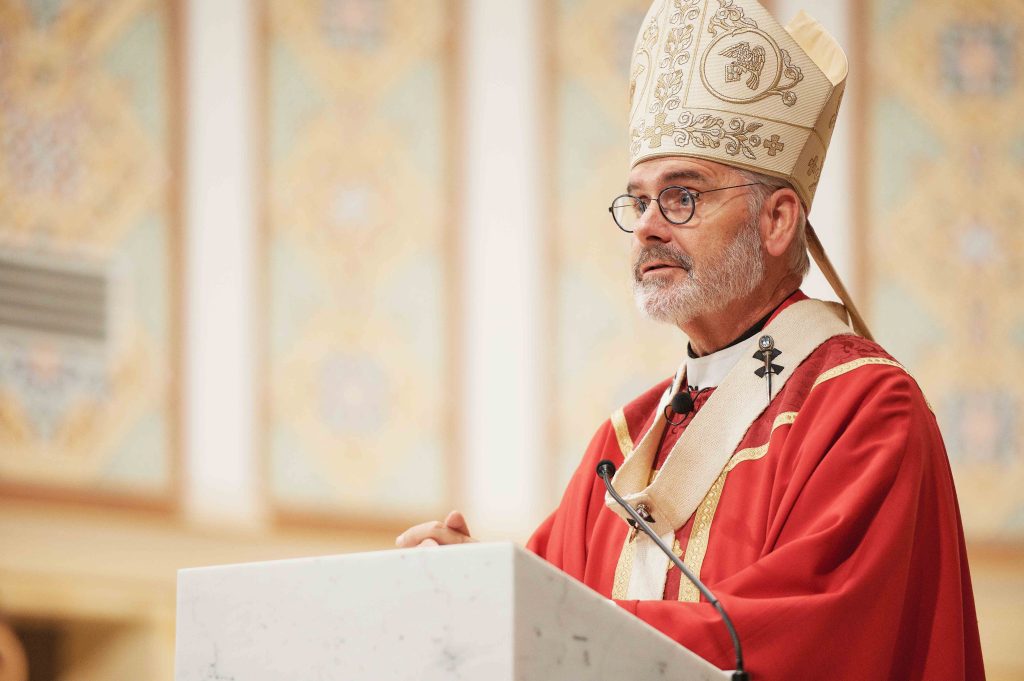
(ZENIT News / Washington, 10.09.2026).- The planned live broadcast of the execution of Nidal Hasan, the former US Army psychiatrist convicted of the 2009 Fort Hood shooting, has drawn a forceful rebuke from the president of the United States Conference of Catholic Bishops, who warns that making a state killing a public spectacle risks deepening the country’s moral crisis rather than healing the wounds of a horrific crime.
Archbishop Paul S. Coakley of Oklahoma City reacted with “profound consternation and sadness” after the US Department of Defense announced on October 8 that Hasan’s execution by firing squad would be streamed live online. The plan followed recommendations from Pentagon chief Pete Hegseth and received approval from President Donald Trump. Coakley called the proposal “a barbaric promotion of a culture of death” and urged the authorities to reconsider it.
The archbishop made clear that condemning the planned broadcast does not diminish the gravity of Hasan’s crimes. In November 2009, Hasan opened fire at the Fort Hood military installation in Texas, killing 13 people and wounding 32 at the Soldier Readiness Processing Center. His actions, Coakley stressed, cannot be justified. Yet the severity of a crime, in the Church’s view, does not automatically make every response to it morally acceptable.
“Do not repay anyone evil for evil,” the archbishop recalled, quoting Romans 12:17. A public execution, he argued, would further damage the nation’s moral fabric and leave a lasting stain on the collective conscience. His objection focuses not only on the death penalty itself, but also on the decision to transmit the killing to an audience, transforming the final punishment of a convicted murderer into a publicly consumed event.
Coakley concluded with a prayer asking Our Lady of Good Counsel to intercede so that the United States would “always choose life, even in the most difficult circumstances.”
According to the announcement described in the reports, Hasan’s execution is scheduled for December 3 at Fort Hood, the same military installation where the killings took place, provided he does not appeal. Such an appeal could substantially delay the proceedings. If carried out, the execution would be the US military’s first since 1961 and its first by firing squad since 1945.
The proposal raises questions extending beyond the fate of one condemned man. For the US bishops’ conference president, the country’s response to an atrocity must be judged not only by the punishment imposed on its perpetrator, but also by the moral example the state chooses to set. The victims of Fort Hood deserve justice and remembrance; whether broadcasting an execution serves either purpose is precisely the question Coakley wants the government to reconsider.
Thank you for reading our content. If you would like to receive ZENIT’s daily e-mail news, you can subscribe for free through this link.

Publicaciones relacionadas:
 Nicaraguan Bishop Rolando Álvarez Nominated for the Sakharov Prize for Human Rights
 Mexican Church Calls for a National Truce on Feast of Our Lady of Guadalupe
 U.S. Bishops Lose First Round in Legal Battle Against Trump’s Refugee Aid Freeze
 Cuba: Oil sanctions will hit the poorest and weakest warn bishops
