

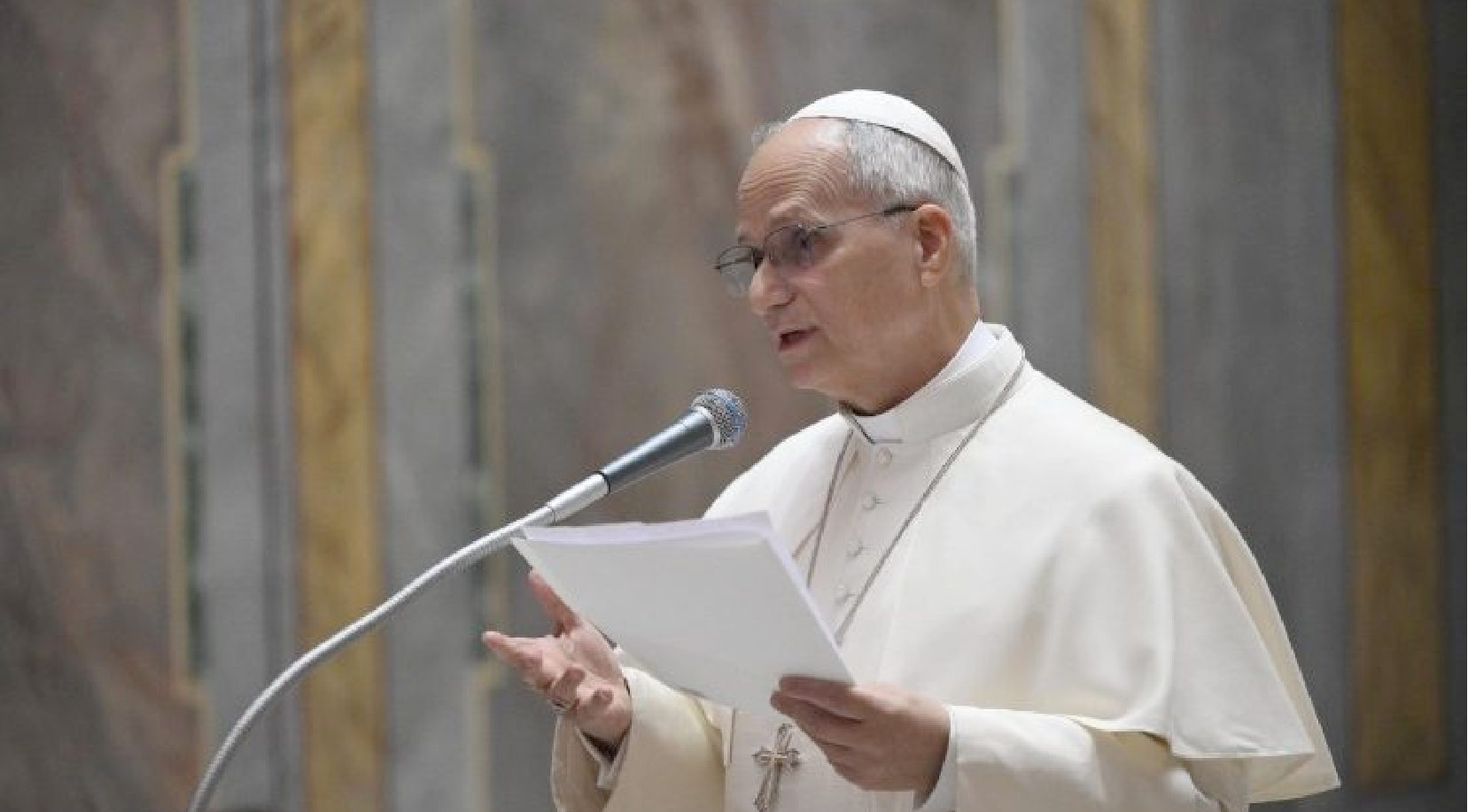
(ZENIT News / Vatican City, 02.27.2026).- A brief, spontaneous remark—delivered with a smile and a note of irony—was enough to give a human, almost disarming close to a week of intense spiritual concentration in the Vatican. On the afternoon of Friday, February 27, Pope Leo XIV concluded the Lenten Spiritual Exercises of the Roman Curia.
Speaking in the Pauline Chapel after the eleventh and final meditation, the Pope acknowledged that the retreat had touched him personally. Referring to a reflection on the election of Pope Eugene III and the role of Saint Bernard of Clairvaux, Leo XIV recalled a striking line: “What have you done? May God have mercy on you.” The remark, offered almost as an aside, drew smiles among members of the Curia present—an indication that the week had combined spiritual depth with moments of shared humanity.
The Lenten retreat began on the evening of Sunday, February 22, and was preached by Erik Varden, the Cistercian bishop of Trondheim, Norway. In his closing words, Leo XIV expressed deep gratitude for Varden’s guidance, thanking him for accompanying both the Pope and the Roman Curia through days of prayer, silence, and reflection. He described the Exercises as “a profound spiritual experience,” emphasizing their importance within the Church’s Lenten journey.
The choice of location added an additional layer of meaning. The Pauline Chapel is not merely one of the Vatican’s most evocative sacred spaces; it is also where the cardinals gathered on May 8, 2025, for the Eucharistic celebration that followed the election of Robert Francis Prevost as Pope. Leo XIV recalled that what struck him then—and again during these Exercises—was the inscription from Saint Paul’s Letter to the Philippians: “For to me, life is Christ and death is gain.” During the retreat, he said, he returned repeatedly to this text as a meditation on hope and on its true source, which for Christians is not optimism or strategy, but Christ himself.
The Pope also highlighted another Pauline exhortation that shaped his concluding appeal: “Only conduct yourselves in a way worthy of the Gospel of Christ.” That line, he explained, encapsulated the invitation he wished to leave with those present. It was not framed as a program or reform agenda, but as a spiritual criterion meant to guide daily life and ecclesial service.
Leo XIV underlined the communal dimension of the retreat. In the press of responsibilities, he noted, members of the Curia can sometimes find themselves “separated,” absorbed in distinct tasks and concerns. Coming together in prayer, therefore, becomes more than a pious exercise; it is a necessary moment of realignment, allowing shared reflection on issues vital both personally and for the life of the Church.
Looking back over the eleven meditations, the Pope briefly traced some of their key themes. Among them was the figure of John Henry Newman, the English cardinal whom Leo XIV himself proclaimed a Doctor of the Church. Newman’s poem The Dream of Gerontius was cited for its stark exploration of the fear of death and the human sense of unworthiness before God. Alongside this came reflections on freedom and truth—realities the Pope described as essential to Christian life, not as abstract ideals but as lived commitments.
As his improvised remarks drew to a close, Leo XIV returned to gratitude. He thanked Bishop Varden once more for the depth and richness of his reflections, including those drawn from the monastic witness of Saint Bernard, which he said would remain a lasting source of grace. He also acknowledged the staff of the Office for Liturgical Celebrations for their preparation and the choir for its musical accompaniment. Sacred music, the Pope observed, has a unique capacity to lift the soul toward God in ways words alone cannot achieve.
In a few unscripted minutes, the Pope managed to summarize the meaning of the week: a retreat grounded in Scripture, shaped by tradition, attentive to human frailty, and oriented toward hope. It was a conclusion that reflected the spirit of Lent itself—quiet, demanding, and ultimately centered on Christ.
Thank you for reading our content. If you would like to receive ZENIT’s daily e-mail news, you can subscribe for free through this link.

Publicaciones relacionadas:
 Cardinals will return to Rome for a new Consistory in June 2026 requested by Pope Leo XIV
 Ordinary time, our baptism, and the memory of a gift received: a simple reflection by Leo XIV
 The art of refraining from taking advantage of fame, popularity, and success, according to Pope Leo XIV
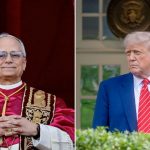 Trump invited the Vatican to the new “Peace Board.” The Holy See confirms that Leo XIV is considering accepting
