

(ZENIT News / Vatican City, 11.22.2026).- The Vatican is turning the digital reconstruction of St. Peter’s Basilica into something more than a virtual replica of one of Christianity’s most important landmarks. A new AI-powered archive will allow visitors, pilgrims and researchers to explore the basilica’s artistic heritage through questions posed in ordinary language, connecting artworks, their creators and the historical documents that preserve their stories.
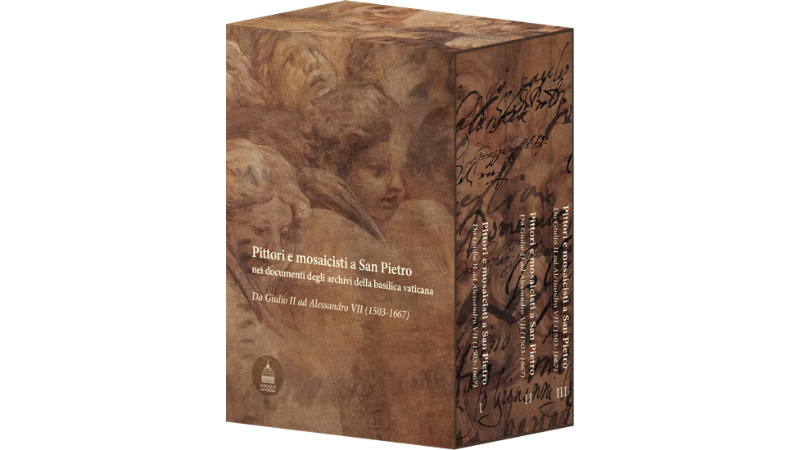
The Fabbrica di San Pietro and Microsoft presented the Living Archive on November 17 in the Vatican, alongside a three-volume scholarly work documenting the painters, mosaicists and illuminators who contributed to the basilica between 1503 and 1667. The initiative, unveiled during the celebrations marking the 400th anniversary of the dedication of the new basilica, brings more than two decades of archival research into a digital environment designed to make that knowledge accessible.
The volumes, titled Pittori e mosaicisti a San Pietro nei documenti degli archivi della Basilica Vaticana. Da Giulio II ad Alessandro VII (1503–1667), contain the work of around 80 art historians and reconstruct the careers and contributions of more than 200 artists. Biographies, contracts, payment records, correspondence and chronological documentation reveal not only the history of celebrated masterpieces but also the lesser-known craftsmen whose work helped shape St. Peter’s.
The project addresses a problem that has long confronted historians and visitors alike: the basilica’s artistic richness is so vast that much of its history remains difficult to navigate, even for those who know where to look. The Living Archive is designed to make those connections easier to discover. Users can begin with an artwork or a particular location and find the artists involved, the historical circumstances surrounding its creation and the archival evidence behind it — or start with a document or artist and trace the works associated with them.
🇻🇦⛪️Wow! They unveiled a digital twin of St. Peter’s Basilica that showcases one of the wonders of the world—the largest Catholic church in Christendom—thanks to Microsoft and AI https://t.co/T6pzFP5DRg
— ZenitEnglish (@zenitenglish) November 22, 2026
The technology builds on the digital twin unveiled in November 2024, created using more than 400,000 high-resolution images captured through drones, cameras and laser scanning. Developed with Microsoft’s AI for Good Lab and the French company Iconem, the model reproduces the basilica with millimetric precision and has already helped identify structural vulnerabilities, including cracks and missing mosaic tiles, supporting conservation work as well as virtual exploration.
The new archive adds a layer of historical intelligence to that three-dimensional representation. Crucially, its artificial intelligence is not designed to generate historical content of its own. Instead, it retrieves, organizes and connects material researched and verified by the Fabbrica di San Pietro, answering questions in natural language while maintaining links to the original sources.
That distinction is central to the Vatican’s approach. The system is intended to make scholarship easier to access without allowing automated answers to replace the work of historians or the authority of documented evidence. Its scientific development and content remain under the Fabbrica’s supervision, with different levels of detail intended for ordinary visitors, pilgrims and specialists.
Archbishop Vittorio Francesco Viola, the papal vicar for Vatican City, archpriest of the basilica and president of the Fabbrica di San Pietro, said the archive and the scholarly volumes serve the basilica’s wider mission. St. Peter’s, built over the tomb traditionally identified as that of the Apostle Peter, is not simply an architectural monument but a place whose art communicates its spiritual significance and vocation of welcome.
Microsoft executive Jeff Bullwinkel described the initiative as giving the basilica’s digital twin a memory, allowing technology to bring people closer to knowledge without replacing the institution that safeguards it.
The ambition extends beyond art history. The Living Archive is expected to incorporate additional scholarly publications and eventually liturgical and spiritual material, creating an expanding resource through which the basilica’s history and religious meaning can be explored. Further content is expected to be added from early 2027.
The project also addresses a question increasingly relevant to the Church’s digital outreach: how to use artificial intelligence without surrendering the human responsibility to interpret, authenticate and transmit knowledge. At St. Peter’s, the answer is to place technology in the service of an existing body of research rather than make it the source of authority.
For those unable to travel to Rome, the digital twin offers another way to encounter the basilica. But the Vatican’s ambition goes beyond virtual access. By connecting the physical monument to the records, people and stories behind its creation, the Living Archive seeks to reveal what a digital image alone cannot: the centuries of faith, artistic labor and human history embedded in the walls of St. Peter’s.
Thank you for reading our content. If you would like to receive ZENIT’s daily e-mail news, you can subscribe for free through this link.

Publicaciones relacionadas:
 Vatican Launches Global Campaign in Favour of Family Doctors
 The Vatican Basilica’s digital twin is born: online in December thanks to Artificial Intelligence and Microsoft
 United States to Exhibit Largest Collection of Vatican Treasures Outside Europe
 Launches Magnifica Humanitas Ambassador Programme During the Global Nobel Laureates Assembly at Borgo Laudato Si’ (Vaticano)
