

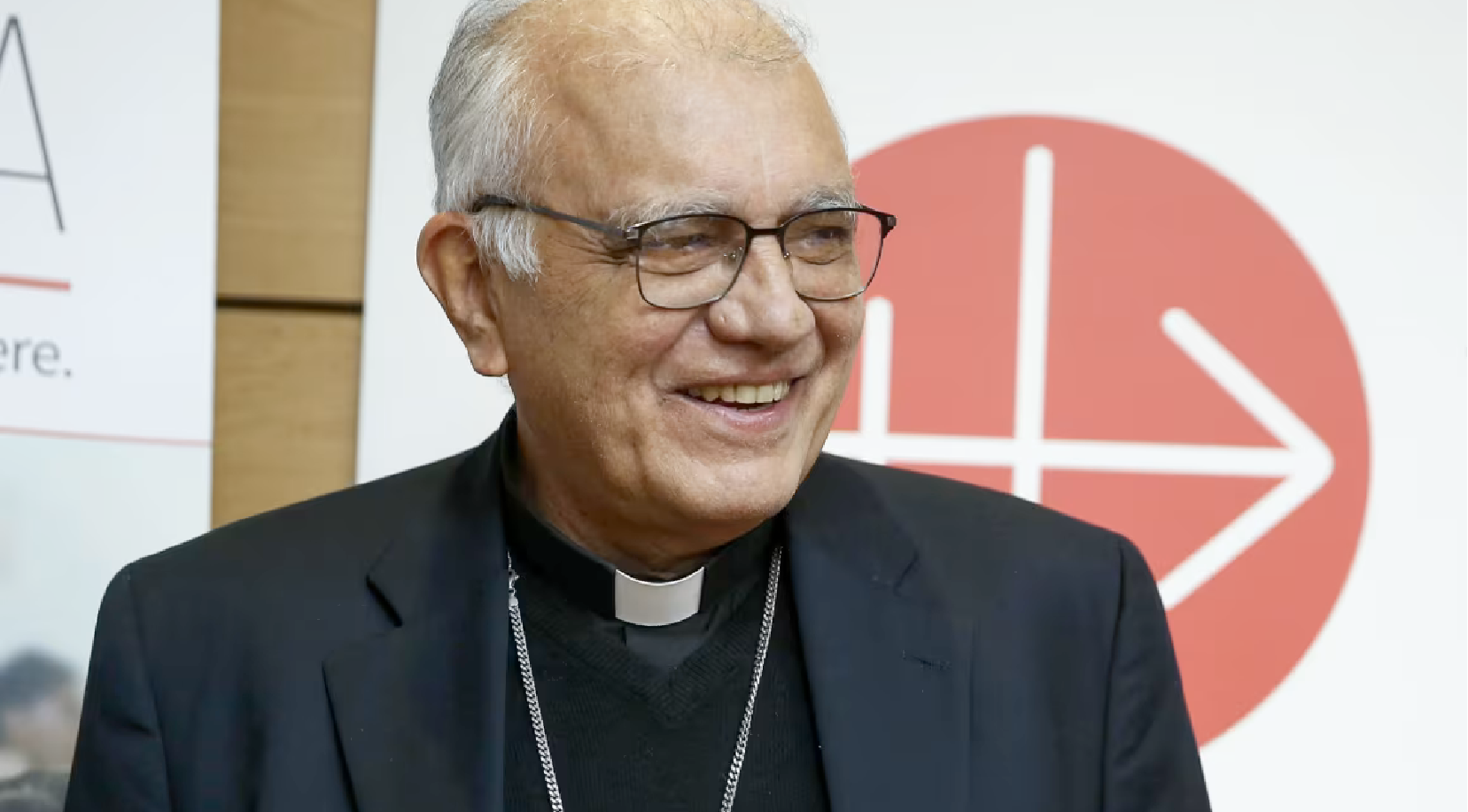
(ZENIT News / Caracas, 12.11.2025).- A senior Venezuelan prelate has once again been pushed to the center of the country’s political turbulence after airport authorities blocked his departure from Caracas, declared his passport invalid, and treated him in a manner more befitting a criminal suspect than a churchman preparing for a engagement abroad.
The incident involving Cardinal Baltazar Porras, archbishop emeritus of Caracas, unfolded on 10 December at the capital’s international airport, disrupting a multi-leg journey that was to take him first to Bogotá and then to Spain, where he was scheduled to assume formal responsibilities within the Military and Hospitaller Order of Saint Lazarus of Jerusalem. His traveling companions, including the Order’s Grand Prior José Antonio Rodríguez and his wife, were allowed to board. The cardinal was not.
Accounts offered by the Order of Saint Lazarus and later by the cardinal himself depict a scene marked by arbitrariness and humiliation. According to their statements, immigration officials informed the 81-year-old prelate that the national database listed him among the deceased. His Venezuelan passport was confiscated and electronically annulled; his Vatican passport, ordinarily recognized under international protocols governing diplomatic privileges, was dismissed as insufficient. Porras was then subjected to searches of his luggage and clothing with drug-sniffing dogs, and at one point followed by armed personnel even into a restroom. His mobile phone was taken from him throughout the ordeal.
The cardinal, who had already lived through a variety of “system failures” over the years that have frequently interrupted his travel, told Venezuelan bishops that this time the intervention was qualitative: it had the contours not of bureaucratic dysfunction, but of a targeted operation. He noted that officers refused to return his passport and warned him not to photograph it, adding that any attempt to do so would lead to his arrest.
Such treatment, the Order of Saint Lazarus argued in its formal protest to the Holy See, constitutes a clear breach of the Vienna Convention on Diplomatic Relations. The group has asked the Vatican Secretariat of State to lodge an official complaint and to insist on the cardinal’s unrestricted ability to travel abroad. The prelate’s inability to leave the country and the revocation of his documents have acquired broader diplomatic resonance, as the episode occurred on the International Day of Human Rights and coincided with global attention on Venezuelan opposition leader María Corina Machado, honored the same day in Oslo with the Nobel Peace Prize.
Observers of church–state relations in Venezuela note that Porras has become an increasingly uncomfortable figure for the Maduro administration. In the weeks surrounding the canonization of José Gregorio Hernández, the nation’s first officially recognized saint, the cardinal worked to keep the event from being exploited for political consolidation. His remarks in Rome shortly before the canonization described Venezuela’s social and institutional collapse as morally intolerable, citing the tightening of military control, the imprisonment of political dissidents, and spiraling poverty. The comments triggered fresh criticism from senior government figures, including President Nicolás Maduro and Minister Diosdado Cabello.
This fraught atmosphere forms the backdrop to the latest interference with the cardinal’s movements. Just weeks earlier, he had been prevented from traveling to Isnotú, birthplace of the new saint, after officials claimed that his domestic flight had been cancelled; he later discovered that it had departed as scheduled. In that instance, he and his companions found themselves surrounded by heavily armed soldiers at a provincial airport.
The cardinal’s public response to December’s events blended pastoral realism with a pointed critique. He lamented the erosion of civic rights and expressed solidarity with Venezuelans who routinely face far worse treatment without public visibility. Drawing on the spiritual tone of the Advent season, he remarked that the Christian message is rooted in the power of vulnerability and the slow labor of building peace without coercion. These reflections echo those of Pope Leo XIV, who has repeatedly encouraged Venezuelan leaders to seek a just and stable resolution to the country’s protracted crisis.
Diplomatic implications remain uncertain. The Holy See has not announced what action it may take in light of the Order’s formal complaint, but church officials within Venezuela have already issued statements of solidarity. The bishops’ conference has requested clarification from the authorities and offered prayers for their fellow prelate, underscoring that the matter raises not only ecclesial concerns but fundamental questions about the rule of law.
For now, Cardinal Porras remains in Caracas, deprived of his documents and unable to fulfill obligations abroad. But the consequences of his halted journey have reverberated far beyond the airport terminal, offering yet another glimpse into the uneasy coexistence between a government intent on controlling dissent and a Church that continues to speak openly about the nation’s moral and humanitarian decline.
Thank you for reading our content. If you would like to receive ZENIT’s daily e-mail news, you can subscribe for free through this link.

Publicaciones relacionadas:
 Cardinal Ambongo Is Threatened by Congo’s Government
 Catholic Church in China: The Strange Case of Bishop Ji Weizhong
 Chinese Communist government takes advantage of Pope’s death to unilaterally impose new bishops
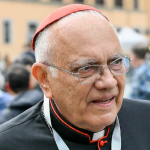 After one month of Nicolás Maduro’s imprisonment, the Venezuelan government restores Cardinal Porras’ passport
