

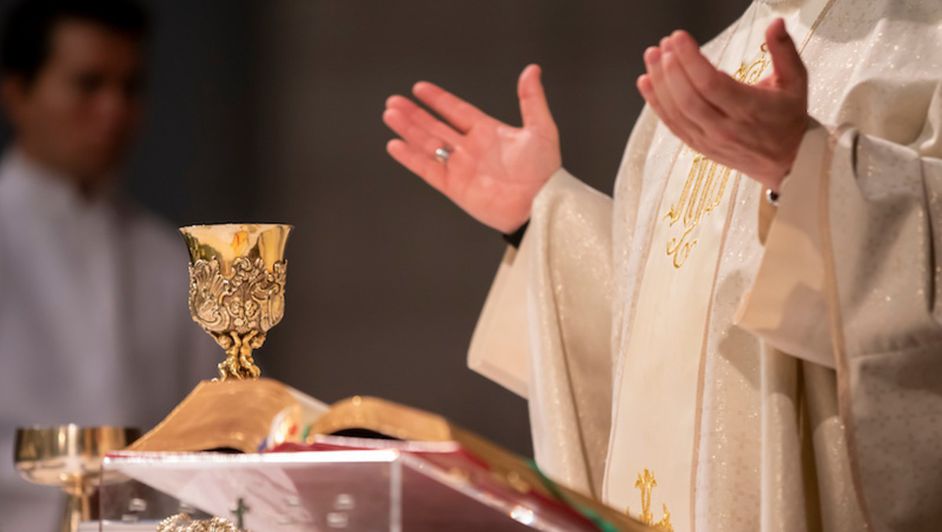
(ZENIT News / Rome, 11.04.2026).- For four months, parishioners in Turin welcomed a young man they believed to be a Catholic priest from Egypt. He celebrated Mass, took part in parish life and, according to reports, heard confessions in several churches. Only after a member of the faithful raised suspicions did the Archdiocese of Turin discover that the documents supporting his claimed priestly identity were forged.
The archdiocese filed a fraud complaint on Saturday, October 31, against the 25-year-old Egyptian who identified himself as Salam Faragalla. He had arrived in Turin in June 2026, claiming to be a priest of the Coptic Catholic Church and a student of engineering at the city’s Polytechnic University. Neither claim could be substantiated: documents purporting to certify his ordination and ecclesiastical status belonged to someone else, while his university enrolment was also found to be false. Diocesan officials have not established whether Salam Faragalla is even his real name.
His apparent credentials had been sufficient to secure an assignment as parochial vicar at the parish of Santa Rosa da Lima. From there, he became involved in celebrations at two other local churches, initially concelebrating Mass and later presiding himself during the summer months. When questioned about aspects of his liturgical practice, he reportedly explained them as differences between the Alexandrian rite of the Coptic Catholic Church and the Latin rite. The explanation appears to have helped him avoid closer scrutiny.
The deception came to light after a parishioner noticed a photograph of the supposed priest and questioned whether the man portrayed was genuinely a member of the clergy. The concern was passed to a parish priest, prompting diocesan officials to contact Catholic Coptic authorities in Egypt. Their inquiries exposed the falsification. They also revealed a basic inconsistency in Faragalla’s account: he had referred to belonging to an Egyptian vicariate, although the Coptic Catholic Church in Egypt is organized into ten eparchies, not vicariates.
The episode raises questions extending beyond the conduct of the alleged impostor. How was a man claiming to have been ordained in January 2025 allowed to exercise ministry without his credentials first being confirmed directly with the Church authorities supposedly responsible for him? And was he given permission to celebrate according to the Latin rite, or did he present documentation granting him faculties in both rites? The available information does not resolve these questions. Nor has the archdiocese publicly explained the procedures it followed before entrusting him with pastoral responsibilities.
Several parishioners have expressed concern that they went to confession to a man who lacked priestly faculties. In the Catholic Church, sacramental ministry depends on more than outward appearances or a convincing performance: the validity of the sacraments requires the appropriate ordination and, in certain cases, the necessary authorization from Church authorities. The distinction is particularly significant in confession, where the priest must also possess the faculty to absolve sins. The archdiocese has not reported evidence that Faragalla attempted to celebrate baptisms or marriages.
The scandal has nevertheless been met with an effort to reassure parishioners through transparency. Father Giuliano Naso, a local parish priest, acknowledged the potential damage to the faithful’s trust but said that communicating the truth had helped. Parishioners, he reported, had thanked the clergy for being candid, even when the information was painful.
At Santa Rosa da Lima, parish priest Father Davide Pavanello described Faragalla as sociable, approachable and apparently well integrated into the community. His mother had even travelled from Egypt to visit him. When Pavanello confronted him, he offered an opportunity to tell the truth and promised to help him regardless. Faragalla denied the allegations. The priest has since expressed the hope that the young man will find the courage to change his life, saying that he is still young and has time to do so.
Thank you for reading our content. If you would like to receive ZENIT’s daily e-mail news, you can subscribe for free through this link.

Publicaciones relacionadas:
 He Passes Himself Off as a Priest and Ends Up in Jail in Germany
 This Is the Mongolia the Pope Is Visiting: The World’s Youngest Cardinal Talks About the Church in a Buddhist Country
 The smiling Carmelite is on her way to the altars: she is recognized as a “servant of God”
 A Cause Halted, A Legacy Questioned: The Vatican Freezes Jorge Novak’s Path to the Altars
