

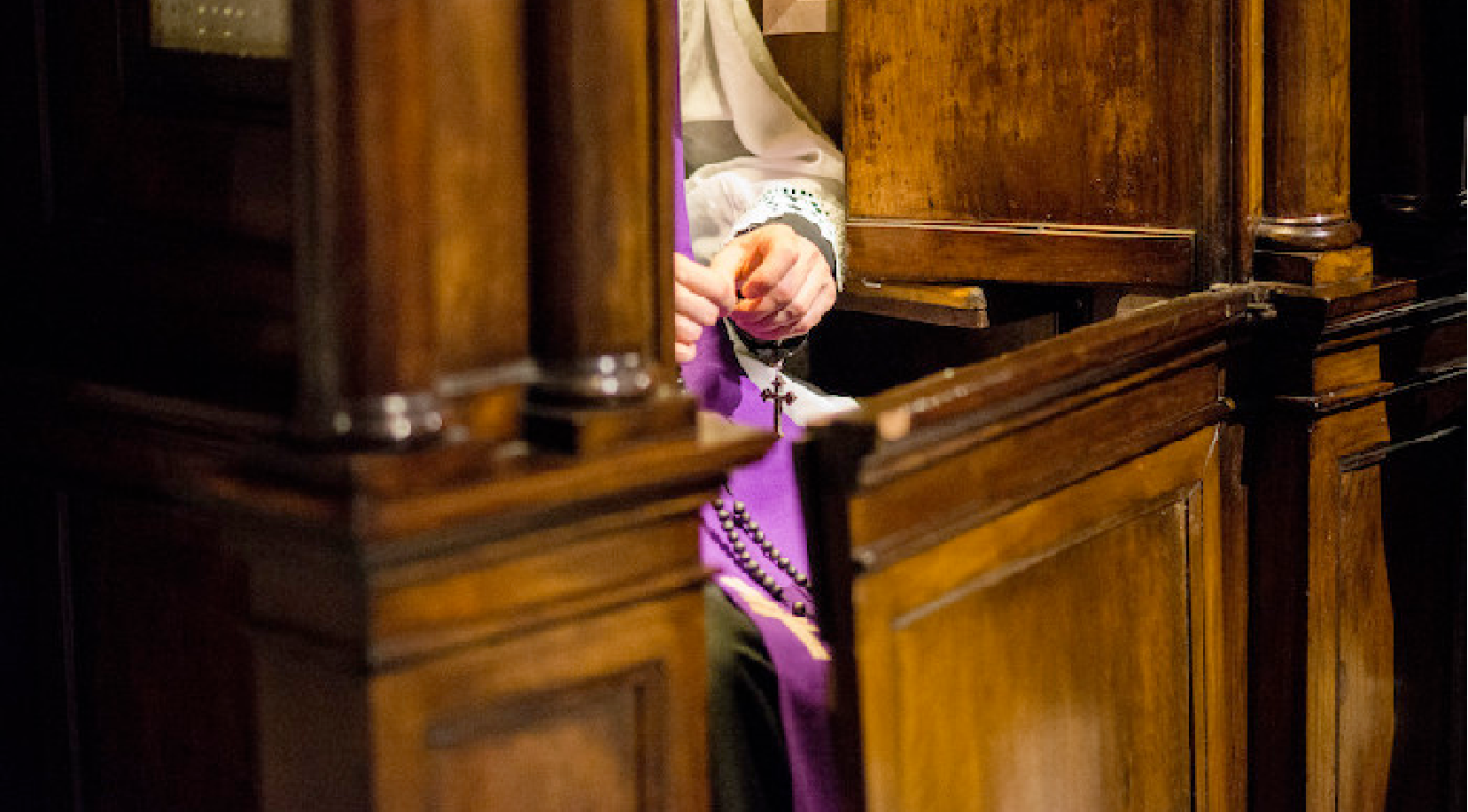
(ZENIT News / Olympia, Washington, 07.22.2025).- In a legal showdown that pitted the sanctity of sacramental confession against the demands of civil law, a federal judge in Washington has blocked a controversial state measure that would have forced Catholic priests to violate the confessional seal under threat of criminal penalties.
Senate Bill 5375, passed by the state legislature earlier this year, sought to compel clergy to report child abuse and neglect, even when such information was disclosed during confession—a move that drew swift and vocal opposition from religious leaders, legal experts, and constitutional scholars. The law, which was slated to take effect July 27, faced its first major legal defeat on July 18 when U.S. District Judge David Estudillo granted a preliminary injunction halting its implementation.
At the heart of the dispute is a centuries-old Catholic doctrine: the absolute inviolability of confession. Under Church law, any priest who breaks the seal is automatically excommunicated. “The state was asking our priests to choose between prison and eternal damnation,” one bishop noted privately. The U.S. Conference of Catholic Bishops, joined by Orthodox Christian churches and legal advocates, challenged the law, arguing it would impose an intolerable burden on religious freedom.
Judge Estudillo agreed, ruling that the law was neither religiously neutral nor broadly applicable, two criteria necessary to justify government intrusion into free exercise. He emphasized that clergy would face an “impossible moral dilemma” under the statute. “SB 5375 squarely places the plaintiffs in the position of choosing between adhering to their religious obligations or complying with state law,” the judge wrote in his decision. He further rejected the state’s argument that no injury had occurred because no priest had yet been prosecuted, calling that logic legally insufficient and morally obtuse.
The case has been closely watched across the country, as several states consider similar legislative efforts to expand mandatory reporting requirements to the confessional. Advocates of such measures argue they are essential to protecting children; critics warn they open the door to unprecedented state interference in religious life.
For now, the injunction applies only to Catholic priests in Washington State, but legal analysts suggest it could bolster similar challenges elsewhere. The law’s selective application—targeting clergy while exempting other privileged relationships such as attorney-client or journalist-source—undermined the state’s claim to neutrality and heightened constitutional concerns.
Peter Breen, lead attorney for the bishops and head of litigation at the Thomas More Society, hailed the ruling as a crucial defense of religious liberty. “This is a clear message that government has no place in the sacramental life of the Church,” Breen said. “The confessional is not a courtroom, and priests are not agents of the state.”
The case now moves into the discovery phase, and a final ruling may still be months—or even years—away. But for many clergy, Friday’s decision has lifted an enormous weight.
“This injunction gives us the freedom, for now, to continue administering the sacrament without fear,” said one parish priest in Seattle, who asked not to be named. “But the fact that we were even in this position should trouble anyone who values freedom of conscience.”
As lawmakers across the United States contemplate similar proposals, the Washington ruling may become a bellwether in a broader struggle over the limits of state authority in matters of faith.
Thank you for reading our content. If you would like to receive ZENIT’s daily e-mail news, you can subscribe for free through this link.

Publicaciones relacionadas:
 Canada: Trudeau Against Religious Freedom Under Bias of “Hate Speech”
 After one month of Nicolás Maduro’s imprisonment, the Venezuelan government restores Cardinal Porras’ passport
 China’s “official” Catholic Church aligns itself with the policies of the Chinese Communist government
 This is what the 2026 Annual Report on Religious Freedom in Latin America states
