


(ZENIT News / Jalandhar, India, 01.22.2026).- When Sister Ranit Pallassery decided to step into the public eye this January, she did more than reveal her face on television. In a country where the law usually shields rape survivors by keeping their identities hidden, her decision marked a deliberate rupture with silence—one she believes was imposed not only by fear and stigma, but by the Church itself.
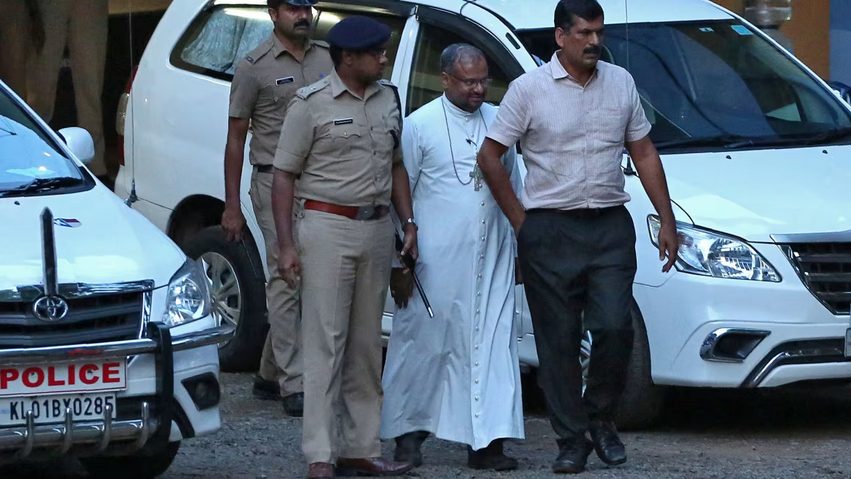
Pallassery, a former superior general of the Missionaries of Jesus, a diocesan congregation based in northern India’s Jalandhar diocese, has accused Bishop Franco Mulakkal of raping her repeatedly during his visits to her convent in Kuravilangad, Kerala, between 2014 and 2016. The number she cites—13 assaults over two years—has become emblematic of her case, but for Pallassery the deeper wound lies in what followed: years of institutional inaction, legal delay, and personal isolation.
In January 2022, a district court in Kottayam acquitted Mulakkal of all charges, ruling that prosecutors had failed to prove rape and suggesting that the encounters appeared consensual. The verdict stunned many observers, particularly given the power imbalance inherent in the relationship between a bishop and a vowed religious woman under his authority. Shortly after the ruling, the Vatican accepted Mulakkal’s resignation as bishop of Jalandhar. He retained his episcopal title and continues to lead spiritual retreats—an outcome Pallassery sees as painfully symbolic of unresolved accountability.
Now 51, Pallassery insists that public perception misreads her silence since the verdict as surrender. “People think we have given up,” she said in a televised interview aired on January 10. “We are still alive, and we are still fighting.” Both she and the Kerala state government have appealed the acquittal to the Kerala High Court, yet four years on, the court has not begun substantive hearings.
Her decision to speak openly was shaped not only by her own stalled case, but by a broader social reckoning. In late 2025, a high-profile Indian actress lost a widely followed rape case despite reporting the crime immediately and enduring a long trial. Watching that outcome, Pallassery said, crystallized a harsh truth: even prominence and prompt reporting do not guarantee justice. For her, remaining anonymous no longer felt protective—it felt complicit.
What distinguishes Pallassery’s story within the global conversation on clerical abuse is not only the allegation itself, but her insistence that the Church had multiple opportunities to intervene quietly and pastorally—and declined to do so. She recounts writing to bishops, cardinals, the apostolic nuncio in India, several Vatican dicasteries, and even Pope Francis before his death. According to her testimony, none replied. The silence, she argues, left her with no option but to approach civil authorities in 2018, particularly after Mulakkal allegedly filed a police complaint against her brother in what she describes as an attempt at intimidation.
The personal cost of that decision has been steep. Of the five nuns who initially stood beside her in a public protest that led to Mulakkal’s arrest in September 2018, three have since left religious life, unable to bear the pressure of being labeled “anti-Church.” Pallassery and the two remaining sisters continue to live in the same convent where the alleged assaults occurred, under round-the-clock police protection. Their movements outside the convent require escort approval, a reality that underscores how safety can come at the price of freedom.
Financially, they survive on little. Until late 2023, the congregation provided each with a modest monthly allowance of 5,000 rupees—about 50 U.S. dollars. That support was suspended after the sisters refused requests to seek exclaustration, a canonical status that would have required them to live outside the community. Instead, they have pieced together an austere livelihood through tailoring, embroidery, vegetable gardening, a small poultry operation, and donations from civil society supporters.
In mid-January, following Pallassery’s public interviews, the Kerala government issued ration cards to help the sisters access subsidized food grains and appointed a special public prosecutor to argue her appeal. For Pallassery, these gestures stand in stark contrast to what she describes as ecclesial abandonment. She has acknowledged police protection and state intervention as lifelines during a period when she felt the Church’s leadership had turned away.
Supporters argue that her case exposes a structural blind spot within both Church and society: the difficulty of recognizing abuse when it is cloaked in authority, religious language, and expectations of obedience. Theologian Kochurani Abraham has described Pallassery’s decision to speak as a “lightning strike” against entrenched clerical power, forcing uncomfortable questions about credibility, consent, and institutional self-preservation.
Pallassery herself frames her struggle in spiritual, not ideological, terms. She has repeatedly said she has no intention of leaving her congregation or abandoning her vocation. To do so, she believes, would allow the institution to erase her presence—and her claim—as a nun seeking justice from within the Church, not against it. Therapy, prayer, and meditation have helped her reinterpret the shame she once carried as misplaced responsibility, a psychological shift she describes as essential to reclaiming her voice.
Her appeal before the Kerala High Court emphasizes a point often lost in courtroom debates: the fiduciary relationship between a bishop and a nun. Such relationships, she argues, inherently complicate consent and help explain delays in reporting abuse—an insight increasingly recognized in other jurisdictions but not yet firmly embedded in Indian jurisprudence.
Whether the courts ultimately reverse Mulakkal’s acquittal remains uncertain. What is already clear is that Pallassery has redefined what survival looks like in a context where justice moves slowly and institutions resist scrutiny. By refusing to disappear—socially, legally, or spiritually—she has forced both Church and state to confront a question that extends far beyond her own case: who bears the burden of silence, and who benefits from it.
“I did not commit a crime,” she has said. “Why should I hide?” For an institution built on moral witness, her challenge resonates far beyond the walls of a convent in Kerala, reaching into the heart of how authority, accountability, and human dignity are understood in the Church today.
Thank you for reading our content. If you would like to receive ZENIT’s daily e-mail news, you can subscribe for free through this link.

Publicaciones relacionadas:
 USA: Bishop Chairmen Call on Lawmakers to Protect Children Online
 Cardinal Dolan takes insurer to court for non-compliance in sexual abuse cases
 Investigation Launched into Seton Hall President’s Handling of McCarrick Allegations
 Pope Francis Warns of AI’s Role in Enabling Abuse, Calls for Ethical Responsibility
