

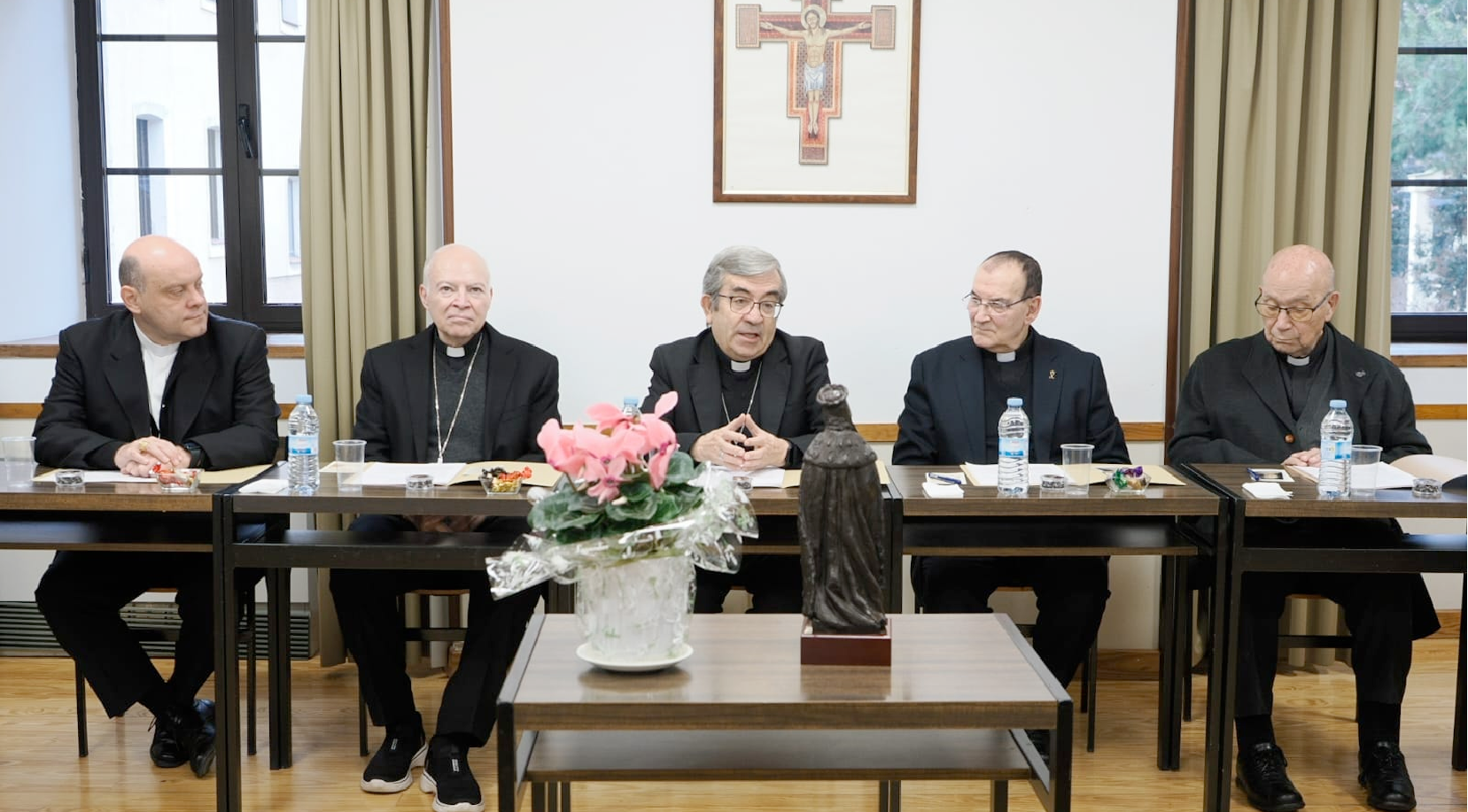
(ZENIT News / Madrid, 01.25.2026).- A meeting in Valladolid Monday, January 19 carried echoes of five centuries of history—and a renewed ecclesial ambition to reconnect Spain and the Americas through a figure: Queen Isabella I of Castile.
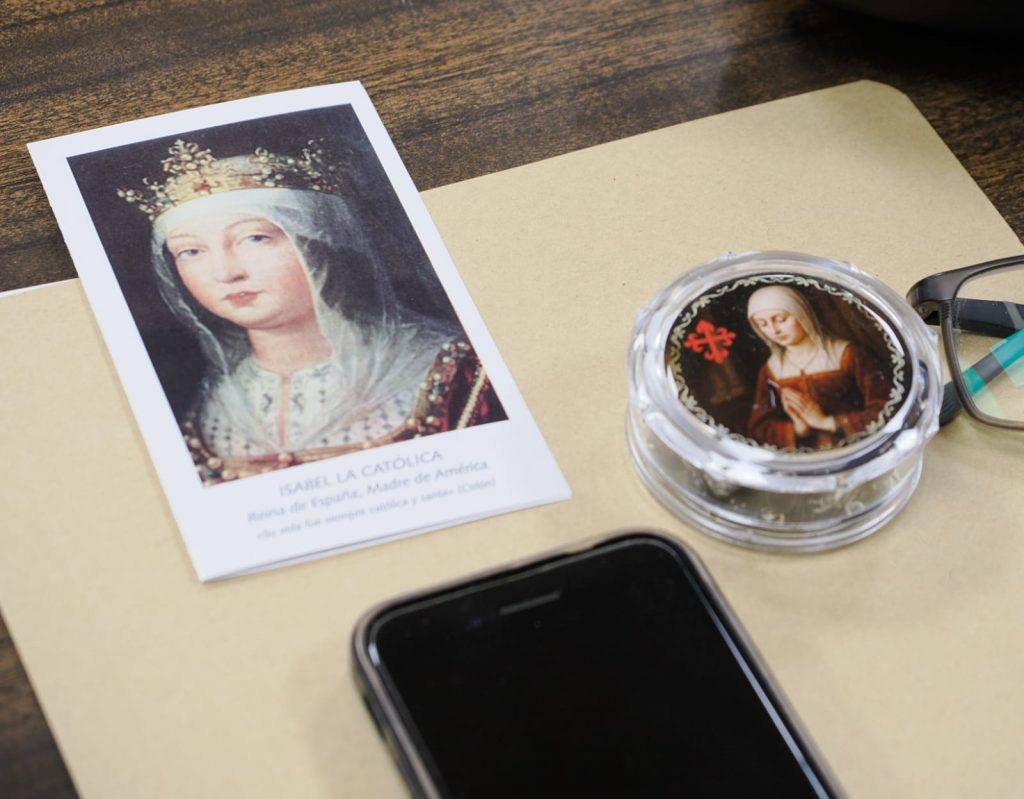
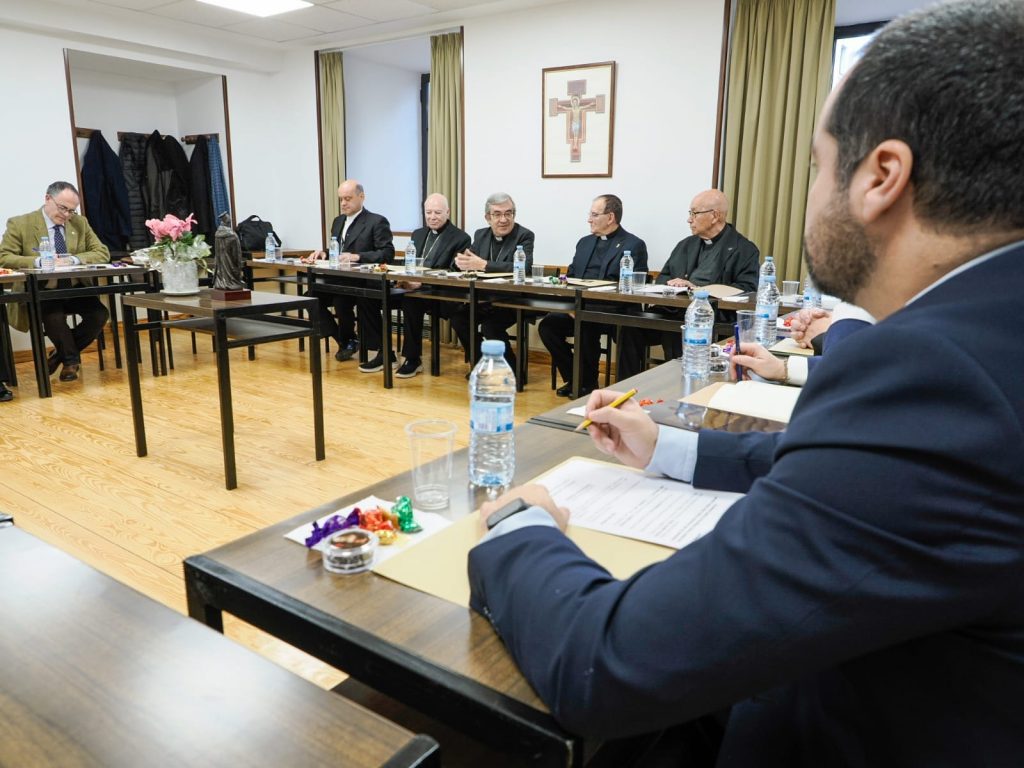
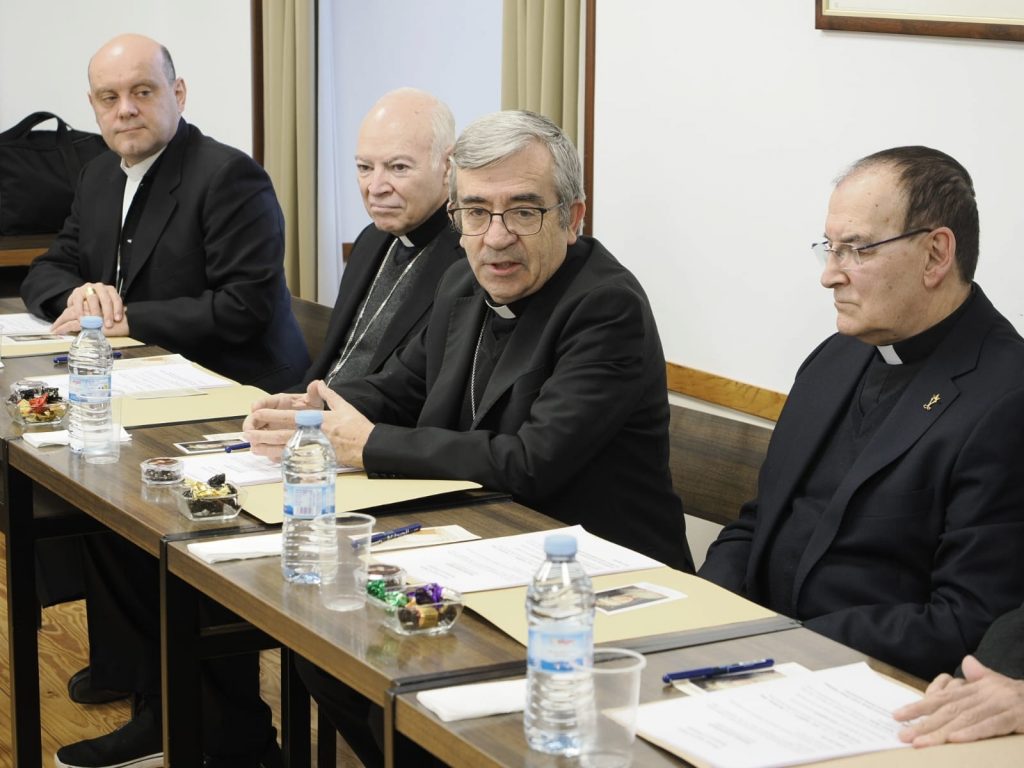
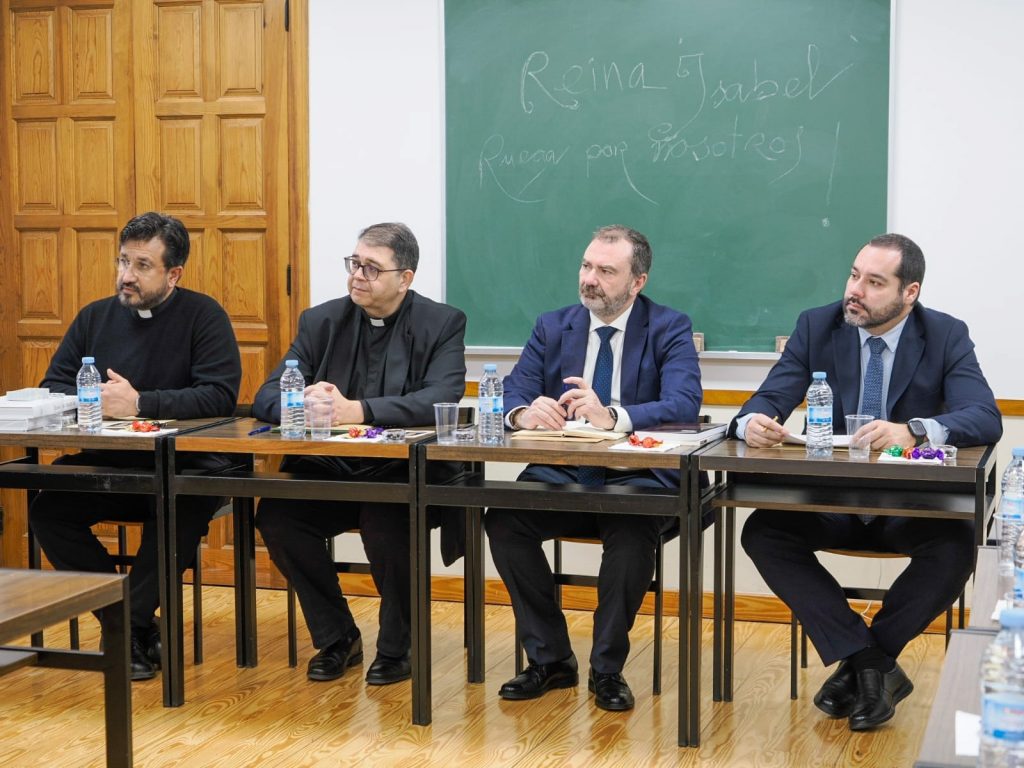
On January 19, Mexico’s archbishop, Cardinal Carlos Aguiar Retes, paid a formal visit to the Commission for the Cause of Beatification of Queen Isabella the Catholic, which convened specially for the occasion at the Archdiocese of Valladolid’s spirituality center. Accompanied by his auxiliary bishop, the Augustinian Francisco Javier Acero, and Father Eduardo Aguilar, executive secretary of the Mexican Bishops’ Conference, Aguiar was received by Archbishop Luis Argüello García of Valladolid—also president of Spain’s Episcopal Conference—together with Father José Luis Rubio Willen, director of the Isabella commission, and a significant number of its members.
The encounter was not merely ceremonial. Speaking after Argüello’s welcome, Cardinal Aguiar said that years of study had led him to a firm conviction about Isabella’s personal sanctity and the urgency of making it better known. He pointed in particular to the queen’s landmark Royal Decree of 1503, which affirmed that the indigenous peoples of the newly encountered territories were to enjoy the same rights as subjects in Spain itself—an extraordinary position for its time.
For Aguiar, that decision embodied a deeper spiritual vision: the recognition that every human being is fundamentally a brother or sister. In his view, this principle places Isabella among the early political figures who articulated a proto-concept of universal human dignity, long before the modern language of human rights emerged.
The Mexican cardinal stressed that the cause is not about historical nostalgia but about patient discernment. “We want the essential facts of her life and spirituality to be known,” he said, emphasizing the need for time so that her role in shaping the Americas—particularly in matters of justice and evangelization—can be evaluated with clarity and balance.
He also framed the initiative in strikingly contemporary terms. At a moment when political systems across much of the Americas and beyond appear exhausted and disconnected from popular needs, Aguiar suggested that Isabella’s legacy offers an alternative model: a woman in power who sought the common good on both sides of the Atlantic.
Archbishop Argüello, for his part, situated the conversation within the broader horizon of the upcoming Guadalupan celebrations leading toward 2031, marking 500 years since the apparitions of Our Lady of Guadalupe. He recalled that at the heart of Isabella’s life was fidelity to Christ and to the Church’s missionary mandate—an interior compass that shaped her political vision and her commitment to unity in Spain, rooted in shared faith.
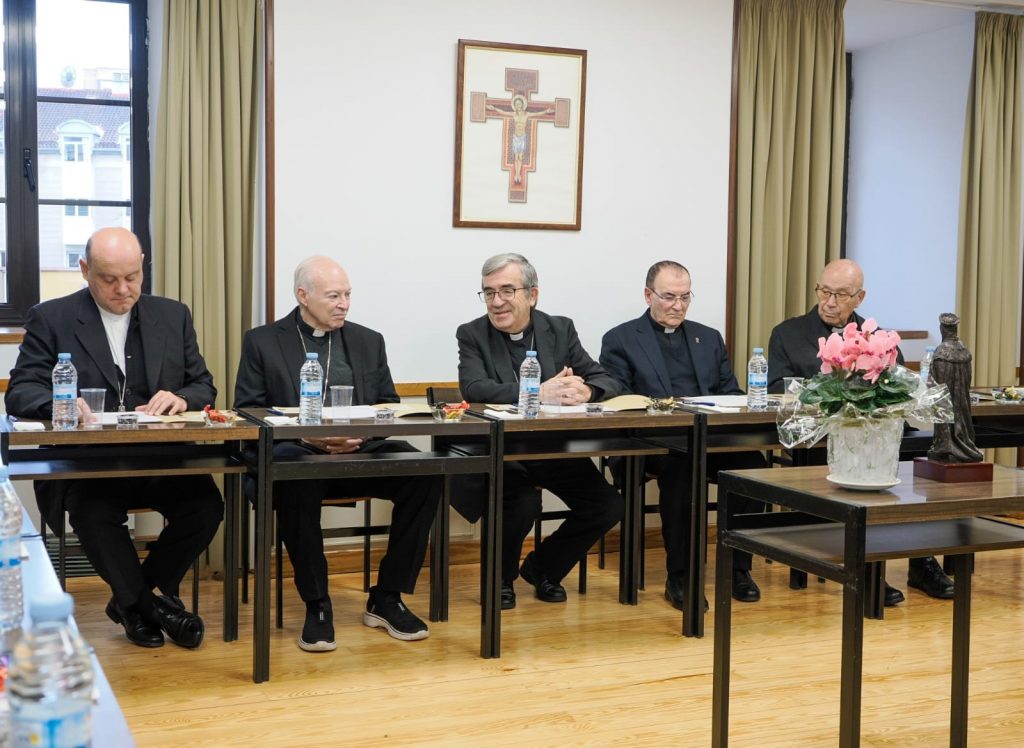
Argüello argued that in today’s cultural climate, marked by migration and intercultural tension, the reality of mestizaje—cultural and spiritual blending—poses a profound challenge. He sees Isabella’s cause as a potential catalyst for renewed dialogue between Spain and Latin America, fostering what he called a “new embrace” between their Churches around a common mission of evangelization.
The Valladolid visit forms part of the Intercontinental Guadalupan Novena, launched in December 2022, an ecclesial initiative designed to promote encounter with God through devotion to Our Lady of Guadalupe while seeking fresh paths for social and ecclesial renewal. Within this framework, participants agreed to organize a joint Ibero-American congress in Mexico focused on Isabella’s role in the discovery and evangelization of the Americas, as well as her advocacy for human dignity—an event intended to bring historians, theologians, and pastoral leaders into sustained conversation.
Cardinal Aguiar himself embodies the transatlantic dimension of the project. A member of the Vatican’s Pontifical Commission for Latin America, he has previously served as secretary and president of Mexico’s episcopal conference and as president of CELAM, the council of Latin American bishops. Created cardinal by Pope Francis on November 19, 2016, he was appointed Archbishop Primate of Mexico in December 2017 and took office in February 2018. Now 76, he submitted his resignation upon turning 75, as required by canon law, making his eventual successor—expected to be named by Pope Leo XIV in 2026—one of the most consequential appointments in the Mexican Church.
For supporters of Isabella’s cause, the Valladolid meeting marked more than another procedural step. It signaled a growing desire, particularly from Latin America, to reassess a complex historical figure not only through the lens of conquest and empire, but also through her spiritual motivations and early insistence on the dignity of indigenous peoples.
Thank you for reading our content. If you would like to receive ZENIT’s daily e-mail news, you can subscribe for free through this link.

Publicaciones relacionadas:
 Next Argentinean saint «performs miracle»: Javier Milei and Pope Francis at the Vatican
 The process of beatification of King Baudouin of Belgium officially begins: Vatican and Pope give their approval
 From Boardroom to Beatification: How an Argentine Businessman Is Redefining Holiness
 USA: Visionary of Our Lady of Champion Declared «Servant of God»
