

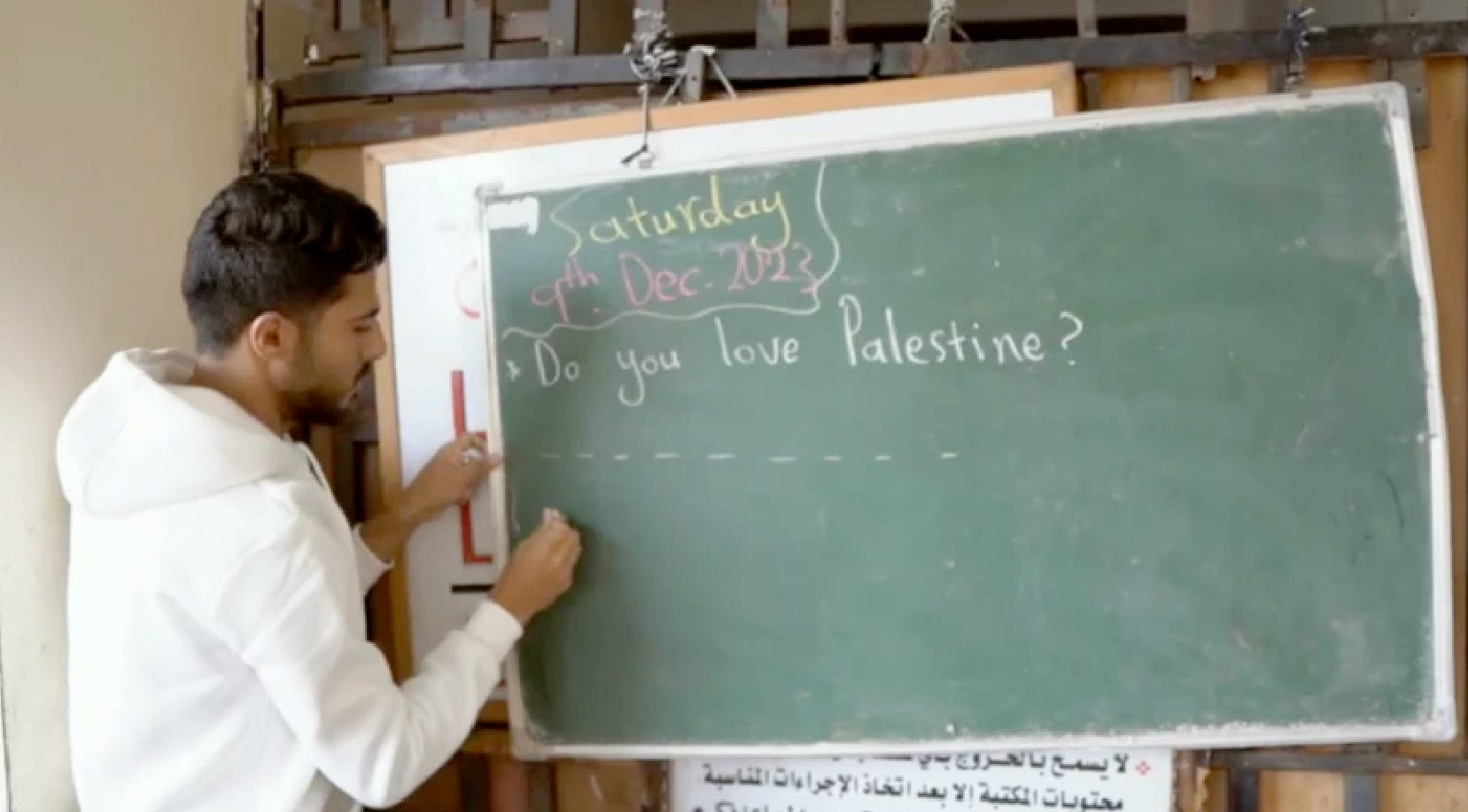
(ZENIT News / Jerusalem, 01.25.2026).- In today’s Palestinian territories, teaching has become more than a profession. It is, quite literally, a lifeline.
“Right now, teachers are the only ones who are working, the only ones who can still earn an income,” says Father Ibrahim Faltas, the Franciscan friar responsible for the schools of the Custody of the Holy Land. Since the outbreak of war, he explains, most sectors of the Palestinian economy have collapsed. Tourism—once a cornerstone in places like Bethlehem—has been frozen for over two years. Thousands who previously held permits to work in Israel are now unable to leave the occupied territories. Salaries from the Palestinian Authority have largely stopped because public funds have dried up.
Against this already fragile backdrop, Israel’s Knesset passed a controversial law on January 21 that could further destabilize Palestinian society—especially its Christian institutions.
Approved by 31 votes to 10 and promoted by Likud lawmakers Amit Halevi and Avichay Boaron, the new legislation bars graduates of Palestinian Authority–accredited universities from teaching in Israeli schools unless they also obtain specific Israeli certification. Supporters frame the measure as a safeguard against incitement. Critics see something far more ominous.
For Father Faltas, the implications are immediate and severe.
Under the new rules, Palestinians who earned their degrees at universities such as Bethlehem University—an institution founded by the Vatican and run by the De La Salle Brothers—or Hebron University would no longer be eligible to teach in Israel. “This is extremely serious,” the friar warns, pointing out that many of these educators are already among the few remaining wage earners in their families.
The Custody of the Holy Land alone operates 18 schools across the region, five of them in Jerusalem. These institutions form part of a wider network of Christian education in the Holy City: 15 Christian schools serve approximately 12,000 students, including many Muslim children. In the Old City, next to the Franciscan convent of St. Saviour, stands the Magnificat Institute, the Custody’s music school, attended not only by Christian and Muslim pupils but also by Jewish children.
This fragile ecosystem depends heavily on teachers commuting from the West Bank.
“There are 235 educators coming mainly from Bethlehem, Hebron, and Ramallah,” Father Faltas explains. “If they cannot enter Jerusalem, all these schools would have to close. There simply aren’t enough qualified teachers in the city itself.”
The consequences would ripple far beyond classrooms. Each teacher represents a household—235 families whose financial survival hinges on access to Jerusalem. Observers note that the law risks accelerating Palestinian emigration while simultaneously weakening Christian institutions, long regarded as pillars of coexistence and stability.
Tensions had already reached a breaking point in recent weeks. Around 10,000 students in Christian schools were unable to resume classes after Christmas holidays when Israeli authorities failed to renew work permits for 171 teachers from the occupied territories. School administrators responded with a strike.
Initially, permits were granted for every day except Saturday—ironically the very day classes are held. After protests, Saturday access was restored, but Fridays and Sundays were blocked instead, disrupting extracurricular activities and special programs. Only after a full week without classes were permits finally issued for all seven days, allowing the semester to restart.
According to The Times of Israel, the newly passed law will not apply retroactively to teachers already hired by the Ministry of Education. Still, anxiety remains high. Some educators have worked in Jerusalem for two or even three decades. “We are talking about 235 families,” Father Faltas says. “I sincerely hope the regulation will not be extended to them as well.”
Arab-speaking members of the Knesset have denounced the law as discriminatory. Nationalist Jewish lawmakers defend it as necessary to prevent the spread of anti-Israeli sentiment in schools.
Father Faltas responds from a distinctly Christian perspective.
“These teachers serve in Christian schools,” he says. “We begin our day with the simple prayer of Saint Francis of Assisi: ‘Lord, make me an instrument of your peace.’”
For the Franciscans, who have safeguarded Christian presence in the Holy Land since the 13th century, education is not merely academic. It is part of a broader mission to sustain hope, dialogue, and rootedness in a land increasingly fractured by conflict.
Today, that mission is under strain. And as chalkboards fall silent and permits hang in bureaucratic limbo, the future of thousands of students—and the social fabric of Jerusalem itself—now depends on decisions made far from the classroom.
Thank you for reading our content. If you would like to receive ZENIT’s daily e-mail news, you can subscribe for free through this link.

Publicaciones relacionadas:
 Israeli Jesuit David Neuhaus: the plan to remove Palestinians from Gaza feels like a kick in the stomach
 Christian Leaders Unite Against Jerusalem Municipality’s Move to Seize Armenian Patriarchate Properties
 Jewish persecution of Christians in the Holy Land on the rise, research reveals
 Attacks by Jewish settlers against our peaceful community must stop in Taybeh: note from Christian leaders in Holy Land
